
Loading
TMinusZero
Loading
Preparing the latest launch data.
TMinusZero
Loading
Preparing the latest launch data.
Astronaut
Aleksandr Aleksandrovich Serebrov (Russian: Алекса́ндр Алекса́ндрович Серебро́в, February 15, 1944 – November 12, 2013) was a Soviet cosmonaut. He graduated from Moscow Institute of Physics and Technology (1967), and was selected as a cosmonaut on December 1, 1978. He retired on May 10, 1995. He flew on Soyuz T-7, Soyuz T-8, Soyuz TM-8 and Soyuz TM-17. He was one of very few cosmonauts to fly for both the Soviet Union and the Russian Federation that followed it. He held the record for most spacewalks, 10, until Anatoly Solovyev surpassed it. In all, Serebrov spent 371.95 days in space. Serebrov contributed to the design of Salyut 6, Salyut 7, and the Mir space stations.
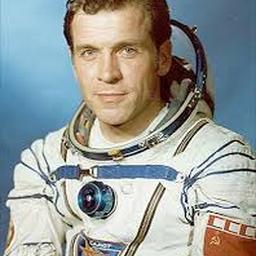
Aleksandr Serebrov is the astronaut record for catalog id 246.
Aleksandr Aleksandrovich Serebrov (Russian: Алекса́ндр Алекса́ндрович Серебро́в, February 15, 1944 – November 12, 2013) was a Soviet cosmonaut. He graduated from Moscow Institute of Physics and Technology (1967), and was selected as a cosmonaut on December 1, 1978. He retired on May 10, 1995. He flew on Soyuz T-7, Soyuz T-8, Soyuz TM-8 and Soyuz TM-17. He was one of very few cosmonauts to fly for both the Soviet Union and the Russian Federation that followed it. He held the record for most spacewalks, 10, until Anatoly Solovyev surpassed it. In all, Serebrov spent 371.95 days in space. Serebrov contributed to the design of Salyut 6, Salyut 7, and the Mir space stations.
No related launch rows are currently resolved for this catalog record.
This record is built from the Launch Library 2 public catalog cache. The page keeps provider, pad, vehicle, astronaut, event, and location records separate from launch detail pages so source-backed facts stay easy to audit.
Aleksandr Serebrov is a catalog record in the astronauts collection. Use this page for entity context and source-backed facts from the public catalog cache.
This page owns the catalog record. Collection pages own browsing, launch pages own mission timing and status, and the info hub explains the wider public-data surface.
Data provided by The Space Devs - Launch Library 2.