
Loading
TMinusZero
Loading
Preparing the latest launch data.
TMinusZero
Loading
Preparing the latest launch data.
Event
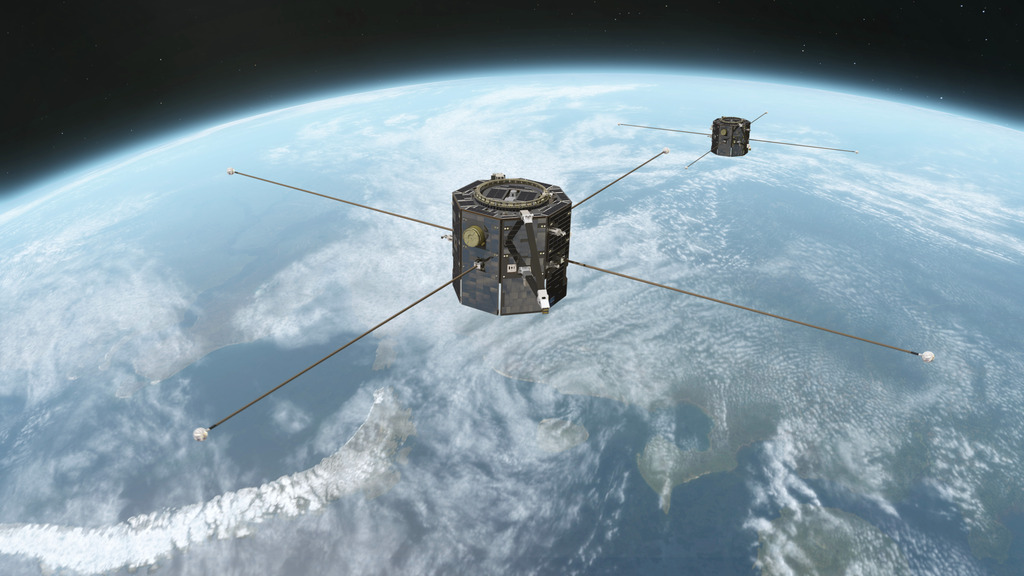
NASA will hold a media teleconference to share information about the agency’s upcoming Tandem Reconnection and Cusp Electrodynamics Reconnaissance Satellites, or TRACERS, mission. The TRACERS mission is a pair of twin satellites that will study how Earth’s magnetic shield — the magnetosphere — protects our planet from the supersonic stream of material from the Sun called solar wind. As they fly pole to pole in a Sun-synchronous orbit, the two TRACERS spacecraft will measure how magnetic explosions send these solar wind particles zooming down into Earth’s atmosphere — and how these explosions shape the space weather that impacts our satellites, technology, and astronauts. Also launching on this flight will be three additional NASA-funded payloads. The Athena EPIC (Economical Payload Integration Cost) SmallSat, led by NASA’s Langley Research Center in Hampton, Virginia, is designed to demonstrate an innovative, configurable way to put remote-sensing instruments into orbit faster and more affordably. The Polylingual Experimental Terminal technology demonstration, managed by the agency’s SCaN (Space Communications and Navigation) program, will showcase new technology that empowers missions to roam between communications networks in space, like cell phones roam between providers on Earth. Finally, the Relativistic Electron Atmospheric Loss (REAL) CubeSat, led by Dartmouth College in Hanover, New Hampshire, will use space as a laboratory to understand how high-energy particles within the bands of radiation that surround Earth are naturally scattered into the atmosphere, aiding the development of methods for removing these damaging particles to better protect satellites and the critical ground systems they support.
NASA TRACERS Media Teleconference is the event record for catalog id 1215.
NASA will hold a media teleconference to share information about the agency’s upcoming Tandem Reconnection and Cusp Electrodynamics Reconnaissance Satellites, or TRACERS, mission. The TRACERS mission is a pair of twin satellites that will study how Earth’s magnetic shield — the magnetosphere — protects our planet from the supersonic stream of material from the Sun called solar wind. As they fly pole to pole in a Sun-synchronous orbit, the two TRACERS spacecraft will measure how magnetic explosions send these solar wind particles zooming down into Earth’s atmosphere — and how these explosions shape the space weather that impacts our satellites, technology, and astronauts. Also launching on this flight will be three additional NASA-funded payloads. The Athena EPIC (Economical Payload Integration Cost) SmallSat, led by NASA’s Langley Research Center in Hampton, Virginia, is designed to demonstrate an innovative, configurable way to put remote-sensing instruments into orbit faster and more affordably. The Polylingual Experimental Terminal technology demonstration, managed by the agency’s SCaN (Space Communications and Navigation) program, will showcase new technology that empowers missions to roam between communications networks in space, like cell phones roam between providers on Earth. Finally, the Relativistic Electron Atmospheric Loss (REAL) CubeSat, led by Dartmouth College in Hanover, New Hampshire, will use space as a laboratory to understand how high-energy particles within the bands of radiation that surround Earth are naturally scattered into the atmosphere, aiding the development of methods for removing these damaging particles to better protect satellites and the critical ground systems they support.
No related launch rows are currently resolved for this catalog record.
This record is built from the Launch Library 2 public catalog cache. The page keeps provider, pad, vehicle, astronaut, event, and location records separate from launch detail pages so source-backed facts stay easy to audit.
NASA TRACERS Media Teleconference is treated as a non-launch event record. Use it for event identity, event timing, type, external references, and any linked launch context rather than as a primary launch schedule page.
This page owns the catalog record. Collection pages own browsing, launch pages own mission timing and status, and the info hub explains the wider public-data surface.
Data provided by The Space Devs - Launch Library 2.