
Loading
TMinusZero
Loading
Preparing the latest launch data.
TMinusZero
Loading
Preparing the latest launch data.
Event
NASA will hold a media teleconference to discuss the agency’s upcoming Sun and space weather missions, IMAP (Interstellar Mapping and Acceleration Probe) and Carruthers Geocorona Observatory. The IMAP mission will map the boundaries of our heliosphere, the vast bubble created by the Sun’s wind that encapsulates our entire solar system. As a modern-day celestial cartographer, IMAP will explore how the heliosphere interacts with interstellar space, as well as chart the range of particles that fill the space between the planets. The IMAP mission also will support near real-time observations of the solar wind and energetic particles. These energetic particles can produce hazardous space weather that can impact spacecraft and other NASA hardware as the agency explores deeper into space, including at the Moon under the Artemis campaign. NASA’s Carruthers Geocorona Observatory will image the ultraviolet glow of Earth’s exosphere, the outermost region of our planet’s atmosphere. This data will help scientists understand how space weather from the Sun shapes the exosphere and ultimately impacts our planet. The first observation of this glow – called the geocorona – was captured during Apollo 16, when a telescope designed and built by George Carruthers was deployed on the Moon. Participants include: - Nicky Fox, associate administrator, Science Mission Directorate, NASA Headquarters in Washington - Teresa Nieves-Chinchilla, director, Moon to Mars Space Weather Analysis Office, NASA’s Goddard Space Flight Center in Greenbelt, Maryland - David J. McComas, IMAP principal investigator, Princeton University - Lara Waldrop, Carruthers Geocorona Observatory principal investigator, University of Illinois Urbana-Champaign
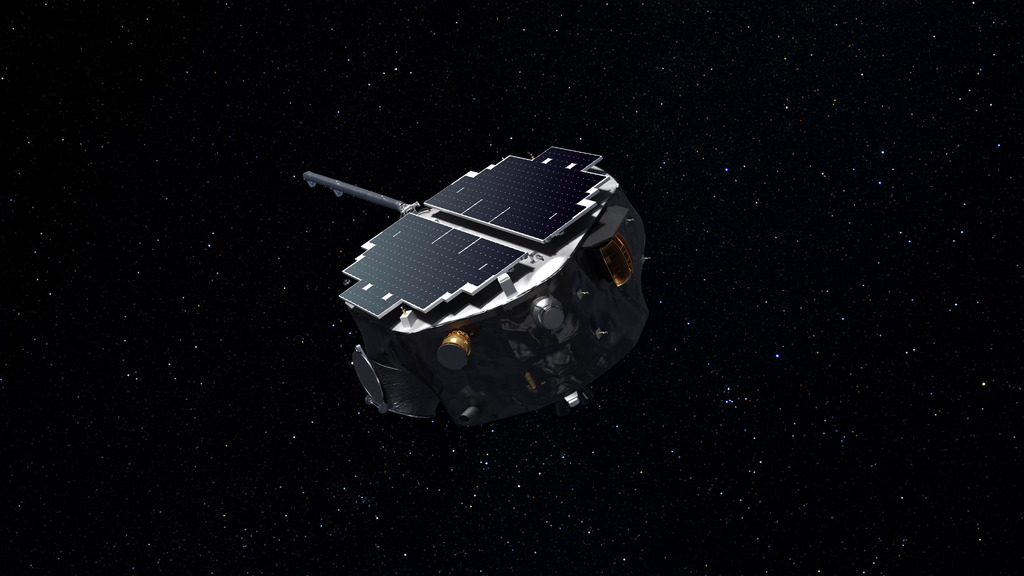
NASA IMAP Media Teleconference is the event record for catalog id 1240.
NASA will hold a media teleconference to discuss the agency’s upcoming Sun and space weather missions, IMAP (Interstellar Mapping and Acceleration Probe) and Carruthers Geocorona Observatory. The IMAP mission will map the boundaries of our heliosphere, the vast bubble created by the Sun’s wind that encapsulates our entire solar system. As a modern-day celestial cartographer, IMAP will explore how the heliosphere interacts with interstellar space, as well as chart the range of particles that fill the space between the planets. The IMAP mission also will support near real-time observations of the solar wind and energetic particles. These energetic particles can produce hazardous space weather that can impact spacecraft and other NASA hardware as the agency explores deeper into space, including at the Moon under the Artemis campaign. NASA’s Carruthers Geocorona Observatory will image the ultraviolet glow of Earth’s exosphere, the outermost region of our planet’s atmosphere. This data will help scientists understand how space weather from the Sun shapes the exosphere and ultimately impacts our planet. The first observation of this glow – called the geocorona – was captured during Apollo 16, when a telescope designed and built by George Carruthers was deployed on the Moon. Participants include: - Nicky Fox, associate administrator, Science Mission Directorate, NASA Headquarters in Washington - Teresa Nieves-Chinchilla, director, Moon to Mars Space Weather Analysis Office, NASA’s Goddard Space Flight Center in Greenbelt, Maryland - David J. McComas, IMAP principal investigator, Princeton University - Lara Waldrop, Carruthers Geocorona Observatory principal investigator, University of Illinois Urbana-Champaign
No related launch rows are currently resolved for this catalog record.
This record is built from the Launch Library 2 public catalog cache. The page keeps provider, pad, vehicle, astronaut, event, and location records separate from launch detail pages so source-backed facts stay easy to audit.
NASA IMAP Media Teleconference is treated as a non-launch event record. Use it for event identity, event timing, type, external references, and any linked launch context rather than as a primary launch schedule page.
This page owns the catalog record. Collection pages own browsing, launch pages own mission timing and status, and the info hub explains the wider public-data surface.
Data provided by The Space Devs - Launch Library 2.