

Loading photos...
Loading mission resources...
Loading related events...
Loading vehicle timeline...
Loading related news...
TMinusZero
Loading
Preparing the latest launch data.
Launch Detail
Loading launch detail
Pulling launch timing, vehicle context, weather signals, and mission evidence.
Launch detail
European Space Agency • Ariane 5 G • Ariane Launch Area 3 (FR-GF)
Top answer
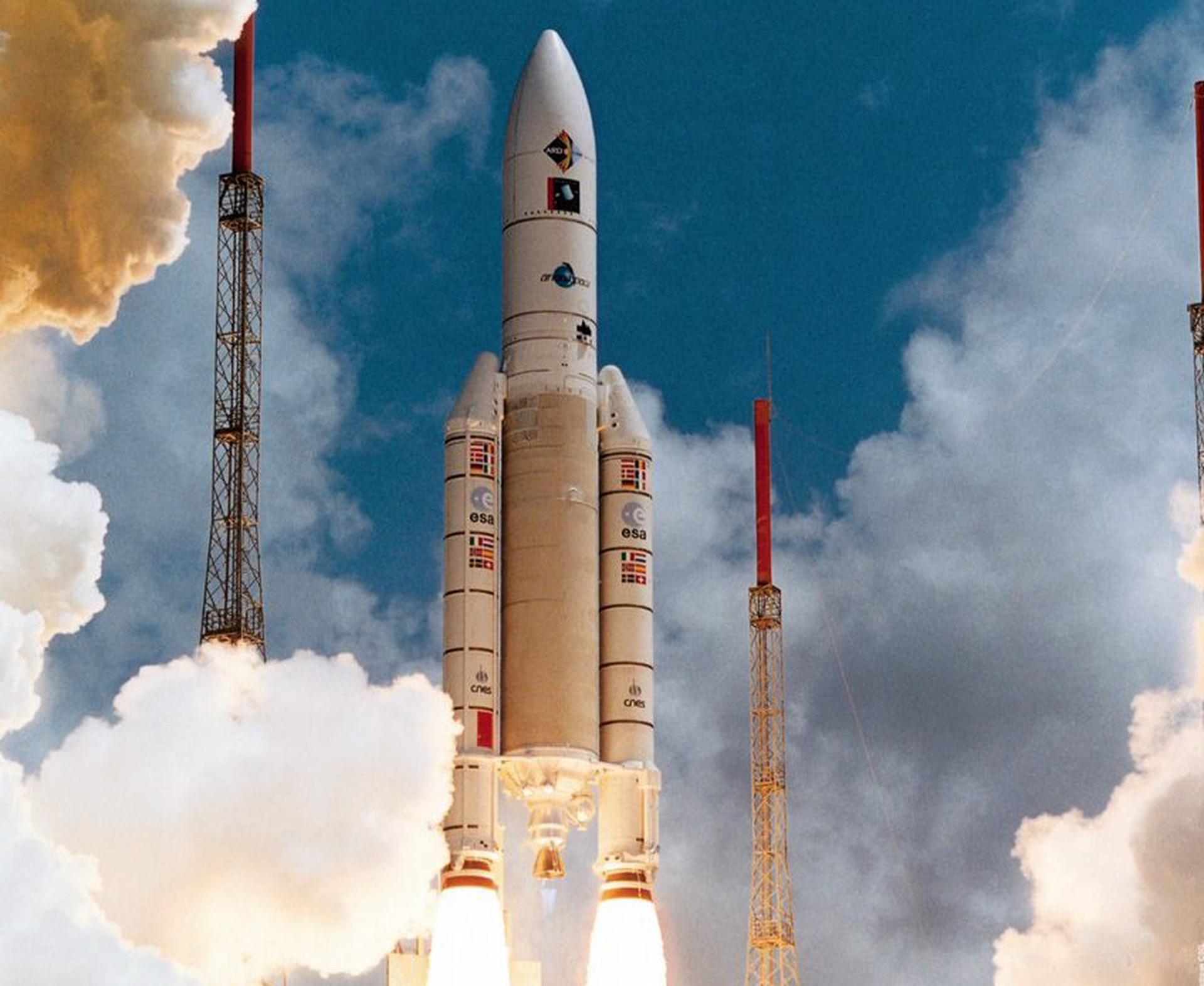
An X-Ray space observatory launches by the ESA.
Last refreshed: Jun 15, 2024, 11:17 AM GMT-3. T-Minus Zero keeps this as the canonical launch record and reconciles schedule, mission, payload, media, and provider signals when those records are available.
Alternate mission URLs consolidate to this canonical launch record so exact mission timing, status, media, and source context stay on one page.
Use these internal paths to move from this exact launch record into the provider, vehicle, launch-site, schedule, and mission-family pages that own broader context.
Premium keeps the launch-by-launch change log visible so you can review slips, window edits, and status changes without waiting for an error-driven upgrade prompt.
Free-to-share photography matched to this launch. Tap a photo to view it at full resolution.
An X-Ray space observatory launches by the ESA.
This launch currently has no dedicated mission-family hub, so provider, vehicle, site, and canonical record links are the primary internal paths.
Key structured fields for this launch record are grouped here so the page answers mission, payload, orbit, provider, source, and timing questions before the deeper tracking and media sections.
This record is preserved as historical launch context. The page emphasizes what was launched, the vehicle and pad involved, published outcome/status fields, linked programs, and source records instead of treating the mission like an upcoming countdown.
Open the launch pad in Google Maps satellite mode using the pad coordinates.
An X-Ray space observatory launches by the ESA.
The original version is dubbed Ariane 5 G (Generic) and had a launch mass of 737 tonnes. Its payload capability to geostationary transfer orbit (GTO) was 6,900 kg (15,200 lb) for a single satellite or 6,100 kg (13,400 lb) for dual launches. It flew 17 times with one failure and two partial failures.
The European Space Agency is an intergovernmental organisation of 22 member states. Established in 1975 and headquartered in Paris, France, ESA has a worldwide staff of about 2,000 employees. ESA's space flight programme includes human spaceflight (mainly through participation in the International Space Station program); the launch and operation of unmanned exploration missions to other planets and the Moon; Earth observation, science and telecommunication; designing launch vehicles; and maintaining a major spaceport, the Guiana Space Centre at Kourou, French Guiana.
bc77abade8dfc7229c309afc422371fdb7459ff32dc260b551a518518919c3d8Linked via Spaceflight News API (SNAPI).
 Article
The European Space Agency’s XMM-Newton and NASA’s Chandra X-ray space telescopes have spotted the aftermath of three bright explosions echoing through the ou...
 Article
What happens when a star dies? In 2019, Betelgeuse dimmed in brightness, sparking speculation that it may soon explode as a supernova. While it likely won’t...
 Article
From the ESA Blogs.
 Article
Leading X-ray space telescopes XMM-Newton and XRISM have spotted an extraordinary blast from a supermassive black hole. In a matter of hours, the gravitation...
 Article
Astronomers using the European Space Agency’s XMM-Newton space observatory and the LOFAR telescope have definitively spotted an explosive burst of material t...
 Article
From the ESA Blogs.
Provider, rocket, pad, and booster history tied to this launch.