Loading photos...
Loading mission resources...
Watch
Live coverage
Stream links and embedded coverage.
More watch links
www.youtube.comTechnical Webcast
Ariane 6 first flight - clean feed (Official broadcast)
TMinusZero
Loading
Preparing the latest launch data.
Launch Detail
Loading launch detail
Pulling launch timing, vehicle context, weather signals, and mission evidence.
Launch detail
European Space Agency • Ariane 62 • Ariane Launch Area 4 (FR-GF)
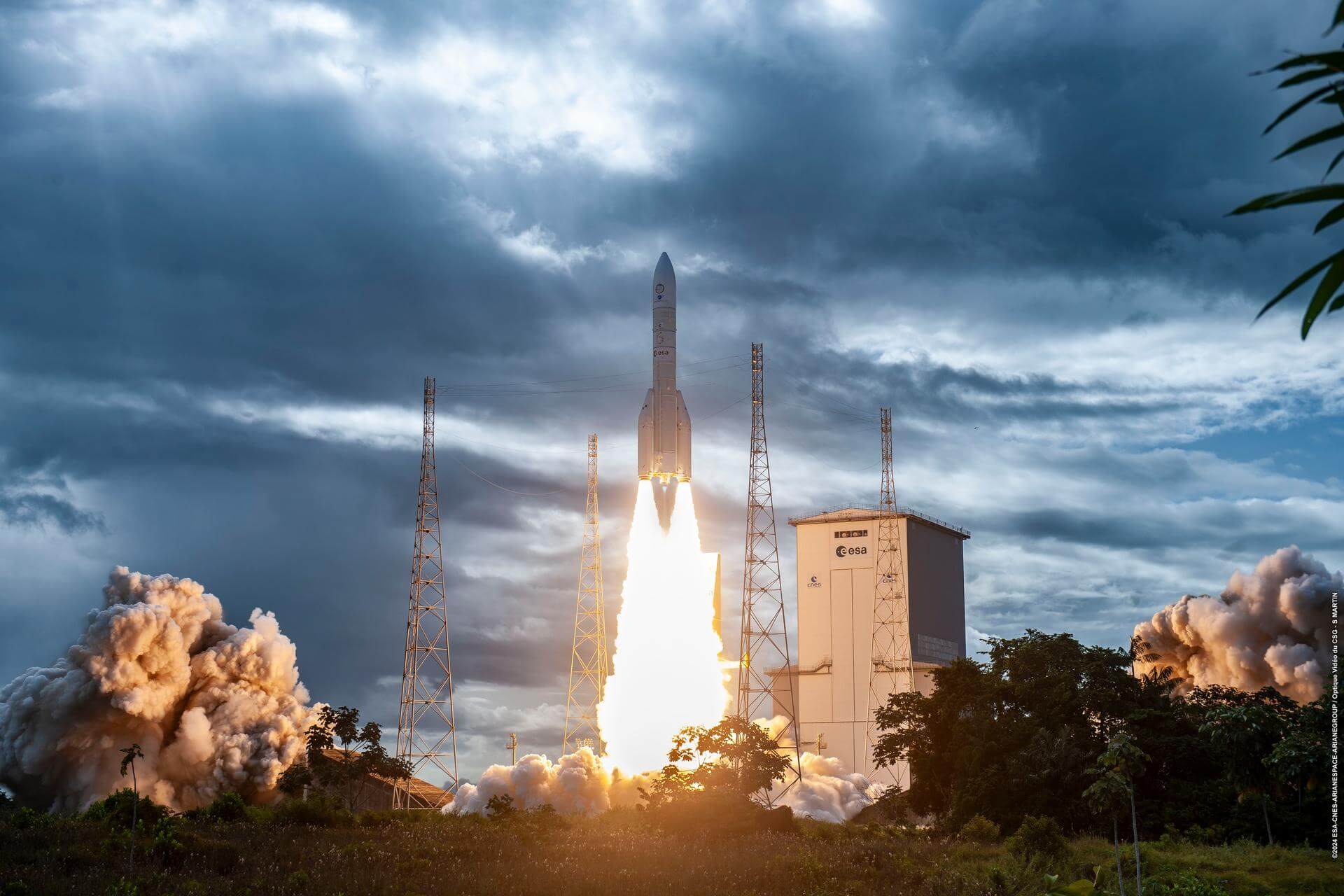
Maiden Flight of the Ariane 62 launch vehicle, carrying ten cubesats, two deployers, five experiments, and two reentry capsules.
Live targets are highlighted across the sequence.
Stream links and embedded coverage.
Premium keeps the launch-by-launch change log visible so you can review slips, window edits, and status changes without waiting for an error-driven upgrade prompt.
Free-to-share photography matched to this launch. Tap a photo to view it at full resolution.
 Ariane 6 Patch
Provider, rocket, pad, and booster history tied to this launch.
Maiden Flight of the Ariane 62 launch vehicle, carrying ten cubesats, two deployers, five experiments, and two reentry capsules.
Open the launch pad in Google Maps satellite mode using the pad coordinates.
Maiden Flight of the Ariane 62 launch vehicle, carrying ten cubesats, two deployers, five experiments, and two reentry capsules.
The Ariane 6 family is currently under development by the European Space Agency, with two variations including the Ariane 62 with two solid boosters intended for government and scientific missions.
The European Space Agency is an intergovernmental organisation of 22 member states. Established in 1975 and headquartered in Paris, France, ESA has a worldwide staff of about 2,000 employees. ESA's space flight programme includes human spaceflight (mainly through participation in the International Space Station program); the launch and operation of unmanned exploration missions to other planets and the Moon; Earth observation, science and telecommunication; designing launch vehicles; and maintaining a major spaceport, the Guiana Space Centre at Kourou, French Guiana.
bfe32fde51f605a1008ae62a64af80d11d5d5d445ec38ee1bd932ebae38995aaLinked via Spaceflight News API (SNAPI).
From the ESA Blogs.


