

Loading photos...
Loading mission resources...
Loading related events...
Loading vehicle timeline...
Loading related news...
TMinusZero
Loading
Preparing the latest launch data.
Launch Detail
Loading launch detail
Pulling launch timing, vehicle context, weather signals, and mission evidence.
Launch detail
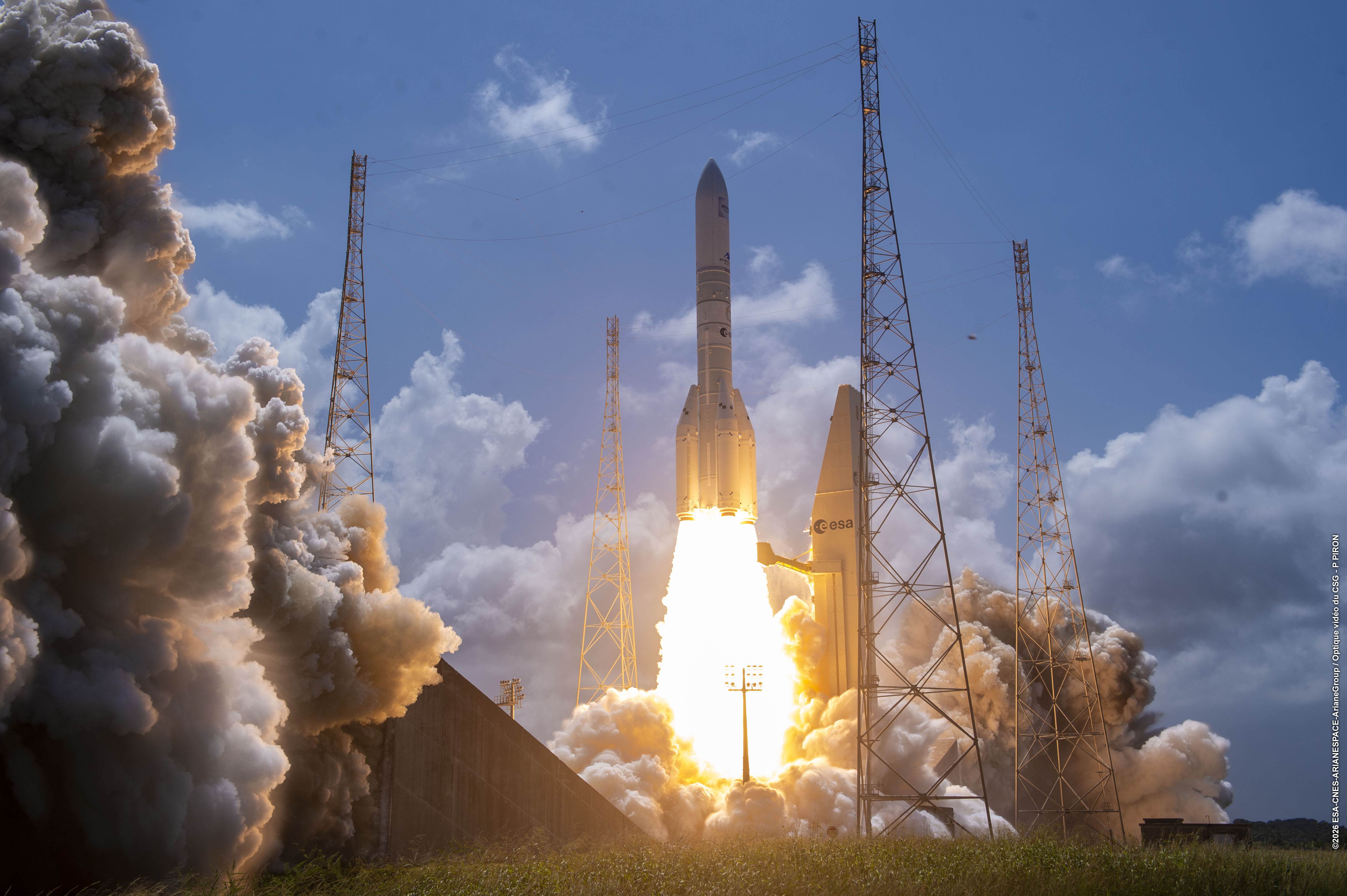
Arianespace • Ariane 64 • Ariane Launch Area 4 (FR-GF)
Top answer
GovSat-2 is the second satellite for GovSat, the public-private partnership between SES and the Luxembourg government. The satellite is designed to address the needs of defense users at the highest Security and Service Assurance Level, adding new ultra-high frequency (UHF) channels in the X- and military Ka-bands, and will include other security features such as dedicated hardening, an advanced anti-jamming system...
Last refreshed: Jan 21, 2026, 10:40 PM GMT-3. T-Minus Zero keeps this as the canonical launch record and reconciles schedule, mission, payload, media, and provider signals when those records are available.
Alternate mission URLs consolidate to this canonical launch record so exact mission timing, status, media, and source context stay on one page.
Premium keeps the launch-by-launch change log visible so you can review slips, window edits, and status changes without waiting for an error-driven upgrade prompt.
Free-to-share photography matched to this launch. Tap a photo to view it at full resolution.
GovSat-2 is the second satellite for GovSat, the public-private partnership between SES and the Luxembourg government. The satellite is designed to address the needs of defense users at the highest Security and Service Assurance Level, adding new ultra-high frequency (UHF) channels in the X- and military Ka-bands, and will include other security features such as dedicated hardening, an advanced anti-jamming system, and embedded geo-location. GovSat-2 will be positioned over the European satellite arc, joining GovSat-1 in augmenting reliable connectivity services for government customers over the region. The satellite will be built by Thales Alenia Space on its Spacebus 4000B2 platform.
Use these internal paths to move from this exact launch record into the provider, vehicle, launch-site, schedule, and mission-family pages that own broader context.
This launch currently has no dedicated mission-family hub, so provider, vehicle, site, and canonical record links are the primary internal paths.
Some high-demand launch records carry specialized search intent. These profiles explain what can be verified from the published record without filling gaps that upstream sources have not published.
Payload and orbit evidence is shown from published launch, payload, mission, and source-link records so the page can answer spacecraft, customer, orbit, provider, and schedule intent.
Key structured fields for this launch record are grouped here so the page answers mission, payload, orbit, provider, source, and timing questions before the deeper tracking and media sections.
Open the launch pad in Google Maps satellite mode using the pad coordinates.
GovSat-2 is the second satellite for GovSat, the public-private partnership between SES and the Luxembourg government. The satellite is designed to address the needs of defense users at the highest Security and Service Assurance Level, adding new ultra-high frequency (UHF) channels in the X- and military Ka-bands, and will include other security features such as dedicated hardening, an advanced anti-jamming system, and embedded geo-location. GovSat-2 will be positioned over the European satellite arc, joining GovSat-1 in augmenting reliable connectivity services for government customers over the region. The satellite will be built by Thales Alenia Space on its Spacebus 4000B2 platform.
Ariane 6 variant with four solid boosters, enabling heavier payloads.
Arianespace SA is a multinational company founded in 1980 as the world's first commercial launch service provider. It undertakes the production, operation, and marketing of the Ariane programme. Their vehicles launch exclusively from French Guiana in South America.
Payload and object details are usually published 1–2 days after launch.
Provider, rocket, pad, and booster history tied to this launch.