Live coverage
Stream links and embedded coverage.
TMinusZero
Loading
Preparing the latest launch data.
Launch Detail
Loading launch detail
Pulling launch timing, vehicle context, weather signals, and mission evidence.
Launch detail
United Launch Alliance • Atlas V 401 • Space Launch Complex 41 (FL)
Top answer
Lucy is the first mission to explore and study Trojan asteroids. The Trojans are a type of asteroids that orbit the Sun in two groups, in front of and behind Jupiter in its orbit around our star. Since these asteroids have been in such stable orbits for billions of years, they are of great interest as remnants of early Solar System. Lucy is a NASA mission led by NASA Goddard and Southwest Research Institute in Bou...
Last refreshed: Dec 31, 2023, 7:31 AM EST. T-Minus Zero keeps this as the canonical launch record and reconciles schedule, mission, payload, media, and provider signals when those records are available.
Stream links and embedded coverage.
Premium keeps the launch-by-launch change log visible so you can review slips, window edits, and status changes without waiting for an error-driven upgrade prompt.
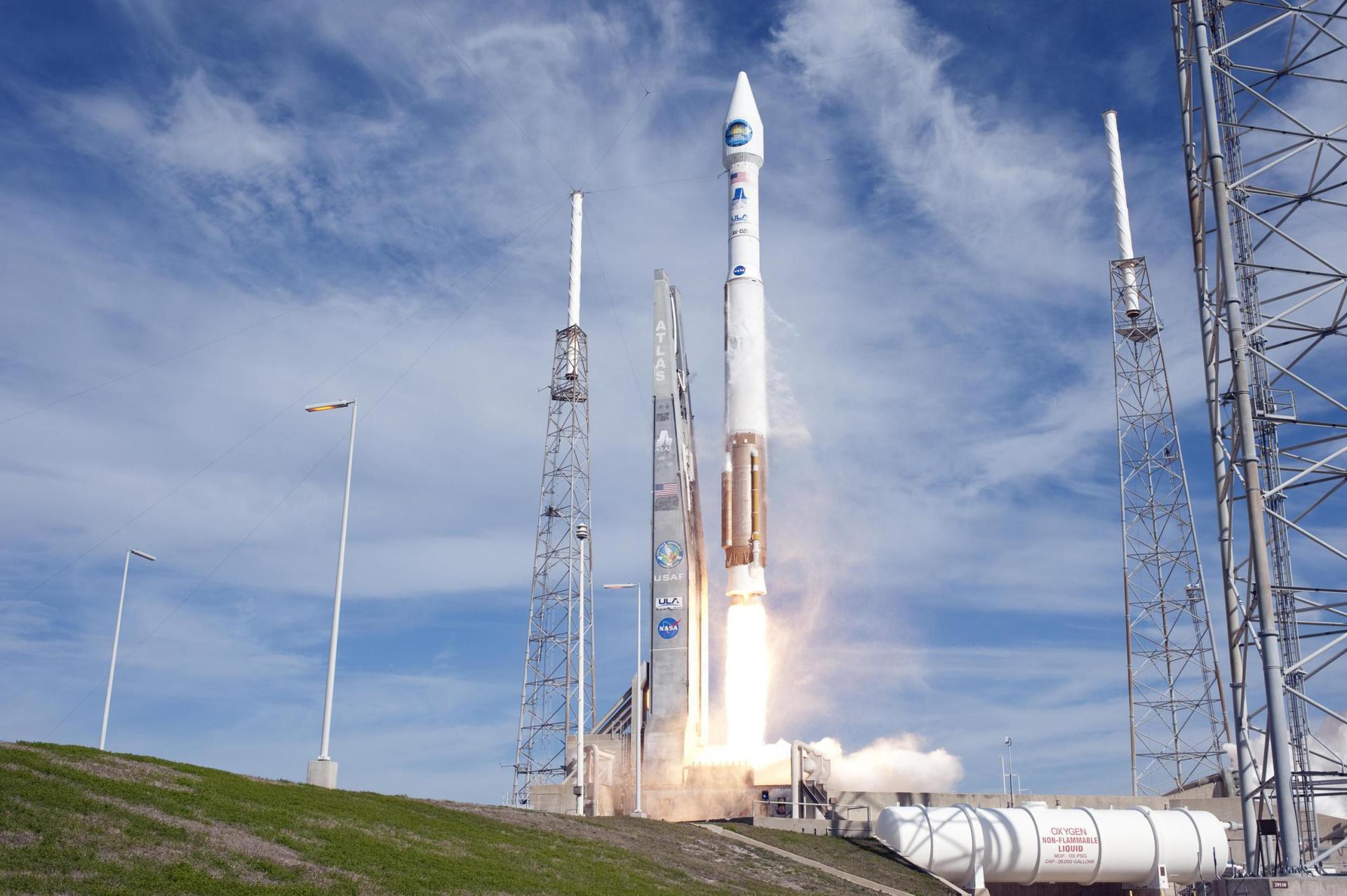
Free-to-share photography matched to this launch. Tap a photo to view it at full resolution.
Lucy NASA Mission PatchEnhanced forecast insights (select launches).
Premium adds the higher-signal weather shell for select Eastern Range launches, including the extra launch criteria and fast-read risk rows.
Lucy is the first mission to explore and study Trojan asteroids. The Trojans are a type of asteroids that orbit the Sun in two groups, in front of and behind Jupiter in its orbit around our star. Since these asteroids have been in such stable orbits for billions of years, they are of great interest as remnants of early Solar System. Lucy is a NASA mission led by NASA Goddard and Southwest Research Institute in Boulder, Colorado. Over the course of 12 years, Lucy will fly by seven different Trojan asteroids and also one main belt asteroid. The complex trajectory to visit all targets will include several Earth gravity assists.

Alternate mission URLs consolidate to this canonical launch record so exact mission timing, status, media, and source context stay on one page.
Use these internal paths to move from this exact launch record into the provider, vehicle, launch-site, schedule, and mission-family pages that own broader context.
This launch currently has no dedicated mission-family hub, so provider, vehicle, site, and canonical record links are the primary internal paths.
Key structured fields for this launch record are grouped here so the page answers mission, payload, orbit, provider, source, and timing questions before the deeper tracking and media sections.
This record is preserved as historical launch context. The page emphasizes what was launched, the vehicle and pad involved, published outcome/status fields, linked programs, and source records instead of treating the mission like an upcoming countdown.
Open the launch pad in Google Maps satellite mode using the pad coordinates.
Lucy is the first mission to explore and study Trojan asteroids. The Trojans are a type of asteroids that orbit the Sun in two groups, in front of and behind Jupiter in its orbit around our star. Since these asteroids have been in such stable orbits for billions of years, they are of great interest as remnants of early Solar System. Lucy is a NASA mission led by NASA Goddard and Southwest Research Institute in Boulder, Colorado. Over the course of 12 years, Lucy will fly by seven different Trojan asteroids and also one main belt asteroid. The complex trajectory to visit all targets will include several Earth gravity assists.
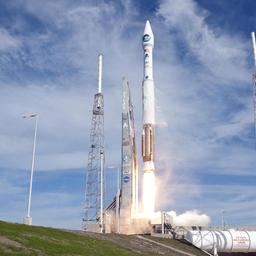
An Atlas V with a 4 meter diameter fairing, no boosters and a single centaur upper stage engine.
United Launch Alliance (ULA) is a joint venture of Lockheed Martin Space Systems and Boeing Defense, Space & Security. ULA was formed in December 2006 by combining the teams at these companies which provide spacecraft launch services to the government of the United States. ULA launches from both coasts of the US. They launch their Atlas V vehicle from LC-41 in Cape Canaveral and LC-3E at Vandeberg. Their Delta IV launches from LC-37 at Cape Canaveral and LC-6 at Vandenberg.
f96b87e312fd31fbf1ea23e3b9b070de0f0a46254598d8403307e3dedd400edbLinked via Spaceflight News API (SNAPI).
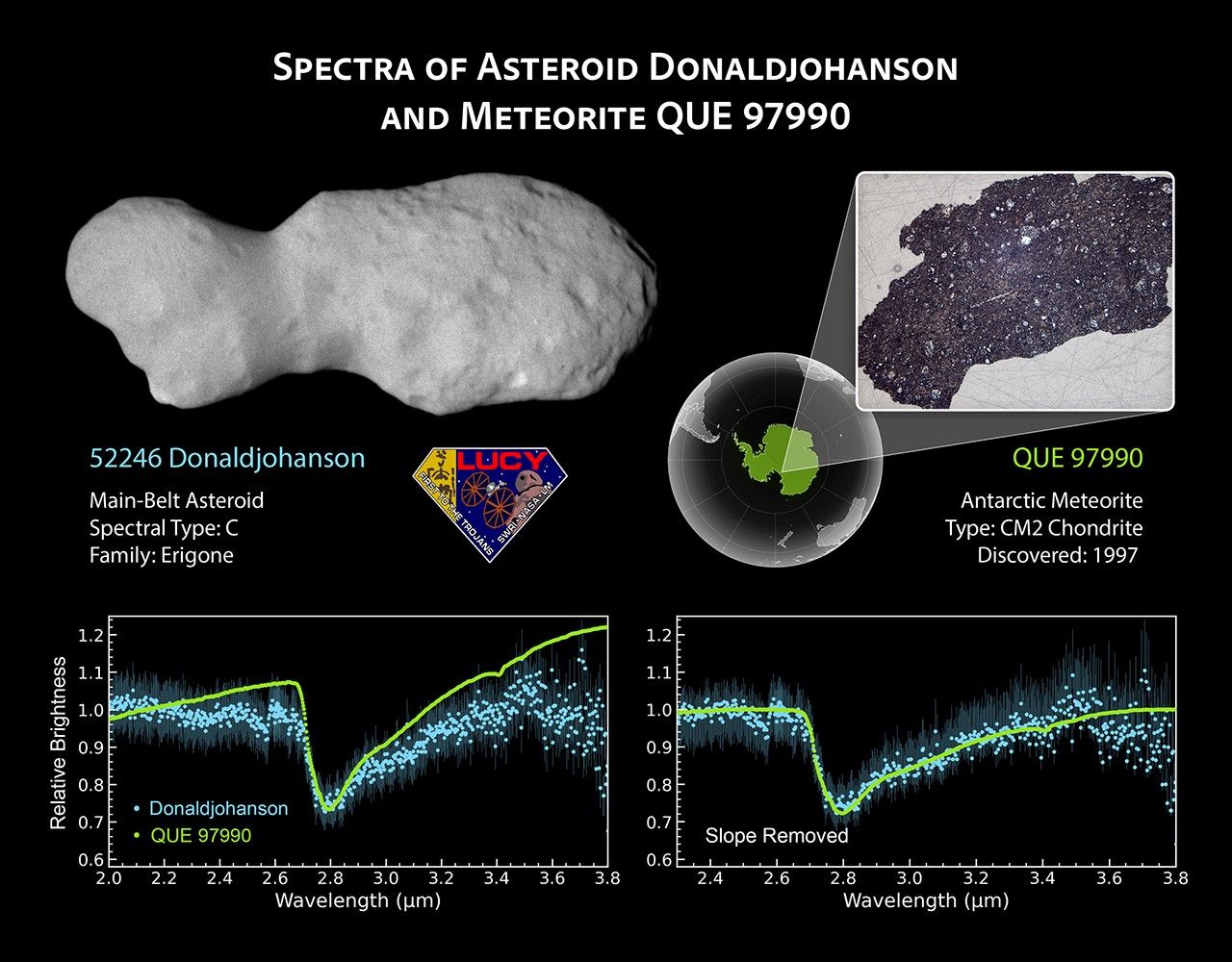
ArticleEven small asteroids lead complex lives. During its flyby of the asteroid Donaldjohanson last year, NASA’s Lucy spacecraft revealed the asteroid to be a wobb...
This article was updated to include the full range of dates from the SOHO image. Lee esta historia en español aquí. NASA is in the midst of an unprecedented...
ArticleThe IAU (International Astronomical Union), a global naming authority for celestial objects, has approved official names for features on Donaldjohanson, an a...
ArticleIn its second asteroid encounter, NASA’s Lucy spacecraft obtained a close look at a uniquely shaped fragment of an asteroid that formed about 150 million yea...
ArticleNASA’s Lucy spacecraft is 6 days and less than 50 million miles (80 million km) away from its second close encounter with an asteroid; this time, the small m...
Provider, rocket, pad, and booster history tied to this launch.