

Loading photos...
Loading mission resources...
Watch
Live coverage
Stream links and embedded coverage.
Loading related events...
Loading vehicle timeline...
Loading related news...
TMinusZero
Loading
Preparing the latest launch data.
Launch Detail
Loading launch detail
Pulling launch timing, vehicle context, weather signals, and mission evidence.
Launch detail
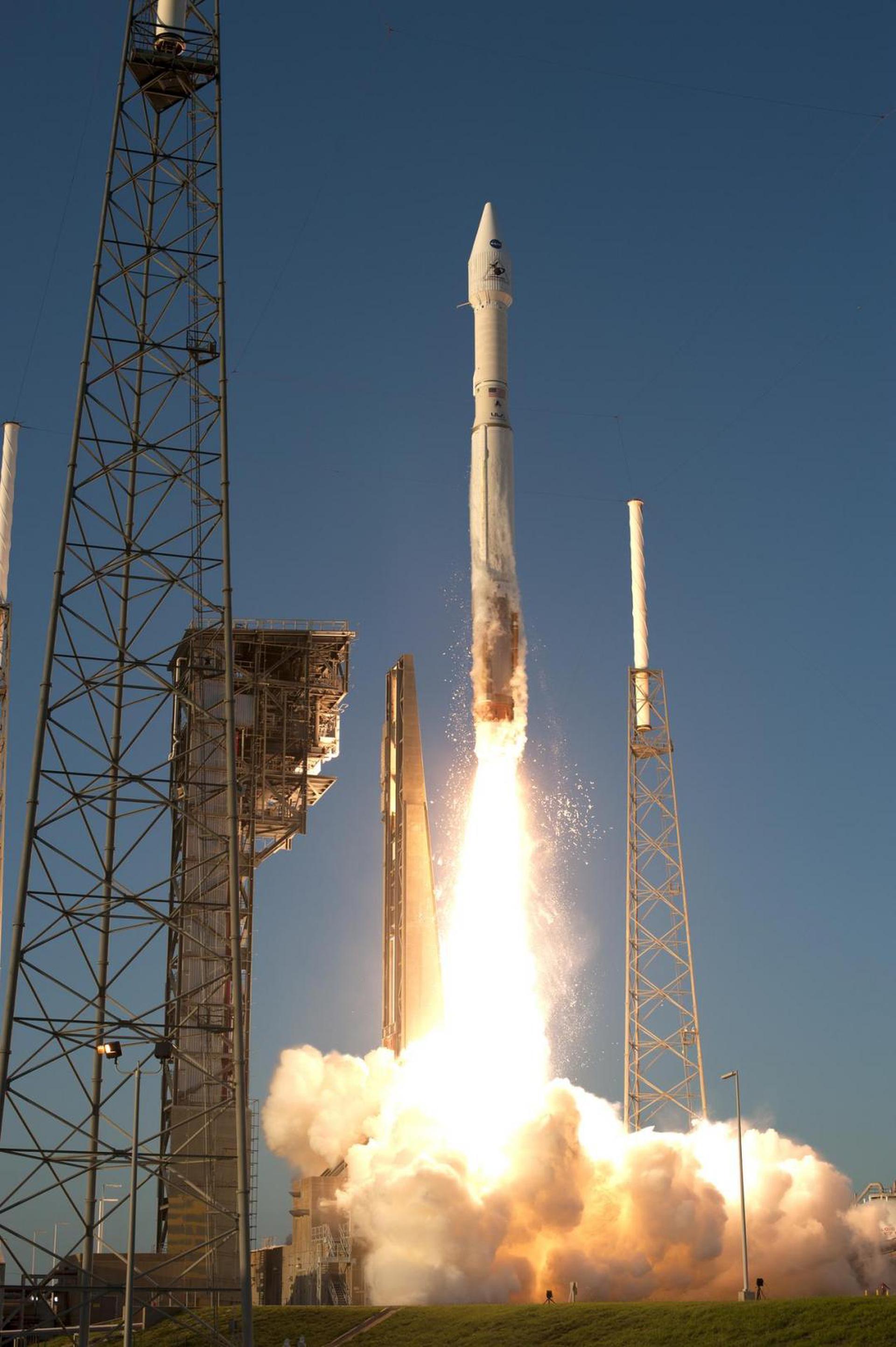
United Launch Alliance • Atlas V 411 • Space Launch Complex 41 (FL)
Top answer
Solar Orbiter is a joint ESA/NASA mission dedicated to solar and heliospheric physics. It will be used to examine how the Sun creates and controls the heliosphere, the vast bubble of charged particles blown by the solar wind into the interstellar medium. The spacecraft will combine in situ and remote sensing observations to gain new information about the solar wind, the heliospheric magnetic field, solar energetic...
Last refreshed: Jun 14, 2023, 1:42 PM EDT. T-Minus Zero keeps this as the canonical launch record and reconciles schedule, mission, payload, media, and provider signals when those records are available.
Stream links and embedded coverage.
Premium keeps the launch-by-launch change log visible so you can review slips, window edits, and status changes without waiting for an error-driven upgrade prompt.
Free-to-share photography matched to this launch. Tap a photo to view it at full resolution.
Enhanced forecast insights (select launches).
Premium adds the higher-signal weather shell for select Eastern Range launches, including the extra launch criteria and fast-read risk rows.
Solar Orbiter is a joint ESA/NASA mission dedicated to solar and heliospheric physics. It will be used to examine how the Sun creates and controls the heliosphere, the vast bubble of charged particles blown by the solar wind into the interstellar medium. The spacecraft will combine in situ and remote sensing observations to gain new information about the solar wind, the heliospheric magnetic field, solar energetic particles, transient interplanetary disturbances and the Sun's magnetic field. Instruments include: * Solar Wind Analyser (SWA) * Energetic Particle Detector (EPD) * Magnetometer (MAG) * Radio and Plasma Wave analyser (RPW) * Polarimetric and Helioseismic Imager (PHI) * Extreme Ultraviolet Imager (EUI) * Spectral Imaging of the Coronal Environment (SPICE) * Spectrometer Telescope for Imaging X-rays (STIX) * Coronagraph (Metis) While mission is not intended to get as close to the Sun as Parker Solar Probe, it's designed to coordinate observations and has different set of instruments. Main mission starts after one and only Earth flyby in November 2021, and lasts until Dec 2026 when it enters extended phase. During the mission, Solar Orbiter will get through numerous Venus gravity assists, and its trajectory will be highly inclined allowing direct observations of Sun's poles.
Alternate mission URLs consolidate to this canonical launch record so exact mission timing, status, media, and source context stay on one page.
Use these internal paths to move from this exact launch record into the provider, vehicle, launch-site, schedule, and mission-family pages that own broader context.
This launch currently has no dedicated mission-family hub, so provider, vehicle, site, and canonical record links are the primary internal paths.
Key structured fields for this launch record are grouped here so the page answers mission, payload, orbit, provider, source, and timing questions before the deeper tracking and media sections.
This record is preserved as historical launch context. The page emphasizes what was launched, the vehicle and pad involved, published outcome/status fields, linked programs, and source records instead of treating the mission like an upcoming countdown.
Open the launch pad in Google Maps satellite mode using the pad coordinates.
Solar Orbiter is a joint ESA/NASA mission dedicated to solar and heliospheric physics. It will be used to examine how the Sun creates and controls the heliosphere, the vast bubble of charged particles blown by the solar wind into the interstellar medium. The spacecraft will combine in situ and remote sensing observations to gain new information about the solar wind, the heliospheric magnetic field, solar energetic particles, transient interplanetary disturbances and the Sun's magnetic field. Instruments include: * Solar Wind Analyser (SWA) * Energetic Particle Detector (EPD) * Magnetometer (MAG) * Radio and Plasma Wave analyser (RPW) * Polarimetric and Helioseismic Imager (PHI) * Extreme Ultraviolet Imager (EUI) * Spectral Imaging of the Coronal Environment (SPICE) * Spectrometer Telescope for Imaging X-rays (STIX) * Coronagraph (Metis) While mission is not intended to get as close to the Sun as Parker Solar Probe, it's designed to coordinate observations and has different set of instruments. Main mission starts after one and only Earth flyby in November 2021, and lasts until Dec 2026 when it enters extended phase. During the mission, Solar Orbiter will get through numerous Venus gravity assists, and its trajectory will be highly inclined allowing direct observations of Sun's poles.
Atlas V with 4m fairing, 1 SRB, 1 Centaur upper stage engine.
United Launch Alliance (ULA) is a joint venture of Lockheed Martin Space Systems and Boeing Defense, Space & Security. ULA was formed in December 2006 by combining the teams at these companies which provide spacecraft launch services to the government of the United States. ULA launches from both coasts of the US. They launch their Atlas V vehicle from LC-41 in Cape Canaveral and LC-3E at Vandeberg. Their Delta IV launches from LC-37 at Cape Canaveral and LC-6 at Vandenberg.
414bdcda40b860f4d8f490fad677563089749be3594ac292d1ebafc83b77d2caLinked via Spaceflight News API (SNAPI).
 Article
Paris, France (SPX) Jan 26, 2026 Just as avalanches on snowy mountains begin with the motion of a small amount of snow, Solar Orbiter has revealed that...
 Article
Just as avalanches on snowy mountains start with the movement of a small quantity of snow, the ESA-led Solar Orbiter spacecraft has discovered that a solar f...
 Article
Tokyo, Japan (SPX) Jan 14, 2026 At times the sun ejects massive clouds of energetic material into space, and these events can disturb satellites, threat...
 Article
Zurich, Switzerland (SPX) Jan 06, 2026 The sun rotates about once every 28 days, so active regions on its surface are usually visible from Earth for onl...
 Article
The Sun is always mesmerising to watch, but Solar Orbiter captured a special treat on camera: a dark ‘prominence’ sticking out from the side of the Sun.
 Article
The European Space Agency-led Solar Orbiter mission has split the flood of energetic particles flung out into space from the Sun into two groups, tracing eac...
Provider, rocket, pad, and booster history tied to this launch.