
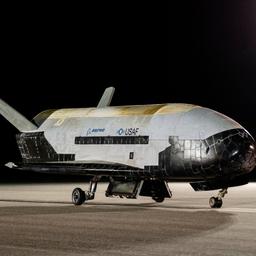
Spacecraft stage
X-37B 2
Spaceplane
Second X-37B. First flight on March 5, 2011.
Successful landing • @ Shuttle Landing Facility
TMinusZero
Loading
Preparing the latest launch data.
Launch Detail
Loading launch detail
Pulling launch timing, vehicle context, weather signals, and mission evidence.
Launch detail
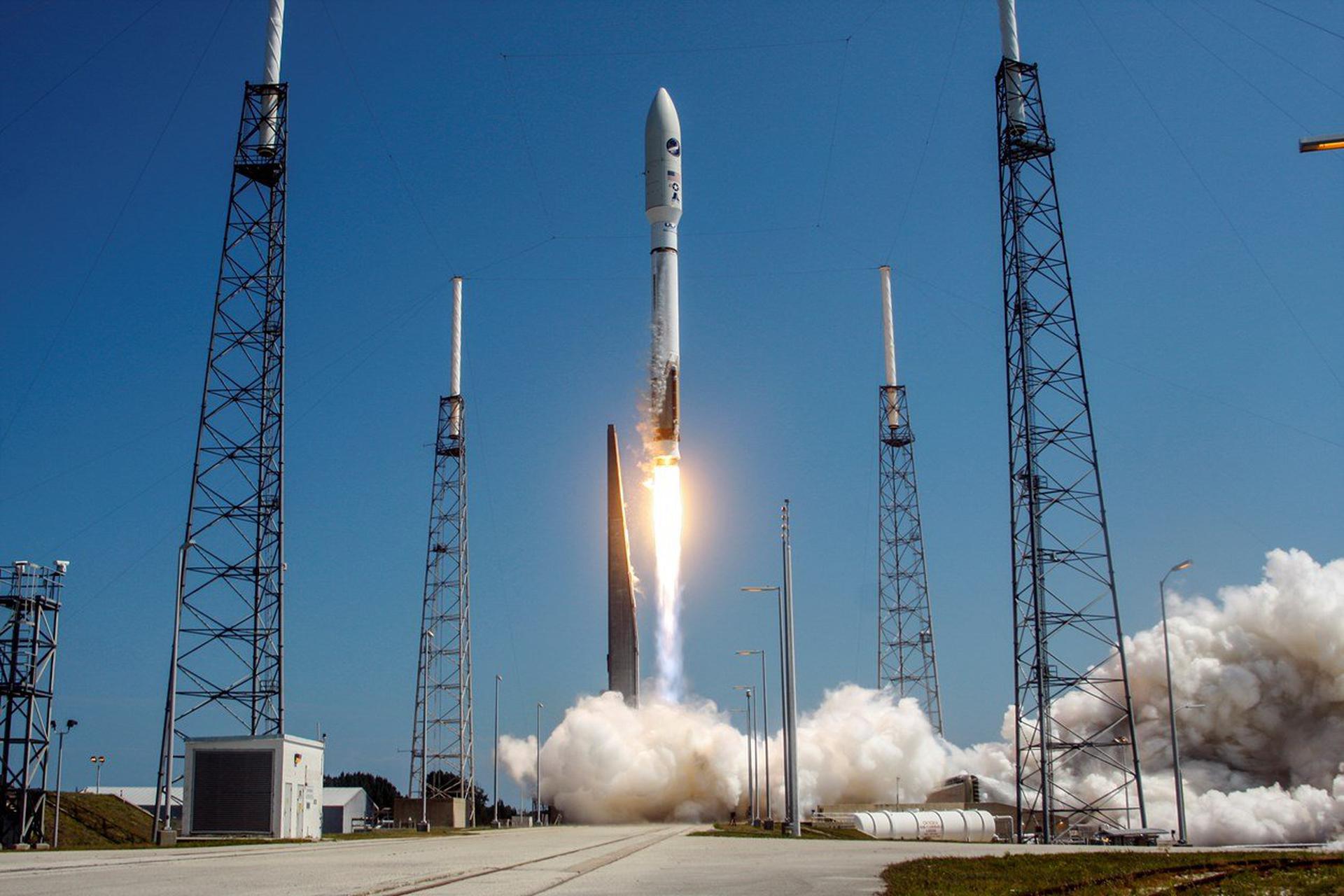
United Launch Alliance • Atlas V 501 • Space Launch Complex 41 (FL)

United Launch Alliance • Atlas V 501 • SLC-41
Top answer
It is the second flight of the second Boeing X-37B vehicle and the fourth flight of the program. United States Air Force Orbital Test Vehicle is an unmanned 5000 kg, 8.8 m-long reusable mini-spaceplane capable of autonomous re-entry and landing. The OTV-4 mission was to test Aerojet Rocketdyne's XR-5A Hall-effect thruster and conduct a NASA investigation for testing various materials in space. The mission conclude...
Last refreshed: Jun 14, 2023, 1:42 PM EDT. T-Minus Zero keeps this as the canonical launch record and reconciles schedule, mission, payload, media, and provider signals when those records are available.
Stream links and embedded coverage.
Premium keeps the launch-by-launch change log visible so you can review slips, window edits, and status changes without waiting for an error-driven upgrade prompt.
Free-to-share photography matched to this launch. Tap a photo to view it at full resolution.
Enhanced forecast insights (select launches).
Premium adds the higher-signal weather shell for select Eastern Range launches, including the extra launch criteria and fast-read risk rows.
Launch-stage and landing context surfaced from LL2 when it exists.
Second X-37B. First flight on March 5, 2011.
The X-37B spaceplane successfully landed after this flight.
It is the second flight of the second Boeing X-37B vehicle and the fourth flight of the program. United States Air Force Orbital Test Vehicle is an unmanned 5000 kg, 8.8 m-long reusable mini-spaceplane capable of autonomous re-entry and landing. The OTV-4 mission was to test Aerojet Rocketdyne's XR-5A Hall-effect thruster and conduct a NASA investigation for testing various materials in space. The mission concluded after 717 days in orbit, marking the first time X-37B landed on the Shuttle Landing Facility at the Kennedy Space Center.
Alternate mission URLs consolidate to this canonical launch record so exact mission timing, status, media, and source context stay on one page.
Use these internal paths to move from this exact launch record into the provider, vehicle, launch-site, schedule, and mission-family pages that own broader context.
This launch currently has no dedicated mission-family hub, so provider, vehicle, site, and canonical record links are the primary internal paths.
Key structured fields for this launch record are grouped here so the page answers mission, payload, orbit, provider, source, and timing questions before the deeper tracking and media sections.
This record is preserved as historical launch context. The page emphasizes what was launched, the vehicle and pad involved, published outcome/status fields, linked programs, and source records instead of treating the mission like an upcoming countdown.
Open the launch pad in Google Maps satellite mode using the pad coordinates.
It is the second flight of the second Boeing X-37B vehicle and the fourth flight of the program. United States Air Force Orbital Test Vehicle is an unmanned 5000 kg, 8.8 m-long reusable mini-spaceplane capable of autonomous re-entry and landing. The OTV-4 mission was to test Aerojet Rocketdyne's XR-5A Hall-effect thruster and conduct a NASA investigation for testing various materials in space. The mission concluded after 717 days in orbit, marking the first time X-37B landed on the Shuttle Landing Facility at the Kennedy Space Center.
Atlas V with 5m Fairing, 0 SRB, 1 Centaur upper stage engine.
United Launch Alliance (ULA) is a joint venture of Lockheed Martin Space Systems and Boeing Defense, Space & Security. ULA was formed in December 2006 by combining the teams at these companies which provide spacecraft launch services to the government of the United States. ULA launches from both coasts of the US. They launch their Atlas V vehicle from LC-41 in Cape Canaveral and LC-3E at Vandeberg. Their Delta IV launches from LC-37 at Cape Canaveral and LC-6 at Vandenberg.
d6a4172c233bc23b88f5c470156858907318680940fbbc94e12c97ae3dfdfb36Provider, rocket, pad, and booster history tied to this launch.