

Loading photos...
Loading mission resources...
Watch
Live coverage
Stream links and embedded coverage.
Loading related events...
Loading vehicle timeline...
Loading related news...
TMinusZero
Loading
Preparing the latest launch data.
Launch Detail
Loading launch detail
Pulling launch timing, vehicle context, weather signals, and mission evidence.
Launch detail
United Launch Alliance • Atlas V 541 • Space Launch Complex 41 (FL)
Top answer
The Mars Science Laboratory (MSL) mission, featuring the renowned Curiosity rover, was designed to assess the planet's past and present habitability. Equipped with an array of advanced scientific instruments, including a drill and a sample analysis unit, Curiosity explored the Gale Crater, a site believed to contain evidence of ancient Martian environments. It delivered groundbreaking discoveries, including the de...
Last refreshed: Nov 11, 2023, 7:52 AM EST. T-Minus Zero keeps this as the canonical launch record and reconciles schedule, mission, payload, media, and provider signals when those records are available.
Stream links and embedded coverage.
Premium keeps the launch-by-launch change log visible so you can review slips, window edits, and status changes without waiting for an error-driven upgrade prompt.
Free-to-share photography matched to this launch. Tap a photo to view it at full resolution.
Enhanced forecast insights (select launches).
Premium adds the higher-signal weather shell for select Eastern Range launches, including the extra launch criteria and fast-read risk rows.
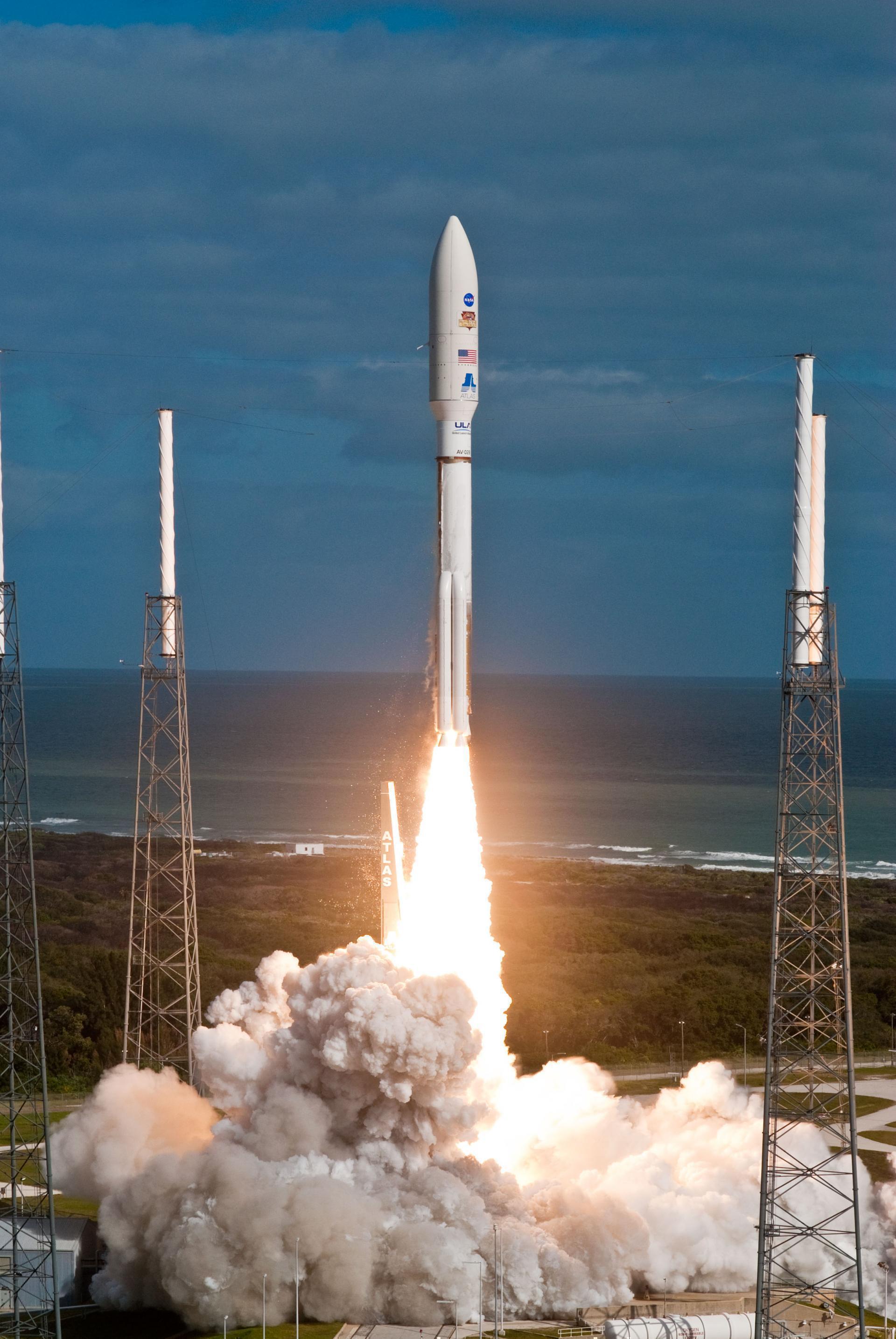
The Mars Science Laboratory (MSL) mission, featuring the renowned Curiosity rover, was designed to assess the planet's past and present habitability. Equipped with an array of advanced scientific instruments, including a drill and a sample analysis unit, Curiosity explored the Gale Crater, a site believed to contain evidence of ancient Martian environments. It delivered groundbreaking discoveries, including the detection of organic molecules and the confirmation of an ancient, potentially habitable lake bed.
Alternate mission URLs consolidate to this canonical launch record so exact mission timing, status, media, and source context stay on one page.
Use these internal paths to move from this exact launch record into the provider, vehicle, launch-site, schedule, and mission-family pages that own broader context.
This launch currently has no dedicated mission-family hub, so provider, vehicle, site, and canonical record links are the primary internal paths.
Key structured fields for this launch record are grouped here so the page answers mission, payload, orbit, provider, source, and timing questions before the deeper tracking and media sections.
This record is preserved as historical launch context. The page emphasizes what was launched, the vehicle and pad involved, published outcome/status fields, linked programs, and source records instead of treating the mission like an upcoming countdown.
Open the launch pad in Google Maps satellite mode using the pad coordinates.
The Mars Science Laboratory (MSL) mission, featuring the renowned Curiosity rover, was designed to assess the planet's past and present habitability. Equipped with an array of advanced scientific instruments, including a drill and a sample analysis unit, Curiosity explored the Gale Crater, a site believed to contain evidence of ancient Martian environments. It delivered groundbreaking discoveries, including the detection of organic molecules and the confirmation of an ancient, potentially habitable lake bed.
Atlas V with 5m Fairing, 4 SRB, 1 Centaur upper stage engine.
United Launch Alliance (ULA) is a joint venture of Lockheed Martin Space Systems and Boeing Defense, Space & Security. ULA was formed in December 2006 by combining the teams at these companies which provide spacecraft launch services to the government of the United States. ULA launches from both coasts of the US. They launch their Atlas V vehicle from LC-41 in Cape Canaveral and LC-3E at Vandeberg. Their Delta IV launches from LC-37 at Cape Canaveral and LC-6 at Vandenberg.
0e2d15fe5f3e7e0b6fb03c6889acbfc8aaaad8c7cf5972fa61b06818226dcaffLinked via Spaceflight News API (SNAPI).
 Article
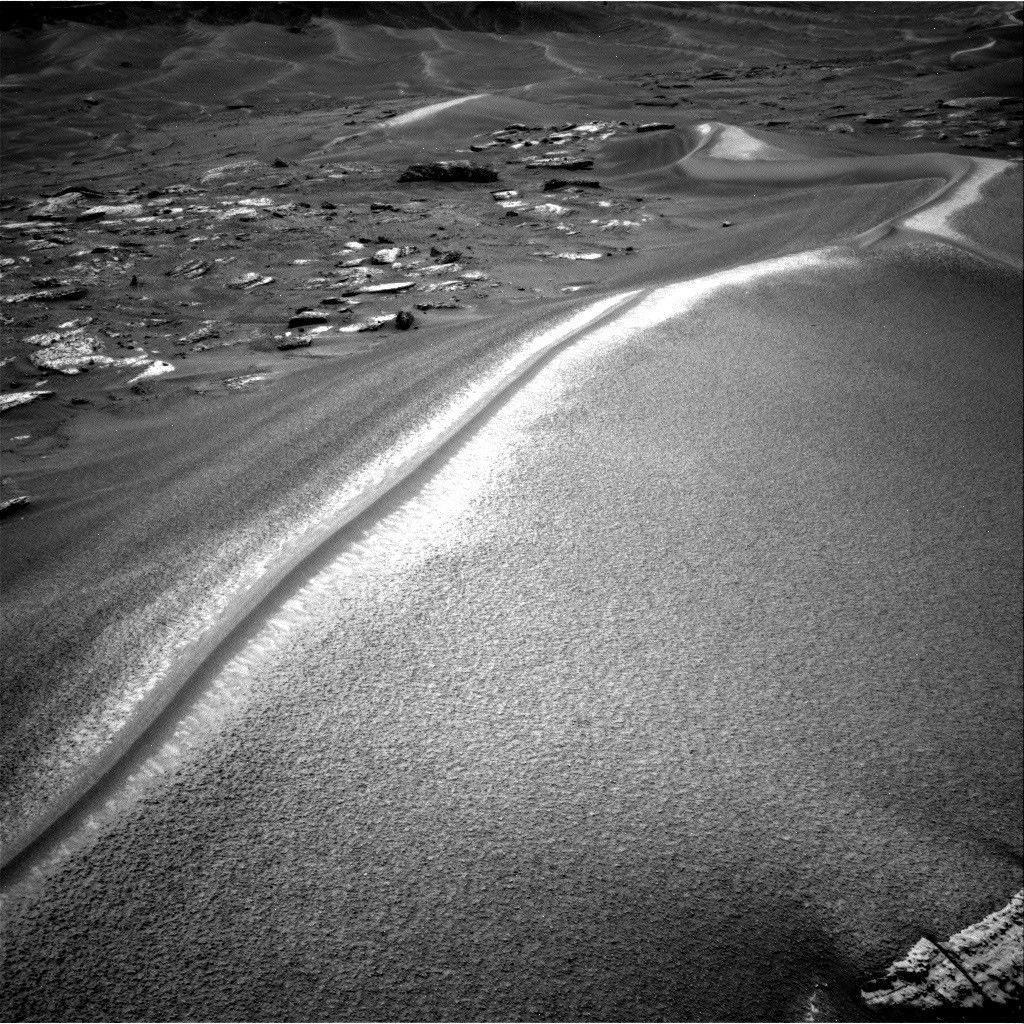
Written by William Farrand, Senior Research Scientist, Space Science Institute Earth planning date: Friday, Aug. 28, 2026 The span of sols spanned by this bl...
 Article
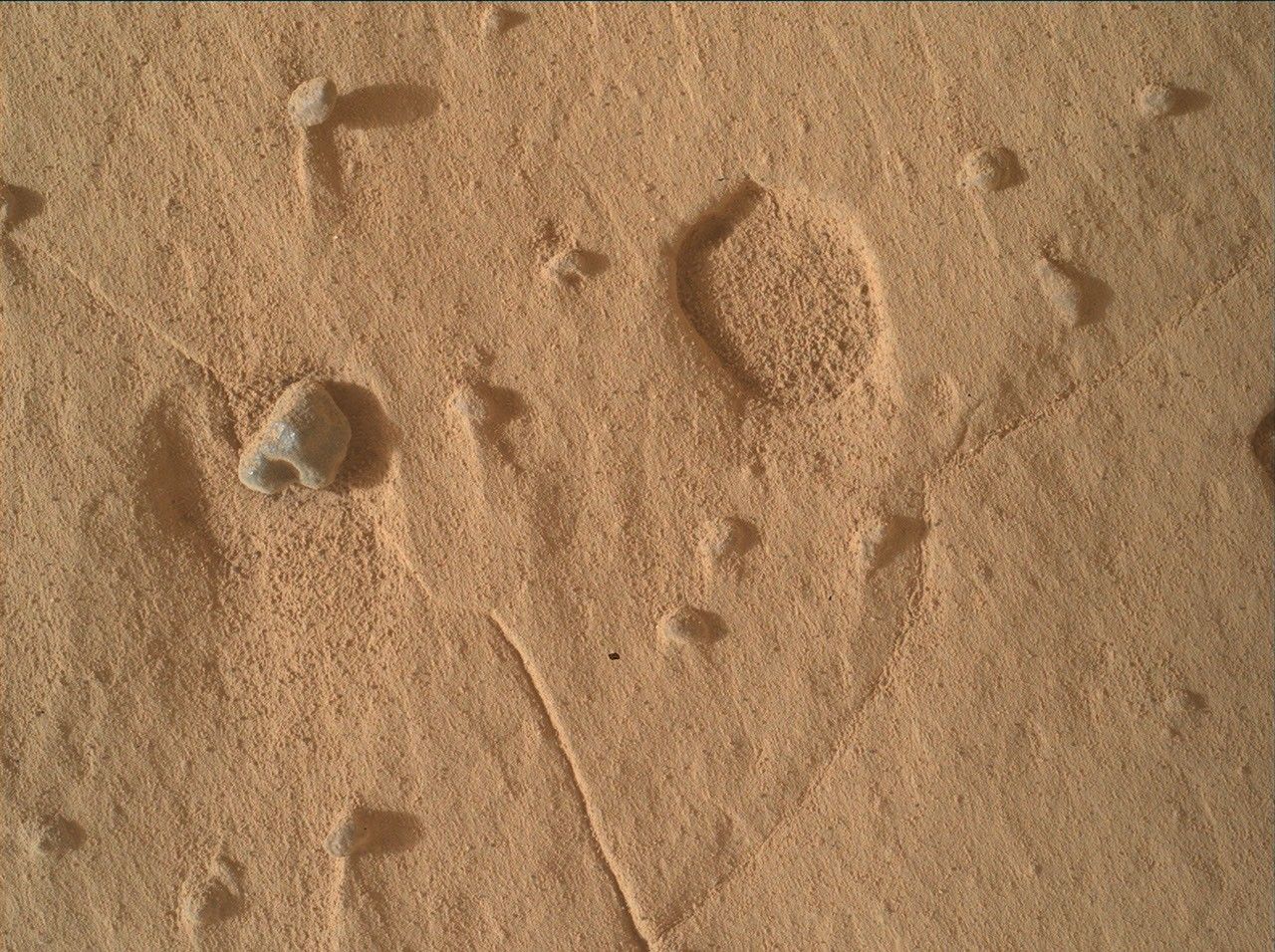
Written by Michelle Minitti, MAHLI Deputy Principal Investigator Earth planning date: Friday, Aug. 21, 2026 After Curiosity’s 14 years on the surface, Mars c...
 Article
By Allison Dries-Padilla, Missions Operations Specialist at Malin Space Science Systems Earth planning date: Friday, Aug. 14, 2026 This week of Curiosity Mar...
 Article
By Susanne P. Schwenzer, Professor of Planetary Mineralogy at The Open University, UK Earth planning date: Friday, Aug. 7, 2026 This week was very special fo...
 Article
Written by Lucy Lim, Planetary Scientist at NASA’s Goddard Space Flight Center Earth planning date: Friday, July 31, 2026 As mentioned in the previous blog,...
 Article
Written by Abigail Fraeman, Deputy Project Scientist, Jet Propulsion Laboratory, California Institute of Technology Earth planning date: Friday, July 24, 202...
Provider, rocket, pad, and booster history tied to this launch.