Loading launch detail
Launch Detail
Loading launch detail
Pulling launch timing, vehicle context, weather signals, and mission evidence.
Launch Detail
Pulling launch timing, vehicle context, weather signals, and mission evidence.
Launch detail
China Aerospace Science and Technology Corporation • Long March 2C/SMA • Launch Area 94 (SLS-2 / 603) (NA)
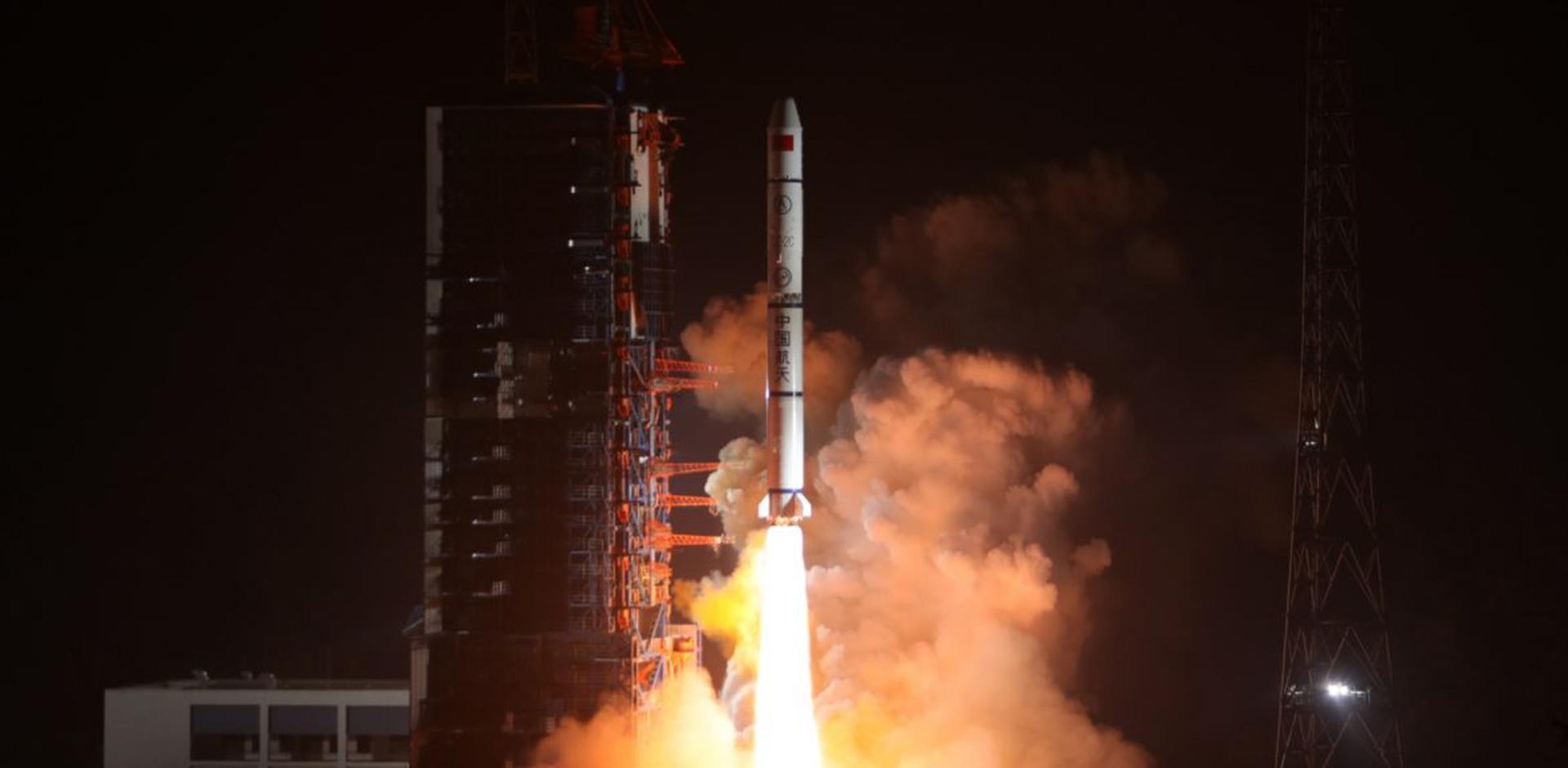
China Aerospace Science and Technology Corporation • Long March 2C/SMA • SLS-2
The Pakistan Remote Sensing Satellite (PRSS) is a dual purpose Earh observation and optical satellite. It is to operate in sun-synchronous orbit with a planned lifetime of 5 years. PakTes-1A is a remote sensing satellite built by Pakistan's space agency with assistance from Space Advisory Company of South Africa.
Stream links and embedded coverage.
Open the launch pad in Google Maps satellite mode using the pad coordinates.
The Pakistan Remote Sensing Satellite (PRSS) is a dual purpose Earh observation and optical satellite. It is to operate in sun-synchronous orbit with a planned lifetime of 5 years. PakTes-1A is a remote sensing satellite built by Pakistan's space agency with assistance from Space Advisory Company of South Africa.
The Long March 2C is a family of expendable launch vehicles made and operated by China. It is a two stage launch vehicle with storable propellants, consisting of Nitrogen Tetroxide and Unsymmetrical Dimethylhydrazine.
The China Aerospace Science and Technology Corporation (CASC) is the main contractor for the Chinese space program. It is state-owned and has a number of subordinate entities which design, develop and manufacture a range of spacecraft, launch vehicles, strategic and tactical missile systems, and ground equipment. It was officially established in July 1999 as part of a Chinese government reform drive, having previously been one part of the former China Aerospace Corporation. Various incarnations of the program date back to 1956.
Provider, rocket, pad, and booster history tied to this launch.