Loading launch detail
Launch Detail
Loading launch detail
Pulling launch timing, vehicle context, weather signals, and mission evidence.
Launch Detail
Pulling launch timing, vehicle context, weather signals, and mission evidence.
Launch detail
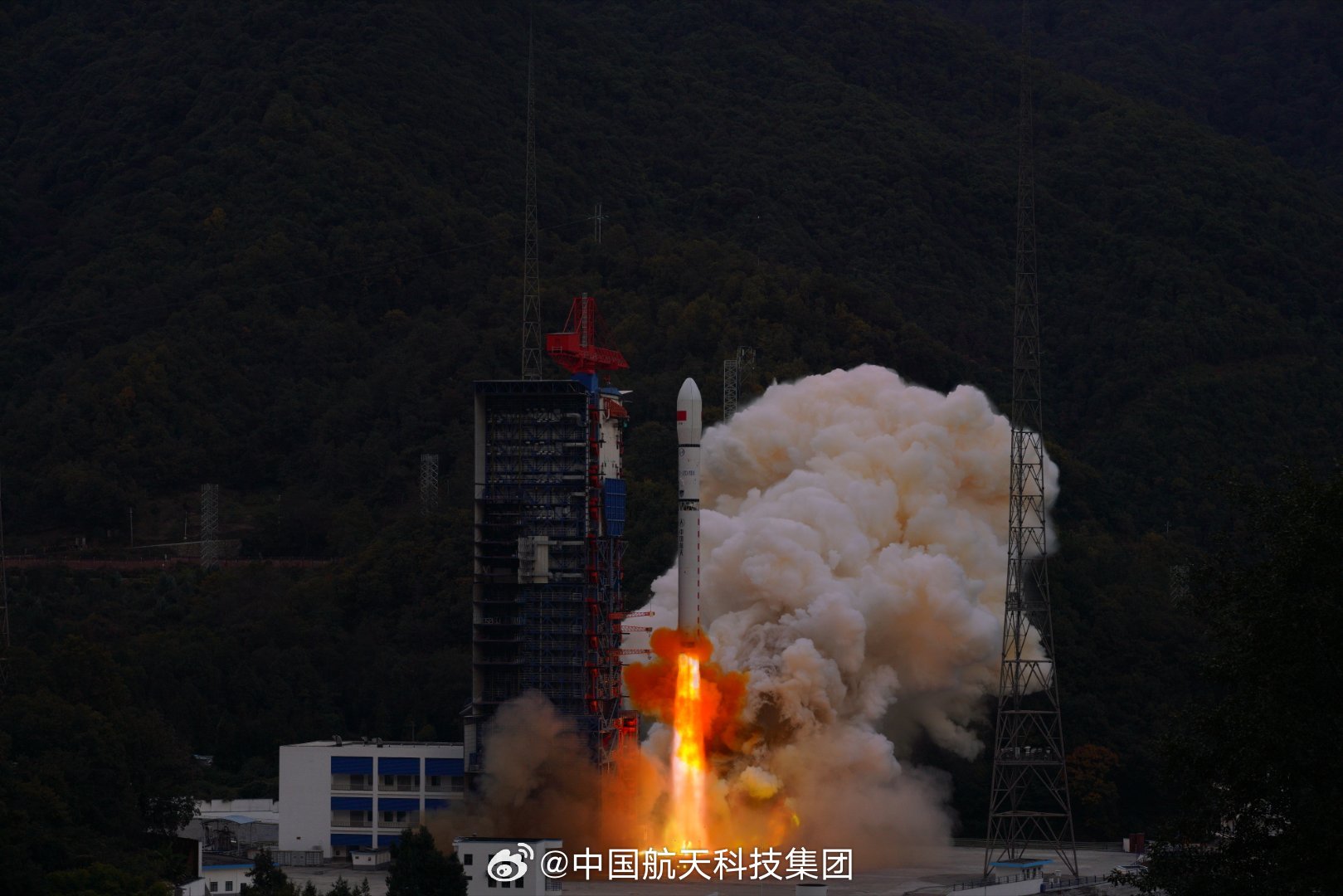
China Aerospace Science and Technology Corporation • Long March 2D/YZ-3 • Launch Area 94 (SLS-2 / 603) (NA)

China Aerospace Science and Technology Corporation • Long March 2D/YZ-3 • SLS-2
Hongyan-1 is the first demonstration satellite for Hongyan, which is a planned constellation consisting of 320 satellites in low Earth orbit. Yunhai-2 is a constellation of Chinese military meteorological satellites. Reportedly the satellites use Global Navigation Satellite System (GNSS) Radio Occultation (GNSS-RO) to collect atmospheric data for weather prediction and for ionosphere, climate, and gravity research.
Stream links and embedded coverage.
Open the launch pad in Google Maps satellite mode using the pad coordinates.
Hongyan-1 is the first demonstration satellite for Hongyan, which is a planned constellation consisting of 320 satellites in low Earth orbit. Yunhai-2 is a constellation of Chinese military meteorological satellites. Reportedly the satellites use Global Navigation Satellite System (GNSS) Radio Occultation (GNSS-RO) to collect atmospheric data for weather prediction and for ionosphere, climate, and gravity research.
The Long March 2D, also known as the Chang Zheng 2D, CZ-2D and LM-2D, is a Chinese orbital carrier rocket. It is a 2-stage carrier rocket mainly used for launching LEO and SSO satellites. The YZ-3 variant includes a YZ-3 upper stage able to push satellites into higher orbits.
The China Aerospace Science and Technology Corporation (CASC) is the main contractor for the Chinese space program. It is state-owned and has a number of subordinate entities which design, develop and manufacture a range of spacecraft, launch vehicles, strategic and tactical missile systems, and ground equipment. It was officially established in July 1999 as part of a Chinese government reform drive, having previously been one part of the former China Aerospace Corporation. Various incarnations of the program date back to 1956.
Provider, rocket, pad, and booster history tied to this launch.