
Loading launch detail
Launch Detail
Loading launch detail
Pulling launch timing, vehicle context, weather signals, and mission evidence.
Launch Detail
Pulling launch timing, vehicle context, weather signals, and mission evidence.
Launch detail
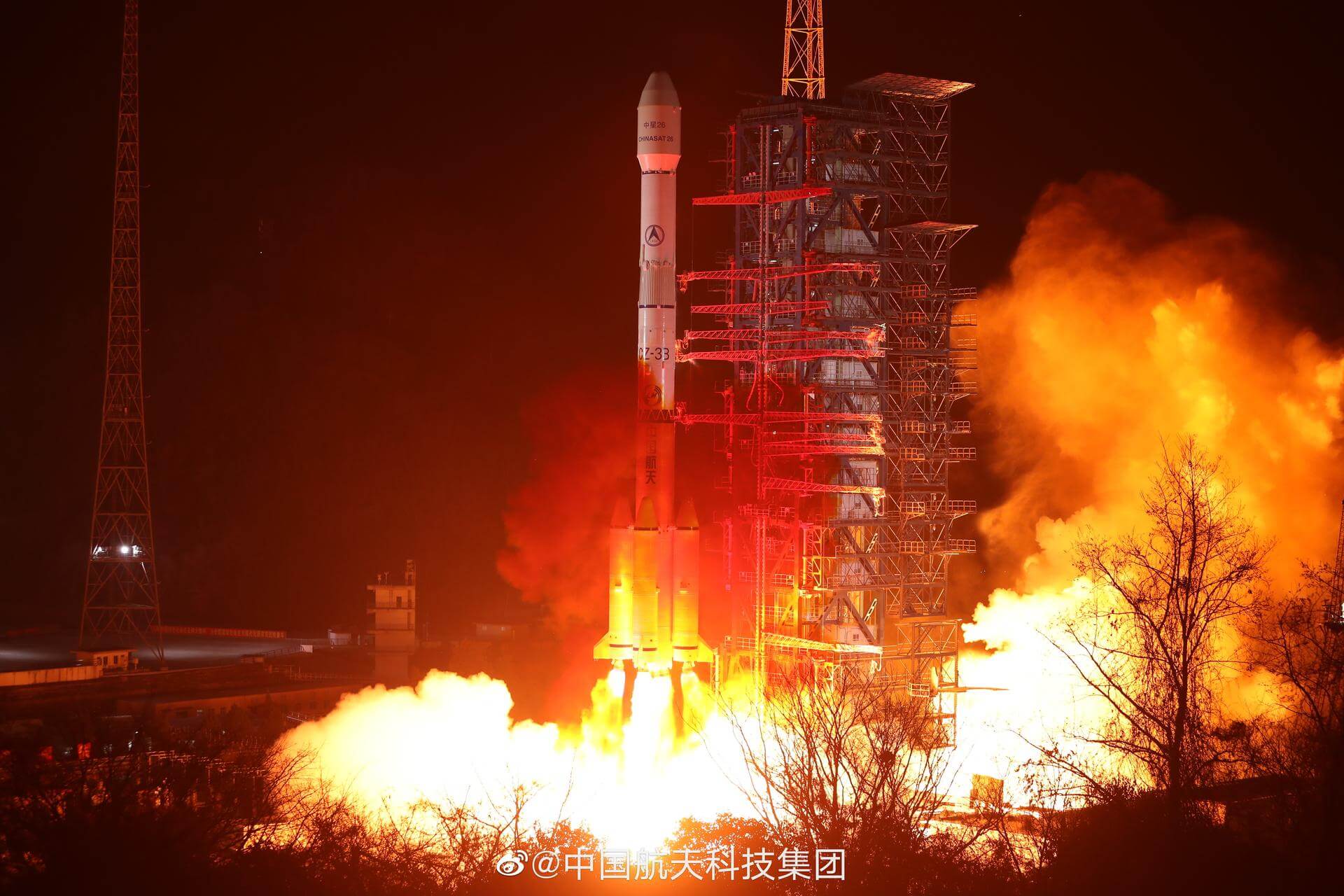
China Aerospace Science and Technology Corporation • Long March 3B/E • Launch Complex 2 (LC-2) (NA)
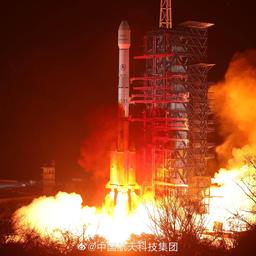
China Aerospace Science and Technology Corporation • Long March 3B/E • LC-2
In geostationary orbit Gaofen 4 will monitor the Earth in the visible light and infrared regions, at a resolution of 50m and 400m respectively for near time civilian applications. The spacecraft is the 4th Gaofen series spacecraft to be launched in China’s High-Definition Earth Observation Satellite (HDEOS) program. The satellite weighs 4600kg, is powered by 2 solar arrays and has an expected lifetime of 8 years.
Stream links and embedded coverage.
Open the launch pad in Google Maps satellite mode using the pad coordinates.
In geostationary orbit Gaofen 4 will monitor the Earth in the visible light and infrared regions, at a resolution of 50m and 400m respectively for near time civilian applications. The spacecraft is the 4th Gaofen series spacecraft to be launched in China’s High-Definition Earth Observation Satellite (HDEOS) program. The satellite weighs 4600kg, is powered by 2 solar arrays and has an expected lifetime of 8 years.
The Long March 3B / E (G2) (CZ-3B / E) is one of the most successful medium-range launchers and the strongest variant of the CZ-3 series. It was specially developed for the transport of heavy communications satellites into a geostationary transfer orbit. The additional designation "E" stands for a higher payload fairing, stretched boosters and extended fuel tanks at the first stage, over the CZ-3B.
The China Aerospace Science and Technology Corporation (CASC) is the main contractor for the Chinese space program. It is state-owned and has a number of subordinate entities which design, develop and manufacture a range of spacecraft, launch vehicles, strategic and tactical missile systems, and ground equipment. It was officially established in July 1999 as part of a Chinese government reform drive, having previously been one part of the former China Aerospace Corporation. Various incarnations of the program date back to 1956.
Provider, rocket, pad, and booster history tied to this launch.