

Recovery
Vertical Landing • Chang’e 5 landing site
Successful landing • LL2
Type: Vertical Landing
Location: Chang’e 5 landing site • Mons Rümker, Moon
Coords: 43.058, -51.916
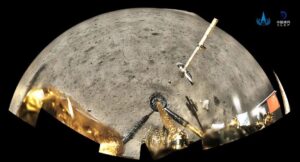
The Lander/Ascender landed on the Moon on 1 December 2020, at 15:11 UTC.
Launch Detail
Pulling launch timing, vehicle context, weather signals, and mission evidence.
Launch detail
China Aerospace Science and Technology Corporation • Long March 5 • 101 (NA)
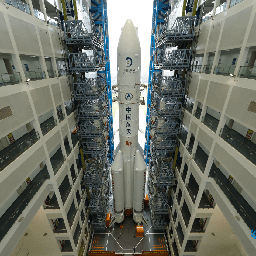
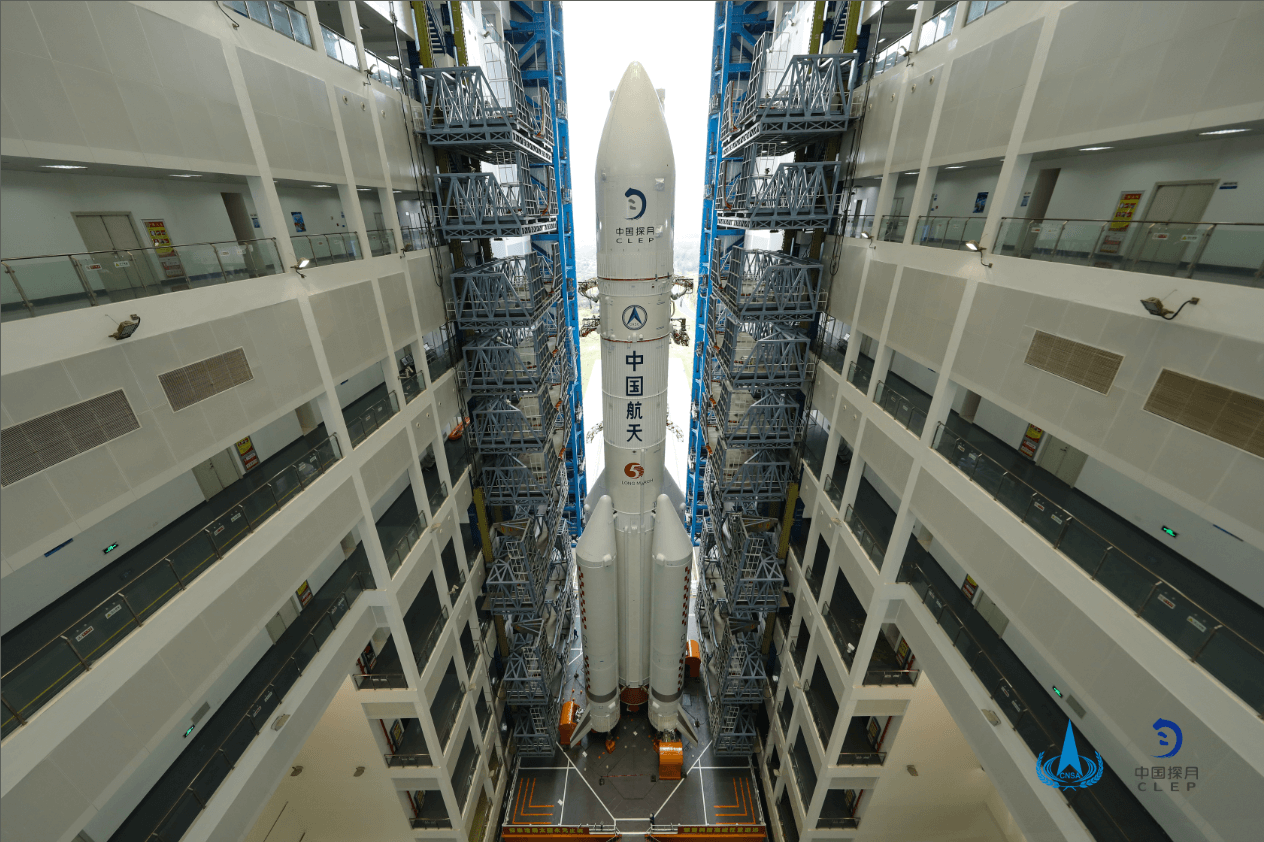
China Aerospace Science and Technology Corporation • Long March 5 • 101
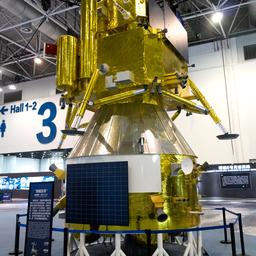
Chang'e 5 is China's robotic lunar sample return mission, which is set to bring back at least 2 kg of lunar soils and rock samples. The probe will perform a soft landing on the Moon, then rendezvous and dock with the return module in lunar orbit and fly back to Earth.
Stream links and embedded coverage.
Open the launch pad in Google Maps satellite mode using the pad coordinates.
Chang'e 5 is China's robotic lunar sample return mission, which is set to bring back at least 2 kg of lunar soils and rock samples. The probe will perform a soft landing on the Moon, then rendezvous and dock with the return module in lunar orbit and fly back to Earth.
Long March 5 is a Chinese heavy lift launch system developed by China Academy of Launch Vehicle Technology (CALT). CZ-5 is the first Chinese vehicle designed from the ground up to focus on non-hypergolic liquid rocket propellants. Currently, two CZ-5 vehicle configurations are planned, with maximum payload capacities of ~25,000 kilograms (55,000 lb) to LEO and ~14,000 kilograms (31,000 lb) to GTO. The Long March 5 roughly matches the capabilities of American EELV heavy-class vehicles such as the Delta IV Heavy.
The China Aerospace Science and Technology Corporation (CASC) is the main contractor for the Chinese space program. It is state-owned and has a number of subordinate entities which design, develop and manufacture a range of spacecraft, launch vehicles, strategic and tactical missile systems, and ground equipment. It was officially established in July 1999 as part of a Chinese government reform drive, having previously been one part of the former China Aerospace Corporation. Various incarnations of the program date back to 1956.
Provider, rocket, pad, and booster history tied to this launch.
Linked via Spaceflight News API (SNAPI).
 Article
China approved international requests, including from two U.S. universities, to borrow small portions of moon samples collected by its Chang’e-5 mission. Th...
 Article
In a surprising turn of events, NASA-funded researchers have been given the green light to apply for access to lunar samples collected by China's Chang'e-5 m...
 Article
NASA-funded researchers have been granted permission to apply for access to China's Chang'e-5 lunar samples in an exception to a prohibition on bilateral act...
 Article
A spacecraft involved in China’s 2020 Chang’e-5 lunar sample-return mission is now in a unique orbit around the Moon, more than a year after completing its p...
ArticleThe Chang’e-5 orbiter module which facilitated China’s complex lunar sample return last year is on its way to the moon following deep space tests.
 Article
The orbiter from China’s 2020 Chang'e-5 lunar sample return mission has entered orbit around Sun-Earth Lagrange point 1 as part of an extended mission.
Launch-stage and landing context surfaced from LL2 when it exists.
The Lander/Ascender landed on the Moon on 1 December 2020, at 15:11 UTC.