Loading photos...
Loading mission resources...
Watch
Live coverage
Stream links and embedded coverage.
More watch links
www.youtube.comUnofficial Webcast
[回放]长征五号遥三火箭发射成功 [Replay]LongMarch-5 Y3 Mission
TMinusZero
Loading
Preparing the latest launch data.
Launch Detail
Loading launch detail
Pulling launch timing, vehicle context, weather signals, and mission evidence.
Launch detail
China Aerospace Science and Technology Corporation • Long March 5 • 101 (CN-HI)

China Aerospace Science and Technology Corporation • Long March 5 • 101
Top answer
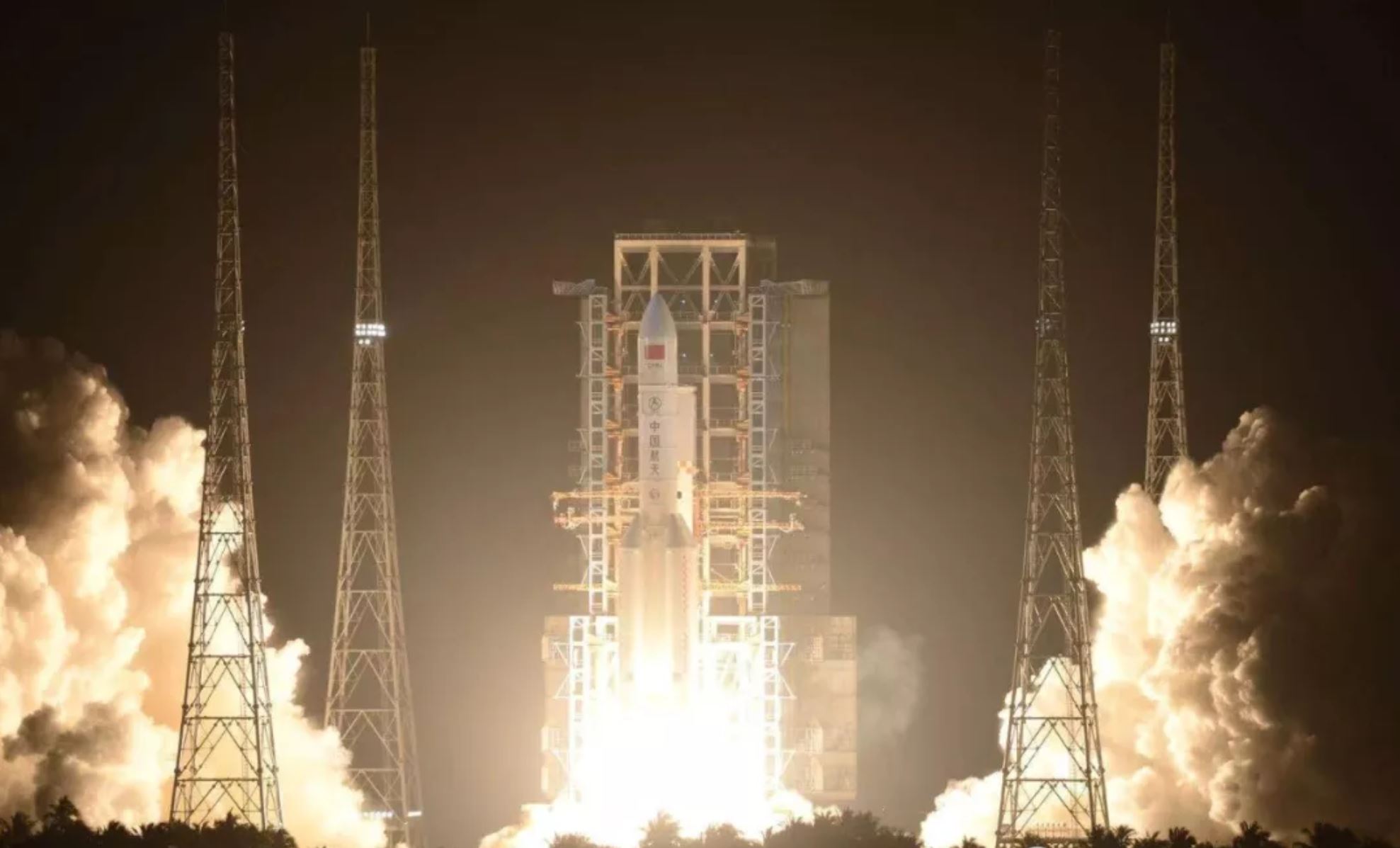
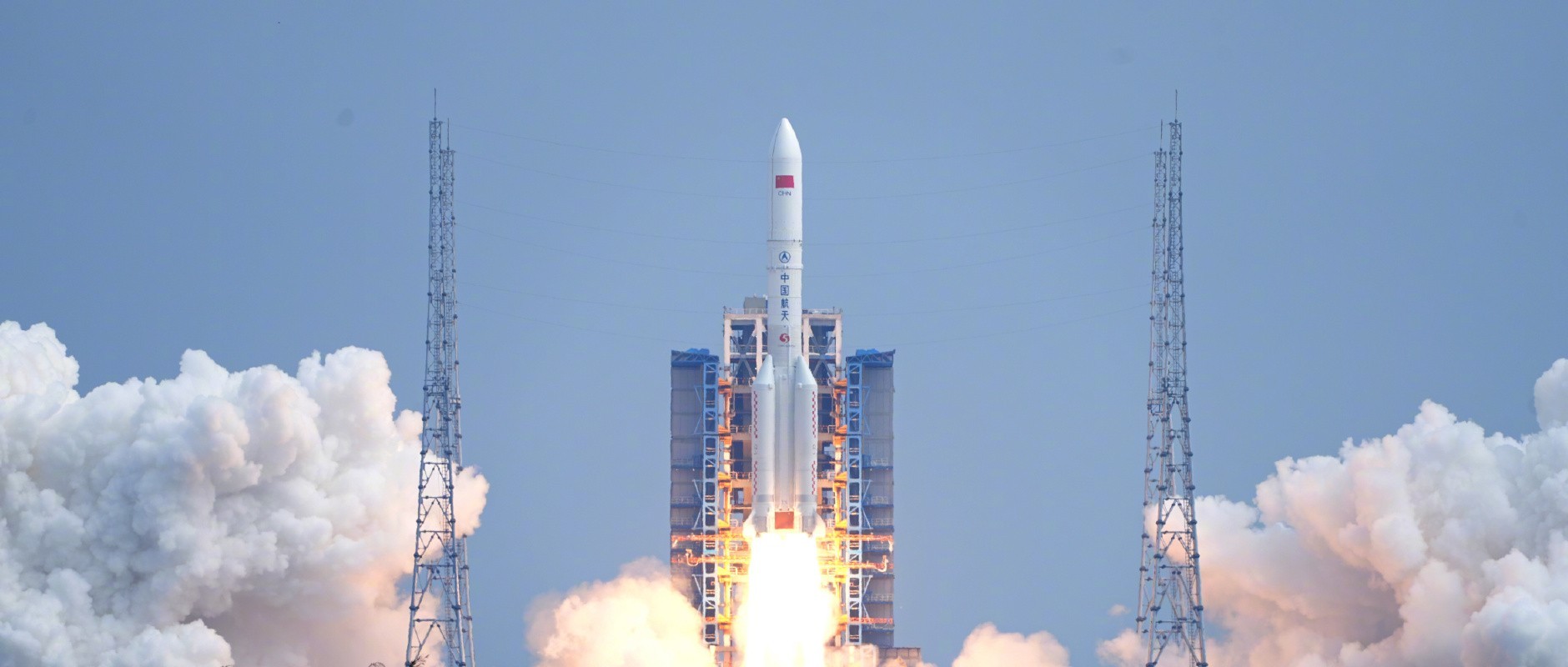
Shijian 20 is an experimental geostationary communications satellite. This is also a return-to-flight launch for Long March 5 after a July 2017 failure.
Last refreshed: Aug 03, 2024, 12:57 AM GMT+8. T-Minus Zero keeps this as the canonical launch record and reconciles schedule, mission, payload, media, and provider signals when those records are available.
Stream links and embedded coverage.
Premium keeps the launch-by-launch change log visible so you can review slips, window edits, and status changes without waiting for an error-driven upgrade prompt.
Free-to-share photography matched to this launch. Tap a photo to view it at full resolution.
Shijian 20 is an experimental geostationary communications satellite. This is also a return-to-flight launch for Long March 5 after a July 2017 failure.
Alternate mission URLs consolidate to this canonical launch record so exact mission timing, status, media, and source context stay on one page.
Use these internal paths to move from this exact launch record into the provider, vehicle, launch-site, schedule, and mission-family pages that own broader context.
This launch currently has no dedicated mission-family hub, so provider, vehicle, site, and canonical record links are the primary internal paths.
Some high-demand launch records carry specialized search intent. These profiles explain what can be verified from the published record without filling gaps that upstream sources have not published.
Payload and orbit evidence is shown from published launch, payload, mission, and source-link records so the page can answer spacecraft, customer, orbit, provider, and schedule intent.
Key structured fields for this launch record are grouped here so the page answers mission, payload, orbit, provider, source, and timing questions before the deeper tracking and media sections.
This record is preserved as historical launch context. The page emphasizes what was launched, the vehicle and pad involved, published outcome/status fields, linked programs, and source records instead of treating the mission like an upcoming countdown.
Open the launch pad in Google Maps satellite mode using the pad coordinates.
Shijian 20 is an experimental geostationary communications satellite. This is also a return-to-flight launch for Long March 5 after a July 2017 failure.
Long March 5 is a Chinese heavy lift launch system developed by China Academy of Launch Vehicle Technology (CALT). CZ-5 is the first Chinese vehicle designed from the ground up to focus on non-hypergolic liquid rocket propellants. Currently, two CZ-5 vehicle configurations are planned, with maximum payload capacities of ~25,000 kilograms (55,000 lb) to LEO and ~14,000 kilograms (31,000 lb) to GTO. The Long March 5 roughly matches the capabilities of American EELV heavy-class vehicles such as the Delta IV Heavy.
The China Aerospace Science and Technology Corporation (CASC) is the main contractor for the Chinese space program. It is state-owned and has a number of subordinate entities which design, develop and manufacture a range of spacecraft, launch vehicles, strategic and tactical missile systems, and ground equipment. It was officially established in July 1999 as part of a Chinese government reform drive, having previously been one part of the former China Aerospace Corporation. Various incarnations of the program date back to 1956.
6fd7d30a4ccb57d742a72c1e7ccaccc68f1b91c286392cb7d25048eead8806d5Linked via Spaceflight News API (SNAPI).
 Article
Provider, rocket, pad, and booster history tied to this launch.