
Loading launch detail
Launch Detail
Loading launch detail
Pulling launch timing, vehicle context, weather signals, and mission evidence.
Launch Detail
Pulling launch timing, vehicle context, weather signals, and mission evidence.
Launch detail
China Aerospace Science and Technology Corporation • Long March 8 • Commercial LC-1 (NA)
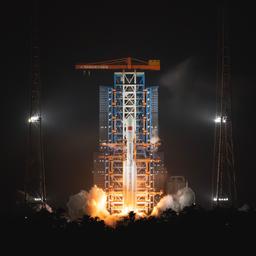
China Aerospace Science and Technology Corporation • Long March 8 • LC-1
18 Low Earth Orbit communication satellites with Ku, Q and V band payloads for the G60 constellation operated by Shanghai Spacecom Satellite Technology (SSST) with funding backed by the Shanghai local government. Initial constellation will consist of 1296 satellites by 2027 with long term plans to expand it to 12000 satellites. First launch from the Wenchang Commercial Space Launch Site's LC-1.
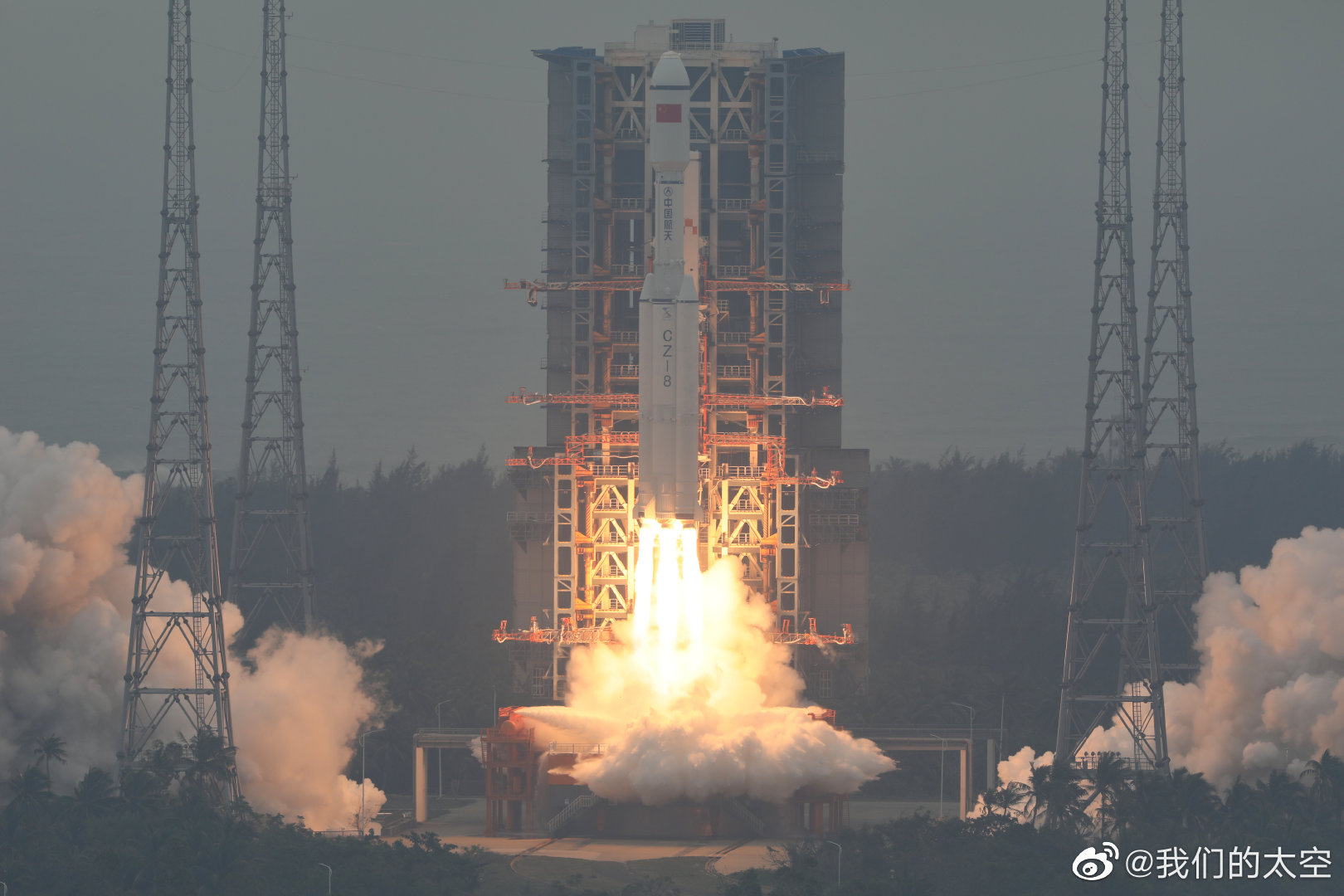
Open the launch pad in Google Maps satellite mode using the pad coordinates.
18 Low Earth Orbit communication satellites with Ku, Q and V band payloads for the G60 constellation operated by Shanghai Spacecom Satellite Technology (SSST) with funding backed by the Shanghai local government. Initial constellation will consist of 1296 satellites by 2027 with long term plans to expand it to 12000 satellites. First launch from the Wenchang Commercial Space Launch Site's LC-1.
Long March 8 (Chinese: 长征八号运载火箭) is an orbital launch vehicle developed by the China Academy of Launch Vehicle Technology to launch up to 5000 kg to a 700 km altitude Sun-synchronous orbit (SSO). The rocket is based on the Long March 7 with its first stage and 2 out of its 4 boosters, along with the existing liquid hydrogen burning 3rd stage of the Long March 3A/3B/3C and 7A as its 2nd stage. A "Core Only" version omitting the boosters is also available.
The China Aerospace Science and Technology Corporation (CASC) is the main contractor for the Chinese space program. It is state-owned and has a number of subordinate entities which design, develop and manufacture a range of spacecraft, launch vehicles, strategic and tactical missile systems, and ground equipment. It was officially established in July 1999 as part of a Chinese government reform drive, having previously been one part of the former China Aerospace Corporation. Various incarnations of the program date back to 1956.
Provider, rocket, pad, and booster history tied to this launch.
Linked via Spaceflight News API (SNAPI).
 Article
HELSINKI — A new group of 18 satellites entered orbit Tuesday for the Thousand Sails constellation with the first launch from a new commercial launch pad. A...
 Article
This week, a busy launch manifest will see SpaceX launch the Crew-10 and Starlink Group… The post Launch Roundup: SpaceX, Rocket Lab, and Firefly set to lau...
29f7db85cbde5a9f2d7205419c176f4638b81b1b94fd9319d24823c27cc0622b