
Loading photos...
Loading mission resources...
Loading related events...
Loading vehicle timeline...
Loading related news...
TMinusZero
Loading
Preparing the latest launch data.
Launch Detail
Loading launch detail
Pulling launch timing, vehicle context, weather signals, and mission evidence.
Top answer
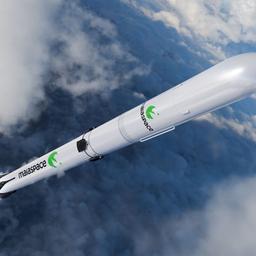
First Maia launch of OneWeb satellites.
Last refreshed: Jan 16, 2026, 5:29 AM GMT-3. T-Minus Zero keeps this as the canonical launch record and reconciles schedule, mission, payload, media, and provider signals when those records are available.
Alternate mission URLs consolidate to this canonical launch record so exact mission timing, status, media, and source context stay on one page.
Premium keeps the launch-by-launch change log visible so you can review slips, window edits, and status changes without waiting for an error-driven upgrade prompt.
Free-to-share photography matched to this launch. Tap a photo to view it at full resolution.
Linked via Spaceflight News API (SNAPI).
 Article
Eutelsat has signed an agreement with French startup MaiaSpace to launch some of its OneWeb replenishment satellites. The post Eutelsat signs OneWeb launch...
 Article
"We are fundamentally shifting our approach to securing our munitions supply chain."
 Article
French rocket builder MaiaSpace has signed an agreement with Eutelsat to perform multiple launches to support the expansion of the company’s OneWeb satellite...
First Maia launch of OneWeb satellites.
Use these internal paths to move from this exact launch record into the provider, vehicle, launch-site, schedule, and mission-family pages that own broader context.
This launch currently has no dedicated mission-family hub, so provider, vehicle, site, and canonical record links are the primary internal paths.
Some high-demand launch records carry specialized search intent. These profiles explain what can be verified from the published record without filling gaps that upstream sources have not published.
Payload and orbit evidence is shown from published launch, payload, mission, and source-link records so the page can answer spacecraft, customer, orbit, provider, and schedule intent.
Deployment evidence is grouped from published launch, payload, orbit, program, agency, source-link, and status records so the page can answer constellation, spacecraft group, provider, orbit, and schedule intent without inventing unpublished manifest details.
Key structured fields for this launch record are grouped here so the page answers mission, payload, orbit, provider, source, and timing questions before the deeper tracking and media sections.
Open the launch pad in Google Maps satellite mode using the pad coordinates.
First Maia launch of OneWeb satellites.
The Maia rocket is a future orbital reusable launch vehicle under development by the French startup MaiaSpace, a wholly-owned subsidiary of the ArianeGroup. The first stage is powered by 3 Prometheus gas generator methane/LOX engines developed under ESA's Future Launchers Preparatory Programme, with the first stage booster returning to a barge at sea. The second stage is powered by a single Prometheus engine, with restart capability. An optional Colibri kick stage could be added to provide enhanced mission flexibility as well as performance to LEO.
MaiaSpace is a wholly-owned subsidiary of ArianeGroup established in 2022 to develop a small reusable orbital launch vehicle, the Maia rocket.
Payload and object details are usually published 1–2 days after launch.
Provider, rocket, pad, and booster history tied to this launch.
