
Loading launch detail
Launch Detail
Loading launch detail
Pulling launch timing, vehicle context, weather signals, and mission evidence.
Launch Detail
Pulling launch timing, vehicle context, weather signals, and mission evidence.
Launch detail
Russian Space Forces • Soyuz 2.1a • 43/3 (43L) (NA)
Russian Space Forces • Soyuz 2.1a • 43/3 (43L)
Note: Payload identity uncertain. Bars-M is the second incarnation of the Bars project, which was started in the mid 1990ies to develop a successor for the Komtea class of area surveillance satellites. The original Bars project was halted in the early 2000s. In 2007, TsSKB-Progress was contracted for Bars-M, for which reportedly the Yantar-based service module was replaced by a new developed advanced service module. The Bars-M satellites feature an electro-optical camera system called Karat, which is developed and built by the Leningrad Optical Mechanical Association (LOMO), and a dual laser altimeter instrument to deliver topographic imagery, stereo images, altimeter data and high-resolution images with a ground resolution around 1 meter.
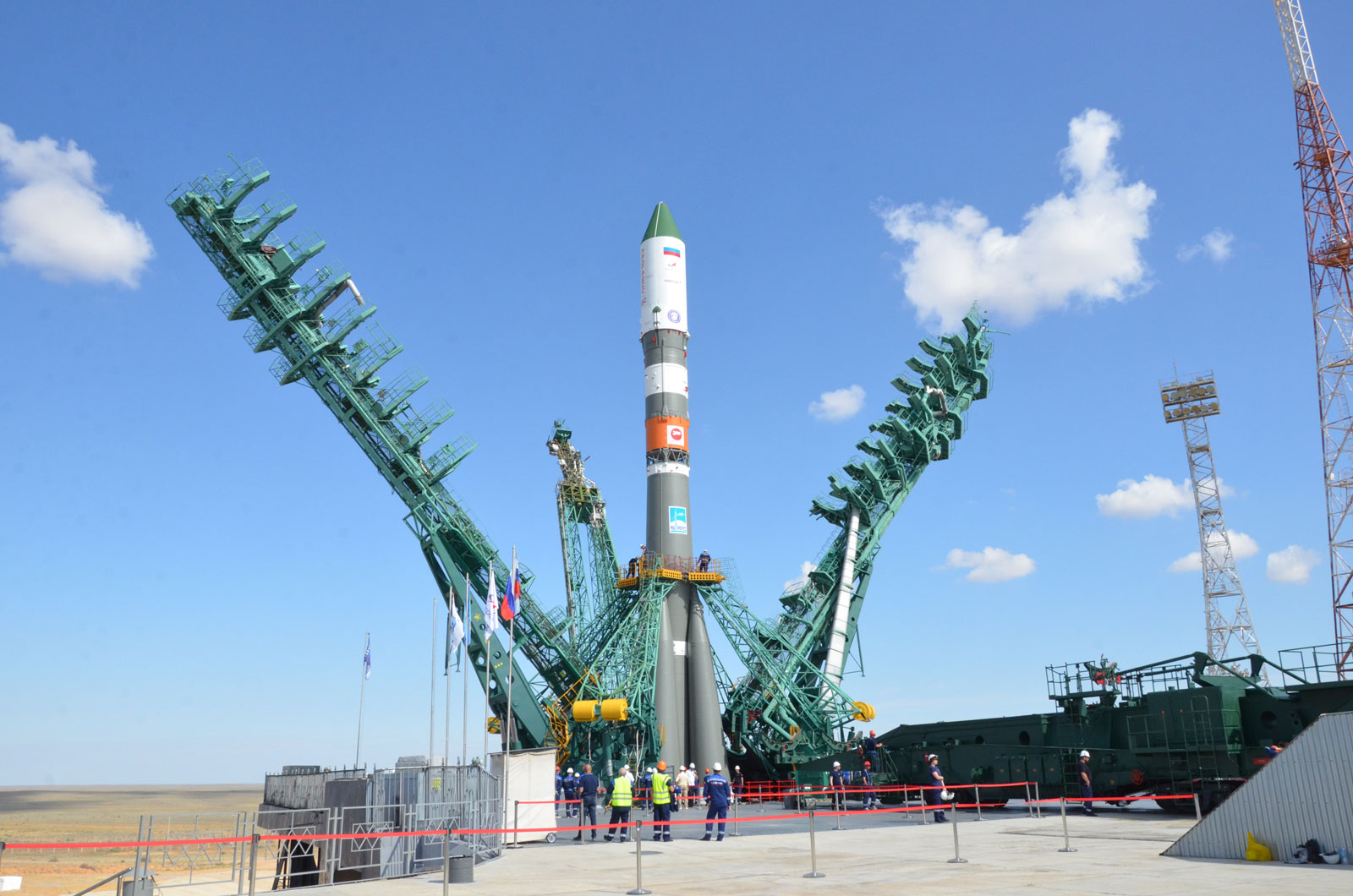
Open the launch pad in Google Maps satellite mode using the pad coordinates.
Note: Payload identity uncertain. Bars-M is the second incarnation of the Bars project, which was started in the mid 1990ies to develop a successor for the Komtea class of area surveillance satellites. The original Bars project was halted in the early 2000s. In 2007, TsSKB-Progress was contracted for Bars-M, for which reportedly the Yantar-based service module was replaced by a new developed advanced service module. The Bars-M satellites feature an electro-optical camera system called Karat, which is developed and built by the Leningrad Optical Mechanical Association (LOMO), and a dual laser altimeter instrument to deliver topographic imagery, stereo images, altimeter data and high-resolution images with a ground resolution around 1 meter.
The Soyuz 2.1A converted the flight control system from analog to digital, which allowed launch from fixed platforms. It also allowed big fairings and payloads. It is currently used for crewed Soyuz and Progress flights to the ISS.
The Russian Space Forces are a branch of the Russian Aerospace Forces, that provides aerospace warning, air sovereignty, and protection for Russia. Having been reestablished following August 1, 2015 merger between the Russian Air Force and the Russian Aerospace Defence Forces after a 2011 dissolving of the branch. The Russian Space Forces were originally formed on August 10, 1992 and the creation of the Russian Armed Forces.
Provider, rocket, pad, and booster history tied to this launch.
4a8d7634030ef70821495621ba58d90ae6b7504553c75634c1e1bf59f35fed62