
Loading photos...
Loading mission resources...
Watch
Live coverage
Stream links and embedded coverage.
Loading related events...
Loading vehicle timeline...
Loading related news...
TMinusZero
Loading
Preparing the latest launch data.
Launch Detail
Loading launch detail
Pulling launch timing, vehicle context, weather signals, and mission evidence.
Launch detail
Arianespace • Soyuz STB Fregat • Soyuz Launch Complex (FR-GF)
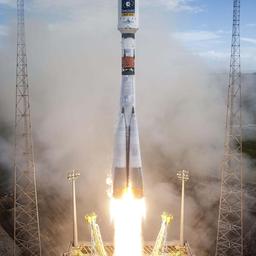
Arianespace • Soyuz STB Fregat • Soyuz Launch Complex
Top answer
The COSMO-SkyMed Second Generation satellite (CSG-1) is an Earth observation spacecraft featuring state-of-the-art technologies and engineering solutions, further bolstering Italian leadership in this sector. It's one out of two satellites to replace the first generation COSMO-SkyMed system. This second-generation system, including its ground segment, will set a new performance standard for space-based radar obser...
Last refreshed: Jun 14, 2023, 1:08 AM GMT-3. T-Minus Zero keeps this as the canonical launch record and reconciles schedule, mission, payload, media, and provider signals when those records are available.
Stream links and embedded coverage.
Premium keeps the launch-by-launch change log visible so you can review slips, window edits, and status changes without waiting for an error-driven upgrade prompt.
Free-to-share photography matched to this launch. Tap a photo to view it at full resolution.
The COSMO-SkyMed Second Generation satellite (CSG-1) is an Earth observation spacecraft featuring state-of-the-art technologies and engineering solutions, further bolstering Italian leadership in this sector. It's one out of two satellites to replace the first generation COSMO-SkyMed system. This second-generation system, including its ground segment, will set a new performance standard for space-based radar observation systems in terms of precision, image quality and the flexibility of user services. It is a dual (civil/military) system, designed to address the requirements of both commercial and government customers, as well as the scientific community. The COSMO-SkyMed Second Generation satellites are equipped with synthetic aperture radar (SAR), capable of observations under any weather or light conditions, day or night. The Characterising Exoplanet Satellite (CHEOPS) is an ESA mission implemented in partnership – in particular with Switzerland. CHEOPS is the first mission dedicated to studying bright, nearby stars that already are known to host exoplanets in order to make high-precision observations of the planet's size as it passes in front of its host star. The spacecraft will focus on planets in the super-Earth to Neptune size range, with its data enabling the bulk density of the planets to be derived – a first characterization step towards understanding these alien worlds. Flight also includes 3 auxiliary payloads: OPS-SAT, EyeSat, ANGELS. OPS-SAT is the world’s first free-for-use, in-orbit test bed for new software, applications and techniques in satellite control. It enables new software to be tested in orbit. In the first year of operation, OPS-SAT will host over 100 in-flight experiments submitted from many ESA Member States. EyeSat is a 3U CubeSat designed to study the zodiacal light and image the Milky Way. It's fitted with an instrument called IRIS, which is a small space telescope. ANGELS is a 12U CubeSat, and is the French industry’s first nanosatellite. The satellite will be fitted with a miniaturized ARGOS Néo instrument, which is 10-times smaller than the equivalent previous-generation device. The instrument collects and determines the position of low-power signals and messages sent by the 20,000 ARGOS beacons now in service worldwide.
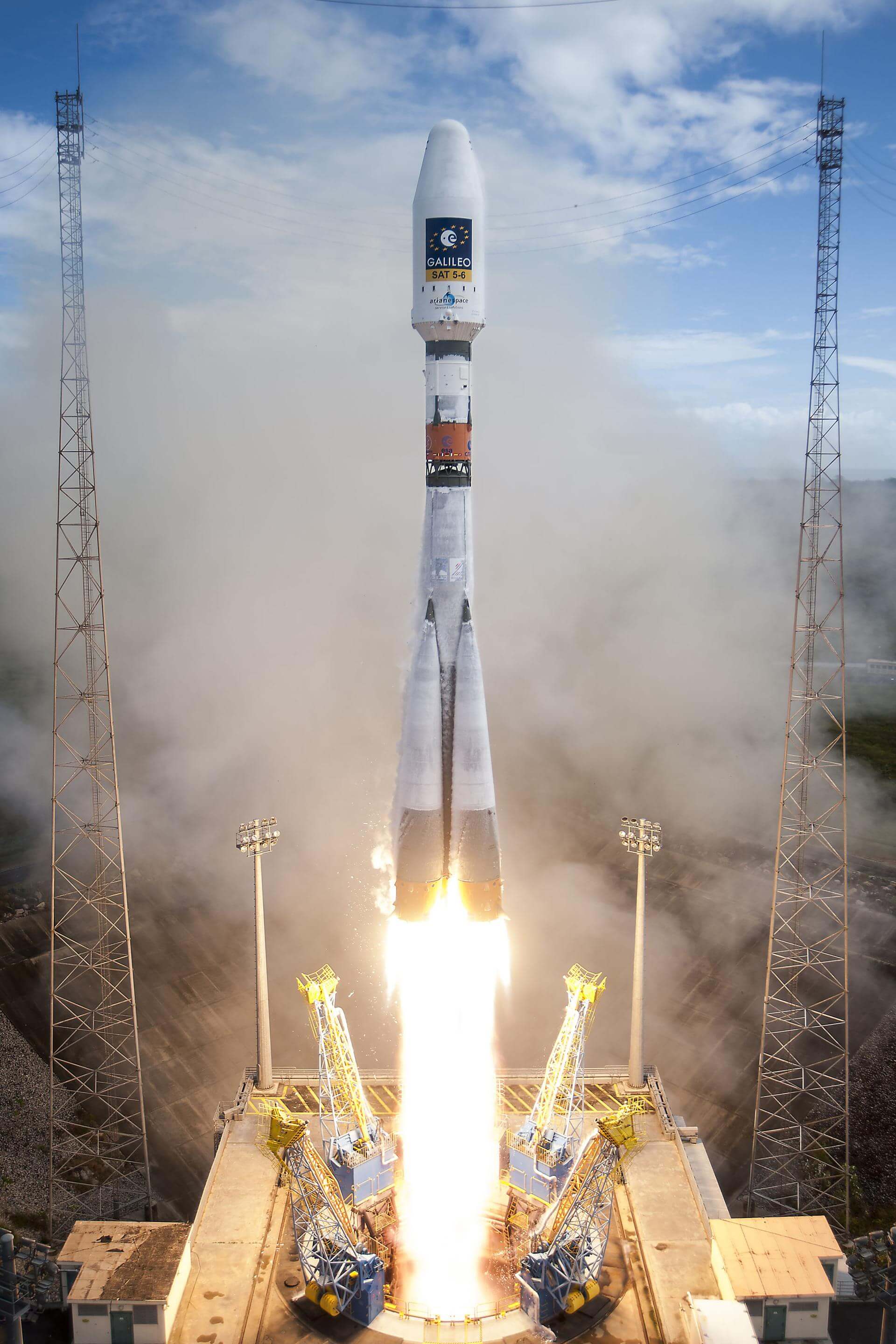
Alternate mission URLs consolidate to this canonical launch record so exact mission timing, status, media, and source context stay on one page.
Use these internal paths to move from this exact launch record into the provider, vehicle, launch-site, schedule, and mission-family pages that own broader context.
This launch currently has no dedicated mission-family hub, so provider, vehicle, site, and canonical record links are the primary internal paths.
Key structured fields for this launch record are grouped here so the page answers mission, payload, orbit, provider, source, and timing questions before the deeper tracking and media sections.
This record is preserved as historical launch context. The page emphasizes what was launched, the vehicle and pad involved, published outcome/status fields, linked programs, and source records instead of treating the mission like an upcoming countdown.
Open the launch pad in Google Maps satellite mode using the pad coordinates.
The COSMO-SkyMed Second Generation satellite (CSG-1) is an Earth observation spacecraft featuring state-of-the-art technologies and engineering solutions, further bolstering Italian leadership in this sector. It's one out of two satellites to replace the first generation COSMO-SkyMed system. This second-generation system, including its ground segment, will set a new performance standard for space-based radar observation systems in terms of precision, image quality and the flexibility of user services. It is a dual (civil/military) system, designed to address the requirements of both commercial and government customers, as well as the scientific community. The COSMO-SkyMed Second Generation satellites are equipped with synthetic aperture radar (SAR), capable of observations under any weather or light conditions, day or night. The Characterising Exoplanet Satellite (CHEOPS) is an ESA mission implemented in partnership – in particular with Switzerland. CHEOPS is the first mission dedicated to studying bright, nearby stars that already are known to host exoplanets in order to make high-precision observations of the planet's size as it passes in front of its host star. The spacecraft will focus on planets in the super-Earth to Neptune size range, with its data enabling the bulk density of the planets to be derived – a first characterization step towards understanding these alien worlds. Flight also includes 3 auxiliary payloads: OPS-SAT, EyeSat, ANGELS. OPS-SAT is the world’s first free-for-use, in-orbit test bed for new software, applications and techniques in satellite control. It enables new software to be tested in orbit. In the first year of operation, OPS-SAT will host over 100 in-flight experiments submitted from many ESA Member States. EyeSat is a 3U CubeSat designed to study the zodiacal light and image the Milky Way. It's fitted with an instrument called IRIS, which is a small space telescope. ANGELS is a 12U CubeSat, and is the French industry’s first nanosatellite. The satellite will be fitted with a miniaturized ARGOS Néo instrument, which is 10-times smaller than the equivalent previous-generation device. The instrument collects and determines the position of low-power signals and messages sent by the 20,000 ARGOS beacons now in service worldwide.
The 2.1b version adds an upgraded engine (RD-0124) with improved performance to the second stage. First launch took place from Plesetsk Cosmodrome Site 43 on 26 July 2008 with a classified military payload. The 2.1b/ST version is sometimes called Soyuz ST-B.
Arianespace SA is a multinational company founded in 1980 as the world's first commercial launch service provider. It undertakes the production, operation, and marketing of the Ariane programme. Their vehicles launch exclusively from French Guiana in South America.
411dcb0503e34276430f8851fdb9680dcf610d188c36bcd8a564f80d740fad9cLinked via Spaceflight News API (SNAPI).
 Article
Paris, France (SPX) Feb 16, 2026 Many students learn memory tricks to remember the order of the Solar System's planets, with rocky worlds close to the S...
 Article
Scientists used the European Space Agency's Cheops satellite to discover that the planetary system around the star LHS 1903 challenges current planet formati...
 Article
Using the European Space Agency’s Characterizing Exoplanets Satellite (CHEOPS) telescope, a team of astronomers has… The post CHEOPS discovers exoplanet tri...
 Article
Astronomers using the European Space Agency’s Cheops mission have caught an exoplanet that seems to be triggering flares of radiation from the star it orbits...
 Article
The CHEOPS Time Allocation Committee (TAC) met on 11 - 13 May 2022 to review proposals submitted to the third and final annual Announcement of Opportunity (A...
ArticleProposals are solicited in response to the third, and final, Announcement of Opportunity (AO-3) for observing time in the CHEOPS Guest Observers Programme du...
Provider, rocket, pad, and booster history tied to this launch.