

Loading photos...
Loading mission resources...
Loading related events...
Loading vehicle timeline...
Loading related news...
TMinusZero
Loading
Preparing the latest launch data.
Launch Detail
Loading launch detail
Pulling launch timing, vehicle context, weather signals, and mission evidence.
Launch detail
United States Air Force • Titan II SLV • Space Launch Complex 4W (CA)
Top answer
The SeaWinds instrument on the QuikScat (Quick Scatterometer) mission is a "quick recovery" mission to fill the gap created by the loss of data from the NASA Scatterometer (NSCAT), when the ADEOS 1 host satellite lost power in June 1997. The SeaWinds instrument is a specialized microwave radar that measures near-surface wind speed and direction under all weather and cloud conditions over the Earth's oceans.
Last refreshed: Jun 13, 2023, 9:26 PM PDT. T-Minus Zero keeps this as the canonical launch record and reconciles schedule, mission, payload, media, and provider signals when those records are available.
Alternate mission URLs consolidate to this canonical launch record so exact mission timing, status, media, and source context stay on one page.
Premium keeps the launch-by-launch change log visible so you can review slips, window edits, and status changes without waiting for an error-driven upgrade prompt.
Free-to-share photography matched to this launch. Tap a photo to view it at full resolution.
The SeaWinds instrument on the QuikScat (Quick Scatterometer) mission is a "quick recovery" mission to fill the gap created by the loss of data from the NASA Scatterometer (NSCAT), when the ADEOS 1 host satellite lost power in June 1997. The SeaWinds instrument is a specialized microwave radar that measures near-surface wind speed and direction under all weather and cloud conditions over the Earth's oceans.
Use these internal paths to move from this exact launch record into the provider, vehicle, launch-site, schedule, and mission-family pages that own broader context.
This launch currently has no dedicated mission-family hub, so provider, vehicle, site, and canonical record links are the primary internal paths.
Key structured fields for this launch record are grouped here so the page answers mission, payload, orbit, provider, source, and timing questions before the deeper tracking and media sections.
This record is preserved as historical launch context. The page emphasizes what was launched, the vehicle and pad involved, published outcome/status fields, linked programs, and source records instead of treating the mission like an upcoming countdown.
Open the launch pad in Google Maps satellite mode using the pad coordinates.
The SeaWinds instrument on the QuikScat (Quick Scatterometer) mission is a "quick recovery" mission to fill the gap created by the loss of data from the NASA Scatterometer (NSCAT), when the ADEOS 1 host satellite lost power in June 1997. The SeaWinds instrument is a specialized microwave radar that measures near-surface wind speed and direction under all weather and cloud conditions over the Earth's oceans.
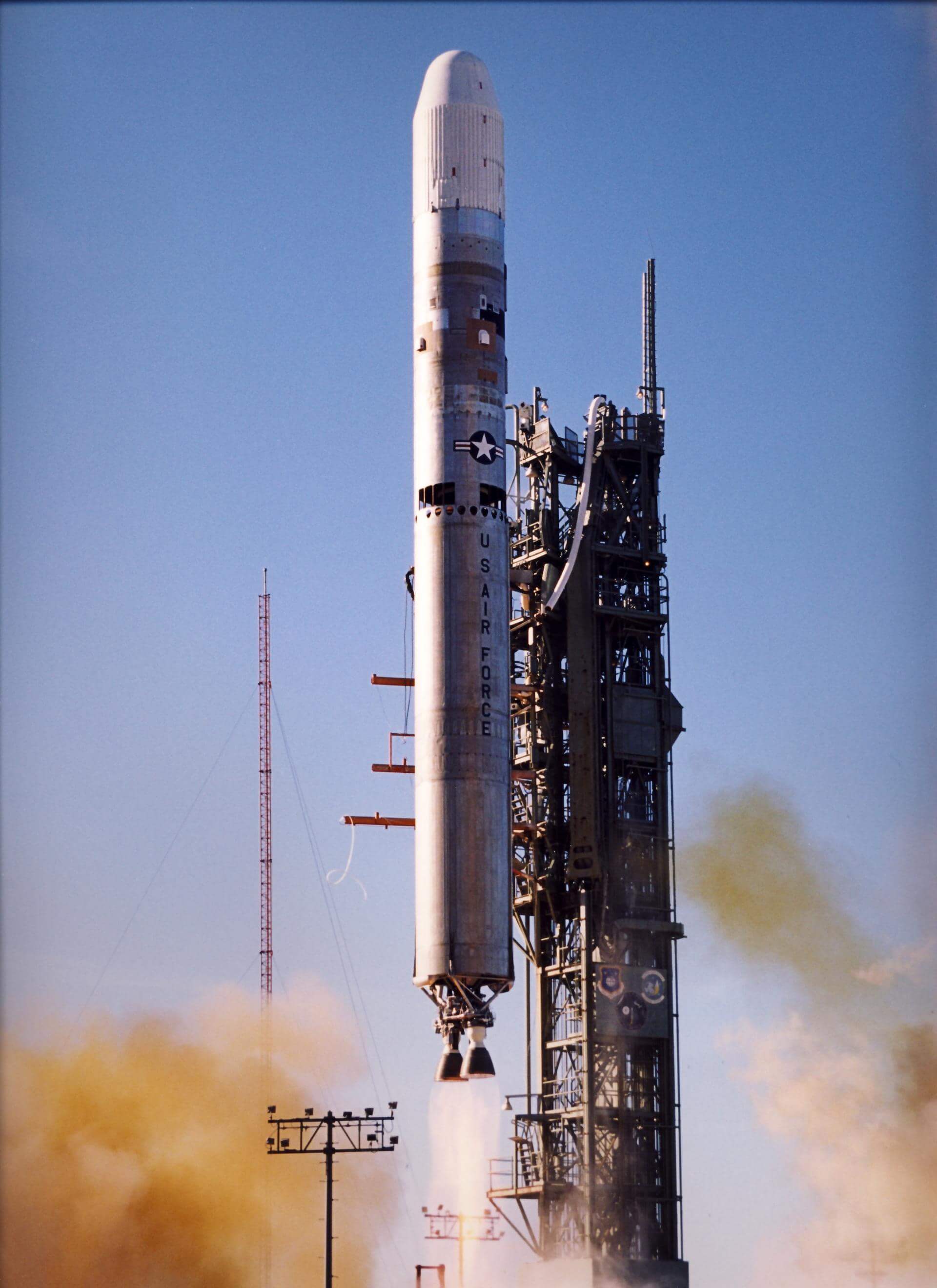
The Titan 23G, Titan II(23)G, Titan 2(23)G or Titan II SLV was an American expendable launch system derived from the LGM-25C Titan II intercontinental ballistic missile. Retired Titan II missiles were converted by Martin Marietta, into which the Glenn L. Martin Company, which built the original Titan II, had merged. It was used to carry payloads for the United States Air Force, NASA and NOAA. Thirteen were launched from Space Launch Complex 4W at the Vandenberg Air Force Base between 1988 and 2003.
The United States Air Force (USAF) is the air service branch of the United States Armed Forces, and is one of the eight uniformed services of the United States. Originally created on 1 August 1907, as a part of the United States Army Signal Corps, the USAF was established as a separate branch of the United States Armed Forces in 1947 with the enactment of the National Security Act of 1947.
e0601e7c7e6f9502573d379c255bbaa733ff14b2ec6ed2e7a33e6b7b39880abeProvider, rocket, pad, and booster history tied to this launch.