Loading photos...
Loading mission resources...
Watch
Live coverage
Stream links and embedded coverage.
More watch links
www.youtube.comOfficial Webcast
Arianespace Vol VV17 - SEOSAT-Ingenio et Taranis (FR)
TMinusZero
Loading
Preparing the latest launch data.
Launch Detail
Loading launch detail
Pulling launch timing, vehicle context, weather signals, and mission evidence.
Launch detail
Arianespace • Vega • Ariane Launch Area 1 (ELV) (FR-GF)
Top answer
SEOSAT-Ingenio is a high-resolution optical imaging mission of Spain - the flagship mission of the Spanish space strategic plan. Its mission is devoted to ensure an even coverage of the areas of national interest, providing a large operational capability in the capture of high-resolution multi-spectral land optical images for numerous user groups, as well as supporting and optimizing the development in Spain of te...
Last refreshed: Jun 14, 2023, 12:49 AM GMT-3. T-Minus Zero keeps this as the canonical launch record and reconciles schedule, mission, payload, media, and provider signals when those records are available.
Stream links and embedded coverage.
Premium keeps the launch-by-launch change log visible so you can review slips, window edits, and status changes without waiting for an error-driven upgrade prompt.
Free-to-share photography matched to this launch. Tap a photo to view it at full resolution.
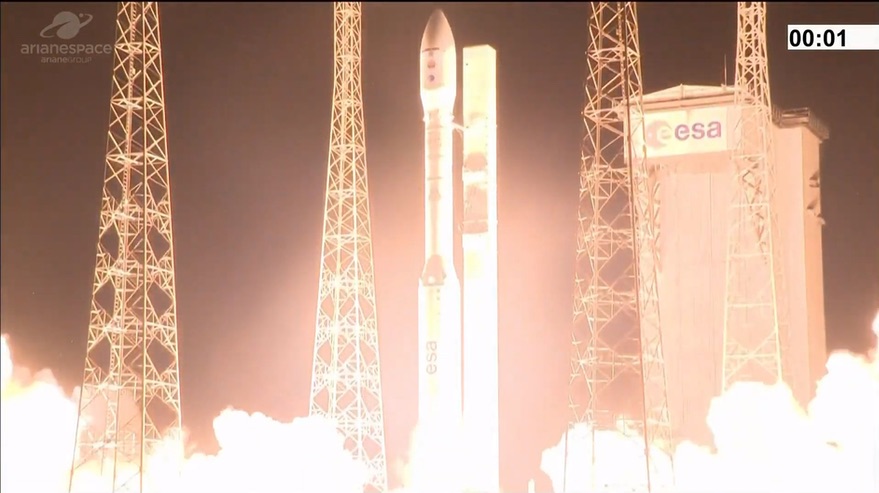
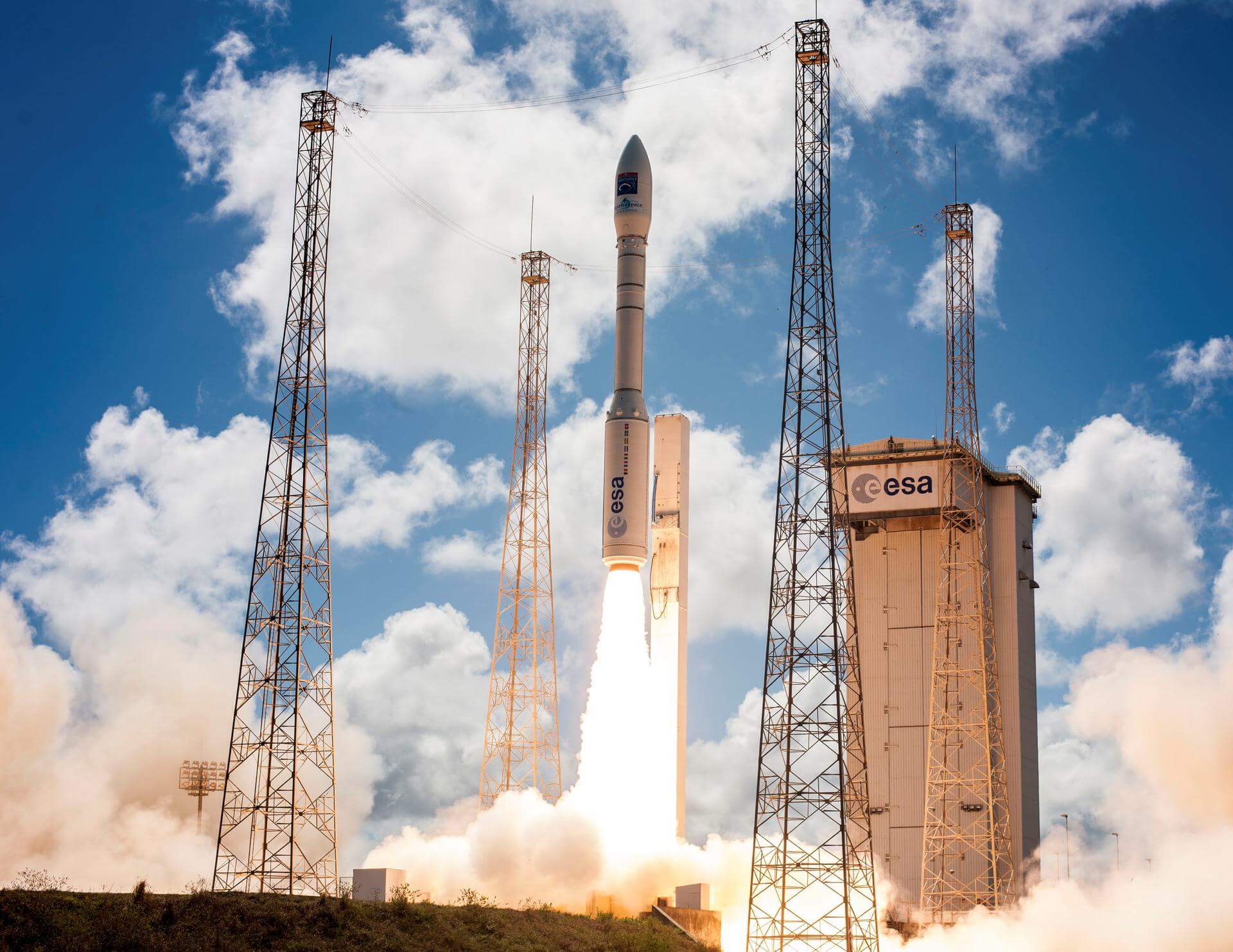
SEOSAT-Ingenio is a high-resolution optical imaging mission of Spain - the flagship mission of the Spanish space strategic plan. Its mission is devoted to ensure an even coverage of the areas of national interest, providing a large operational capability in the capture of high-resolution multi-spectral land optical images for numerous user groups, as well as supporting and optimizing the development in Spain of teledetection-based applications in Spain. The overall mission objective is to provide information for applications in cartography, land use, urban management, water management, environmental monitoring, risk management and security. TARANIS (Tool for the Analysis of RAdiation from lightNIngand Sprites), the Celtic god of thunder and lightning, is the first satellite designed to observe luminous, radiative and electromagnetic phenomena occurring at altitudes of 20 to 100 km over thunderstorms. Discovered 20 years ago, such transient luminous events (TLEs) such as red sprites, blue jets, elves, sprite halos, etc. remain shrouded in mystery. They are sometimes accompanied by terrestrial gamma-ray flashes (TGFs). The TARANIS microsatellite will fly over thousands of TLEs and TGFs for at least four years and will be capable of detecting these events and recording their luminous and radiative signatures at high resolution, as well as the electromagnetic perturbations they set off in Earth’s upper atmosphere. The payload includes numerous sensors to observe the TLEs and to perform in-situ measurements of perturbations caused on the local plasma (fields, waves and particles).
Alternate mission URLs consolidate to this canonical launch record so exact mission timing, status, media, and source context stay on one page.
Use these internal paths to move from this exact launch record into the provider, vehicle, launch-site, schedule, and mission-family pages that own broader context.
This launch currently has no dedicated mission-family hub, so provider, vehicle, site, and canonical record links are the primary internal paths.
Key structured fields for this launch record are grouped here so the page answers mission, payload, orbit, provider, source, and timing questions before the deeper tracking and media sections.
This record is preserved as historical launch context. The page emphasizes what was launched, the vehicle and pad involved, published outcome/status fields, linked programs, and source records instead of treating the mission like an upcoming countdown.
Open the launch pad in Google Maps satellite mode using the pad coordinates.
SEOSAT-Ingenio is a high-resolution optical imaging mission of Spain - the flagship mission of the Spanish space strategic plan. Its mission is devoted to ensure an even coverage of the areas of national interest, providing a large operational capability in the capture of high-resolution multi-spectral land optical images for numerous user groups, as well as supporting and optimizing the development in Spain of teledetection-based applications in Spain. The overall mission objective is to provide information for applications in cartography, land use, urban management, water management, environmental monitoring, risk management and security. TARANIS (Tool for the Analysis of RAdiation from lightNIngand Sprites), the Celtic god of thunder and lightning, is the first satellite designed to observe luminous, radiative and electromagnetic phenomena occurring at altitudes of 20 to 100 km over thunderstorms. Discovered 20 years ago, such transient luminous events (TLEs) such as red sprites, blue jets, elves, sprite halos, etc. remain shrouded in mystery. They are sometimes accompanied by terrestrial gamma-ray flashes (TGFs). The TARANIS microsatellite will fly over thousands of TLEs and TGFs for at least four years and will be capable of detecting these events and recording their luminous and radiative signatures at high resolution, as well as the electromagnetic perturbations they set off in Earth’s upper atmosphere. The payload includes numerous sensors to observe the TLEs and to perform in-situ measurements of perturbations caused on the local plasma (fields, waves and particles).
Vega is the smallest lifter in the current Arianespace family.
Arianespace SA is a multinational company founded in 1980 as the world's first commercial launch service provider. It undertakes the production, operation, and marketing of the Ariane programme. Their vehicles launch exclusively from French Guiana in South America.
Linked via Spaceflight News API (SNAPI).
 Article
An independent investigation of a Vega launch failure in November confirmed that misconnected cables in the rocket’s upper stage doomed the mission and made...
 Article
The head of Italian rocket manufacturer Avio assured customers Nov. 19 that the company was working hard to return Vega to service following the rocket’s sec...
Provider, rocket, pad, and booster history tied to this launch.