
Recovery
Vertical Landing
Failed landing • LL2
Type: Vertical Landing
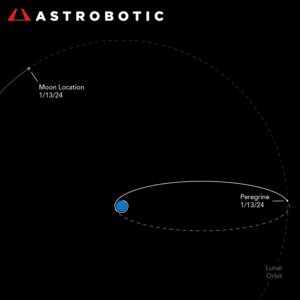
Shortly after the lander separated from the Vulcan rocket in lunar injection orbit, a propellant leak developed that prevented the lander from completing its mission.
TMinusZero
Loading
Preparing the latest launch data.
Launch Detail
Loading launch detail
Pulling launch timing, vehicle context, weather signals, and mission evidence.
Launch detail
United Launch Alliance • Vulcan VC2S • Space Launch Complex 41 (FL)
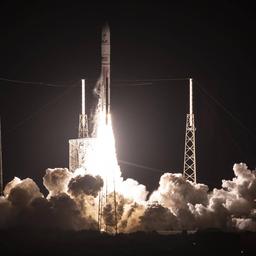

United Launch Alliance • Vulcan VC2S • SLC-41
Top answer
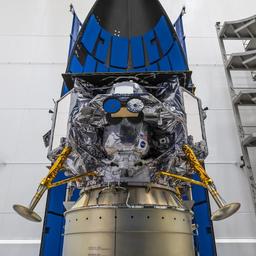
Maiden flight of ULA's Vulcan launch vehicle carrying the Peregrine lunar lander developed by Astrobotic Technology. Astrobotic was selected by NASA’s Commercial Lunar Payload Services (CLPS) program to deliver up to 14 NASA payloads to the Moon on its Peregrine lunar lander in 2022.
Last refreshed: Mar 08, 2024, 2:40 AM EST. T-Minus Zero keeps this as the canonical launch record and reconciles schedule, mission, payload, media, and provider signals when those records are available.
Stream links and embedded coverage.
Premium keeps the launch-by-launch change log visible so you can review slips, window edits, and status changes without waiting for an error-driven upgrade prompt.
Free-to-share photography matched to this launch. Tap a photo to view it at full resolution.
 Vulcan Cert-1
 Peregrine-1
Enhanced forecast insights (select launches).
Premium adds the higher-signal weather shell for select Eastern Range launches, including the extra launch criteria and fast-read risk rows.
Launch-stage and landing context surfaced from LL2 when it exists.
Shortly after the lander separated from the Vulcan rocket in lunar injection orbit, a propellant leak developed that prevented the lander from completing its mission.
Provider, rocket, pad, and booster history tied to this launch.
Maiden flight of ULA's Vulcan launch vehicle carrying the Peregrine lunar lander developed by Astrobotic Technology. Astrobotic was selected by NASA’s Commercial Lunar Payload Services (CLPS) program to deliver up to 14 NASA payloads to the Moon on its Peregrine lunar lander in 2022.
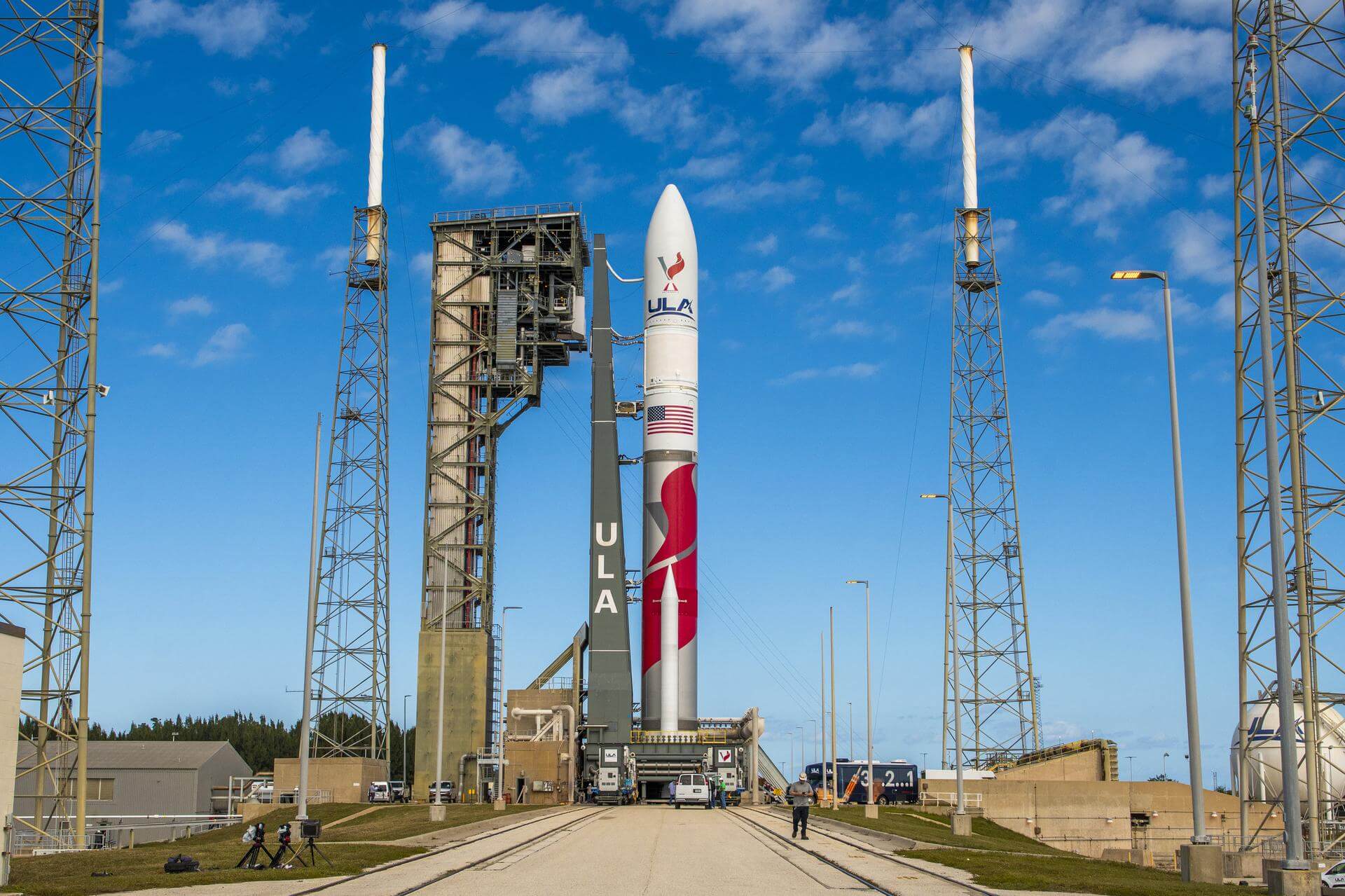
Alternate mission URLs consolidate to this canonical launch record so exact mission timing, status, media, and source context stay on one page.
Use these internal paths to move from this exact launch record into the provider, vehicle, launch-site, schedule, and mission-family pages that own broader context.
This launch currently has no dedicated mission-family hub, so provider, vehicle, site, and canonical record links are the primary internal paths.
Some high-demand launch records carry specialized search intent. These profiles explain what can be verified from the published record without filling gaps that upstream sources have not published.
Payload and orbit evidence is shown from published launch, payload, mission, and source-link records so the page can answer spacecraft, customer, orbit, provider, and schedule intent.
Key structured fields for this launch record are grouped here so the page answers mission, payload, orbit, provider, source, and timing questions before the deeper tracking and media sections.
This record is preserved as historical launch context. The page emphasizes what was launched, the vehicle and pad involved, published outcome/status fields, linked programs, and source records instead of treating the mission like an upcoming countdown.
Open the launch pad in Google Maps satellite mode using the pad coordinates.
Maiden flight of ULA's Vulcan launch vehicle carrying the Peregrine lunar lander developed by Astrobotic Technology. Astrobotic was selected by NASA’s Commercial Lunar Payload Services (CLPS) program to deliver up to 14 NASA payloads to the Moon on its Peregrine lunar lander in 2022.
Vulcan Centaur is a two-stage-to-orbit, heavy-lift launch vehicle under development by United Launch Alliance (ULA) since 2014. It is principally designed to meet launch demands for the U.S. government's National Security Space Launch (NSSL) program for use by the United States Space Force and U.S. intelligence agencies for national security satellite launches. It will replace both of ULA's existing launchers (Atlas V and Delta IV Heavy) in this role, as these launchers are retiring.
United Launch Alliance (ULA) is a joint venture of Lockheed Martin Space Systems and Boeing Defense, Space & Security. ULA was formed in December 2006 by combining the teams at these companies which provide spacecraft launch services to the government of the United States. ULA launches from both coasts of the US. They launch their Atlas V vehicle from LC-41 in Cape Canaveral and LC-3E at Vandeberg. Their Delta IV launches from LC-37 at Cape Canaveral and LC-6 at Vandenberg.
30252d408ce0733f37360e55b8c2a6af4ddf99ccea28272b732a3e6b0265816fLinked via Spaceflight News API (SNAPI).
 Article
An independent review of the January failure of Astrobotic’s Peregrine-1 lunar lander has confirmed that a single bad valve doomed the mission. While designa...
 Article
Astrobotic’s Peregrine lunar lander was unable to make it to the moon because of a failure of a single valve, leading to work to redesign the valve and overa...

