
Loading photos...
Loading mission resources...
Watch
Live coverage
Stream links and embedded coverage.
Loading related events...
Loading vehicle timeline...
Loading related news...
TMinusZero
Loading
Preparing the latest launch data.
Launch Detail
Loading launch detail
Pulling launch timing, vehicle context, weather signals, and mission evidence.
Launch detail
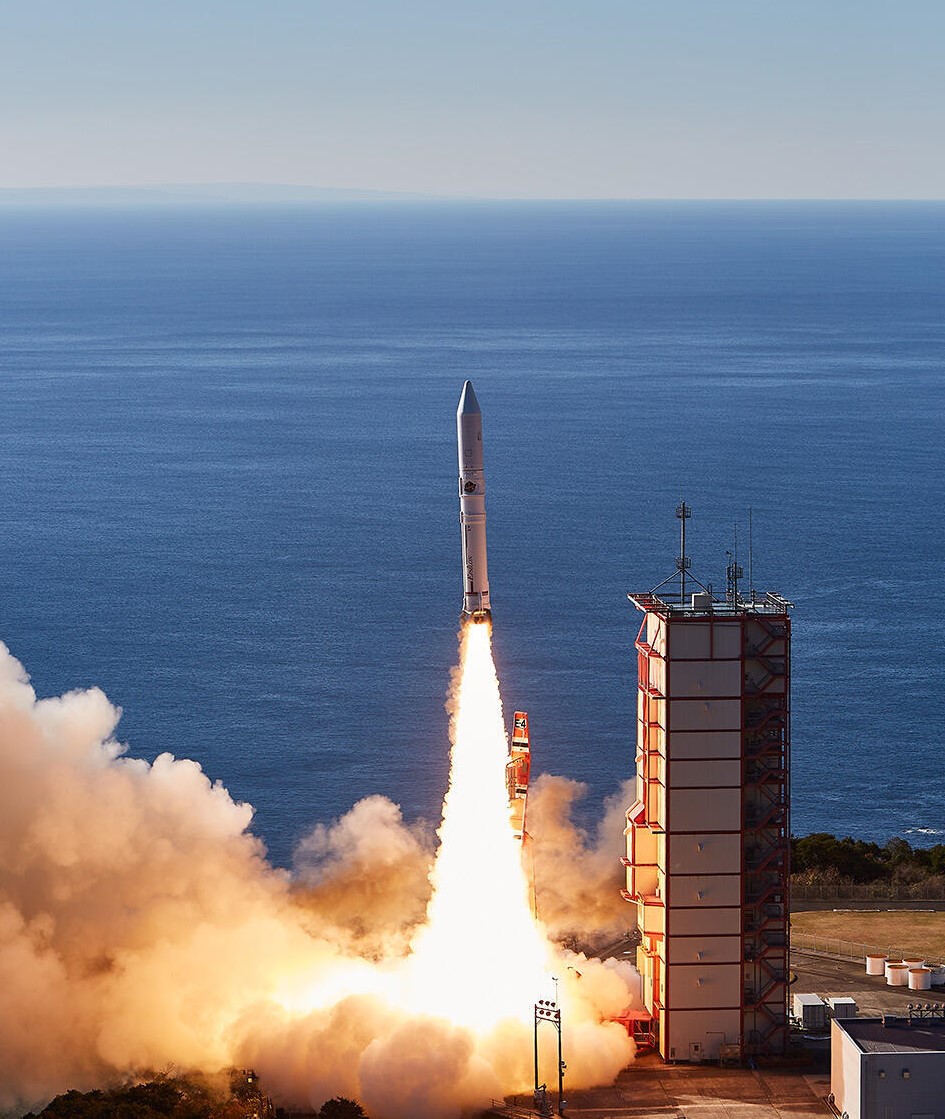
Japan Aerospace Exploration Agency • Epsilon • Mu Center (JP-46)

Japan Aerospace Exploration Agency • Epsilon • Mu Center
Top answer
Hisaki, also known as the Spectroscopic Planet Observatory for Recognition of Interaction of Atmosphere (SPRINT-A) is a Japanese ultraviolet astronomy satellite operated by the Japan Aerospace Exploration Agency (JAXA). Hisaki carries an extreme ultraviolet spectrometer which will be used to study the composition of the atmospheres and the behavior of the magnetospheres of the planets of the Solar System.
Last refreshed: Aug 03, 2024, 2:03 AM GMT+9. T-Minus Zero keeps this as the canonical launch record and reconciles schedule, mission, payload, media, and provider signals when those records are available.
Stream links and embedded coverage.
Premium keeps the launch-by-launch change log visible so you can review slips, window edits, and status changes without waiting for an error-driven upgrade prompt.
Free-to-share photography matched to this launch. Tap a photo to view it at full resolution.
Hisaki, also known as the Spectroscopic Planet Observatory for Recognition of Interaction of Atmosphere (SPRINT-A) is a Japanese ultraviolet astronomy satellite operated by the Japan Aerospace Exploration Agency (JAXA). Hisaki carries an extreme ultraviolet spectrometer which will be used to study the composition of the atmospheres and the behavior of the magnetospheres of the planets of the Solar System.
Alternate mission URLs consolidate to this canonical launch record so exact mission timing, status, media, and source context stay on one page.
Use these internal paths to move from this exact launch record into the provider, vehicle, launch-site, schedule, and mission-family pages that own broader context.
This launch currently has no dedicated mission-family hub, so provider, vehicle, site, and canonical record links are the primary internal paths.
Key structured fields for this launch record are grouped here so the page answers mission, payload, orbit, provider, source, and timing questions before the deeper tracking and media sections.
This record is preserved as historical launch context. The page emphasizes what was launched, the vehicle and pad involved, published outcome/status fields, linked programs, and source records instead of treating the mission like an upcoming countdown.
Open the launch pad in Google Maps satellite mode using the pad coordinates.
Hisaki, also known as the Spectroscopic Planet Observatory for Recognition of Interaction of Atmosphere (SPRINT-A) is a Japanese ultraviolet astronomy satellite operated by the Japan Aerospace Exploration Agency (JAXA). Hisaki carries an extreme ultraviolet spectrometer which will be used to study the composition of the atmospheres and the behavior of the magnetospheres of the planets of the Solar System.
The Epsilon rocket is a Japanese solid-fuel rocket designed to launch scientific satellites. It is a follow-on project to the larger and more expensive M-V rocket which was retired in 2006. The Japan Aerospace Exploration Agency (JAXA) began developing the Epsilon in 2007. It is capable of placing a 590 kg payload into Sun-synchronous orbit.
The Japan Aerospace Exploration Agency (JAXA) is Japan's national aero-space agency. Through the merger of three previously independent organizations, JAXA was formed on 1 October 2003. JAXA is responsible for research, technology development and the launch of satellites into orbit, and is involved in many more advanced missions, such as asteroid exploration and possible manned exploration of the Moon. JAXA launch their Epsilon vehicle from the Uchinoura Space Center and their H-II vehicles from the Tanegashima Space Center.
e2c6ee5e7ec9319af26bf3f52c15243d36783843577ce1fb4dc90d1db450f1f1Provider, rocket, pad, and booster history tied to this launch.