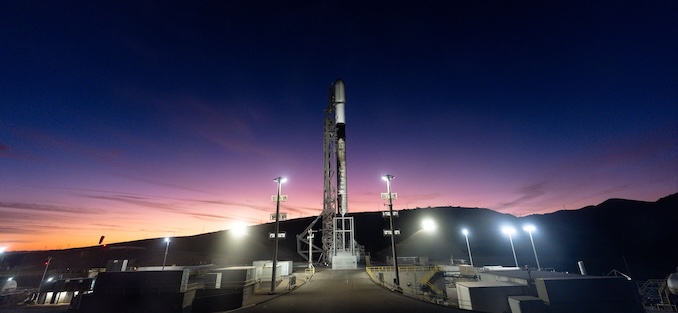
Tracked objects from this launch
27 objects
SATCAT inventory for 2026-219
Last checked: 2026-10-29T00:11:01.345+00:00
Last success: 2026-10-29T00:11:01.345+00:00
Last non-empty: 2026-10-29T00:11:01.345+00:00
Latest snapshot: 2026-10-28T06:11:00.863+00:00
Snapshot hash: e18c79e9512df2ab28ea2571e35ec845a713b78a705ee3d2b10f8dee0cf8ddc8
LL2 payloads: 0SATCAT payloads: 27Delta: +27RB: 0DEB: 0UNK: 0
Open SATCAT inventory
Orbit enrichment loads on demand when this section opens.
SATCAT payload objects
STARLINK-38381
2026-219ANORAD 100753PAYUnited States (US)Ops: +
Technical details
Orbit type: ORBOrbit center: EALaunch date: 2026-09-20Launch site: AFWTRPeriod: 91.81 min
Inc: 70.0°
360 km → 367 km
STARLINK-38409
2026-219AANORAD 100777PAYUnited States (US)Ops: +
Technical details
Orbit type: ORBOrbit center: EALaunch date: 2026-09-20Launch site: AFWTRPeriod: 91.82 min
Inc: 70.0°
362 km → 366 km
STARLINK-38420
2026-219ABNORAD 100778PAYUnited States (US)Ops: +
Technical details
Orbit type: ORBOrbit center: EALaunch date: 2026-09-20Launch site: AFWTRPeriod: 91.82 min
Inc: 70.0°
360 km → 367 km
STARLINK-38385
2026-219ACNORAD 100779PAYUnited States (US)Ops: +
Technical details
Orbit type: ORBOrbit center: EALaunch date: 2026-09-20Launch site: AFWTRPeriod: 91.82 min
Inc: 70.0°
361 km → 366 km
STARLINK-38375
2026-219BNORAD 100754PAYUnited States (US)Ops: +
Technical details
Orbit type: ORBOrbit center: EALaunch date: 2026-09-20Launch site: AFWTRPeriod: 91.82 min
Inc: 70.0°
361 km → 366 km
STARLINK-38320
2026-219CNORAD 100755PAYUnited States (US)Ops: +
Technical details
Orbit type: ORBOrbit center: EALaunch date: 2026-09-20Launch site: AFWTRPeriod: 91.82 min
Inc: 70.0°
361 km → 367 km
STARLINK-38321
2026-219DNORAD 100756PAYUnited States (US)Ops: +
Technical details
Orbit type: ORBOrbit center: EALaunch date: 2026-09-20Launch site: AFWTRPeriod: 91.82 min
Inc: 70.0°
362 km → 366 km
STARLINK-38395
2026-219ENORAD 100757PAYUnited States (US)Ops: +
Technical details
Orbit type: ORBOrbit center: EALaunch date: 2026-09-20Launch site: AFWTRPeriod: 91.81 min
Inc: 70.0°
361 km → 366 km
STARLINK-38389
2026-219FNORAD 100758PAYUnited States (US)Ops: +
Technical details
Orbit type: ORBOrbit center: EALaunch date: 2026-09-20Launch site: AFWTRPeriod: 91.82 min
Inc: 70.0°
360 km → 367 km
STARLINK-38399
2026-219GNORAD 100759PAYUnited States (US)Ops: +
Technical details
Orbit type: ORBOrbit center: EALaunch date: 2026-09-20Launch site: AFWTRPeriod: 91.82 min
Inc: 70.0°
361 km → 366 km
STARLINK-38383
2026-219HNORAD 100760PAYUnited States (US)Ops: +
Technical details
Orbit type: ORBOrbit center: EALaunch date: 2026-09-20Launch site: AFWTRPeriod: 91.82 min
Inc: 70.0°
362 km → 366 km
STARLINK-38402
2026-219JNORAD 100761PAYUnited States (US)Ops: +
Technical details
Orbit type: ORBOrbit center: EALaunch date: 2026-09-20Launch site: AFWTRPeriod: 91.82 min
Inc: 70.0°
361 km → 366 km
STARLINK-38398
2026-219KNORAD 100762PAYUnited States (US)Ops: +
Technical details
Orbit type: ORBOrbit center: EALaunch date: 2026-09-20Launch site: AFWTRPeriod: 91.82 min
Inc: 70.0°
360 km → 367 km
STARLINK-38444
2026-219LNORAD 100763PAYUnited States (US)Ops: +
Technical details
Orbit type: ORBOrbit center: EALaunch date: 2026-09-20Launch site: AFWTRPeriod: 91.82 min
Inc: 70.0°
360 km → 367 km
STARLINK-38451
2026-219MNORAD 100764PAYUnited States (US)Ops: +
Technical details
Orbit type: ORBOrbit center: EALaunch date: 2026-09-20Launch site: AFWTRPeriod: 91.82 min
Inc: 70.0°
362 km → 366 km
STARLINK-38446
2026-219NNORAD 100765PAYUnited States (US)Ops: +
Technical details
Orbit type: ORBOrbit center: EALaunch date: 2026-09-20Launch site: AFWTRPeriod: 91.82 min
Inc: 70.0°
361 km → 366 km
STARLINK-38438
2026-219PNORAD 100766PAYUnited States (US)Ops: +
Technical details
Orbit type: ORBOrbit center: EALaunch date: 2026-09-20Launch site: AFWTRPeriod: 91.82 min
Inc: 70.0°
361 km → 367 km
STARLINK-38448
2026-219QNORAD 100767PAYUnited States (US)Ops: +
Technical details
Orbit type: ORBOrbit center: EALaunch date: 2026-09-20Launch site: AFWTRPeriod: 91.81 min
Inc: 70.0°
360 km → 367 km
STARLINK-38450
2026-219RNORAD 100768PAYUnited States (US)Ops: +
Technical details
Orbit type: ORBOrbit center: EALaunch date: 2026-09-20Launch site: AFWTRPeriod: 91.82 min
Inc: 70.0°
362 km → 366 km
STARLINK-38388
2026-219SNORAD 100769PAYUnited States (US)Ops: +
Technical details
Orbit type: ORBOrbit center: EALaunch date: 2026-09-20Launch site: AFWTRPeriod: 91.82 min
Inc: 70.0°
362 km → 366 km
STARLINK-38301
2026-219TNORAD 100770PAYUnited States (US)Ops: +
Technical details
Orbit type: ORBOrbit center: EALaunch date: 2026-09-20Launch site: AFWTRPeriod: 91.81 min
Inc: 70.0°
361 km → 366 km
STARLINK-38339
2026-219UNORAD 100771PAYUnited States (US)Ops: +
Technical details
Orbit type: ORBOrbit center: EALaunch date: 2026-09-20Launch site: AFWTRPeriod: 91.82 min
Inc: 70.0°
360 km → 367 km
STARLINK-38367
2026-219VNORAD 100772PAYUnited States (US)Ops: +
Technical details
Orbit type: ORBOrbit center: EALaunch date: 2026-09-20Launch site: AFWTRPeriod: 91.82 min
Inc: 70.0°
361 km → 366 km
STARLINK-38386
2026-219WNORAD 100773PAYUnited States (US)Ops: +
Technical details
Orbit type: ORBOrbit center: EALaunch date: 2026-09-20Launch site: AFWTRPeriod: 91.82 min
Inc: 70.0°
360 km → 367 km
STARLINK-38447
2026-219XNORAD 100774PAYUnited States (US)Ops: +
Technical details
Orbit type: ORBOrbit center: EALaunch date: 2026-09-20Launch site: AFWTRPeriod: 91.82 min
Inc: 70.0°
361 km → 366 km
STARLINK-38442
2026-219YNORAD 100775PAYUnited States (US)Ops: +
Technical details
Orbit type: ORBOrbit center: EALaunch date: 2026-09-20Launch site: AFWTRPeriod: 91.82 min
Inc: 70.0°
361 km → 366 km
STARLINK-38400
2026-219ZNORAD 100776PAYUnited States (US)Ops: +
Technical details
Orbit type: ORBOrbit center: EALaunch date: 2026-09-20Launch site: AFWTRPeriod: 91.82 min
Inc: 70.0°
361 km → 366 km