





Recovery
Recovery hint
Recovery hint • SpaceX content
Location: Landing Zone / Expended
TMinusZero
Loading
Preparing the latest launch data.
Launch Detail
Loading launch detail
Pulling launch timing, vehicle context, weather signals, and mission evidence.
Launch detail
SpaceX • Falcon Heavy • Launch Complex 39A (FL)

Top answer
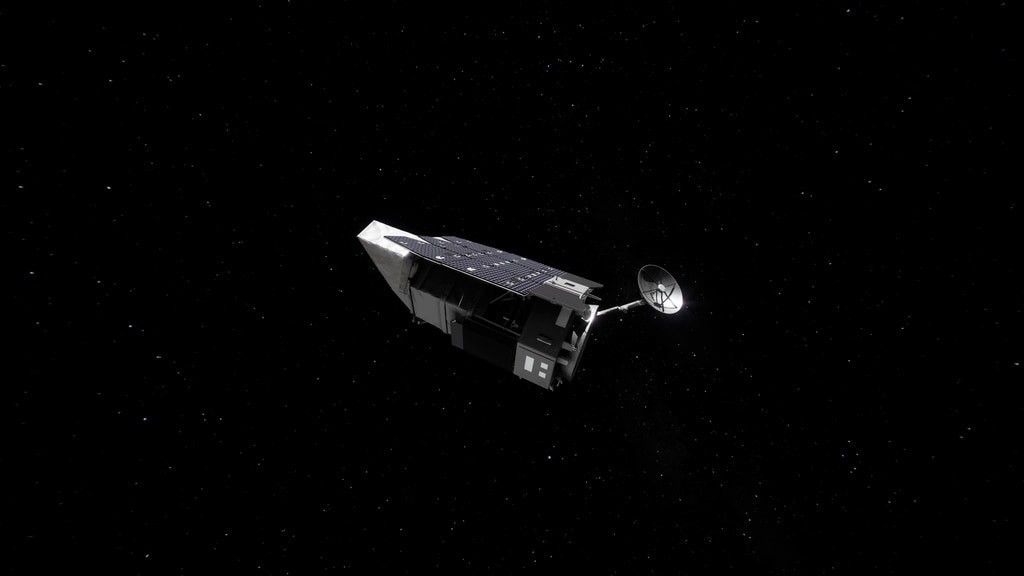
The Nancy Grace Roman Space Telescope is a NASA infrared space telescope with a 2.4 m (7.9 ft) wide field of view primary mirror and two scientific instruments. The Wide-Field Instrument (WFI) is a 300.8-megapixel multi-band visible and near-infrared camera, providing a sharpness of images comparable to that achieved by the Hubble Space Telescope over a 0.28 square degree field of view, 100 times larger than imagi...
Last refreshed: Sep 12, 2026, 11:03 PM EDT. T-Minus Zero keeps this as the canonical launch record and reconciles schedule, mission, payload, media, and provider signals when those records are available.
Live targets are highlighted across the sequence.
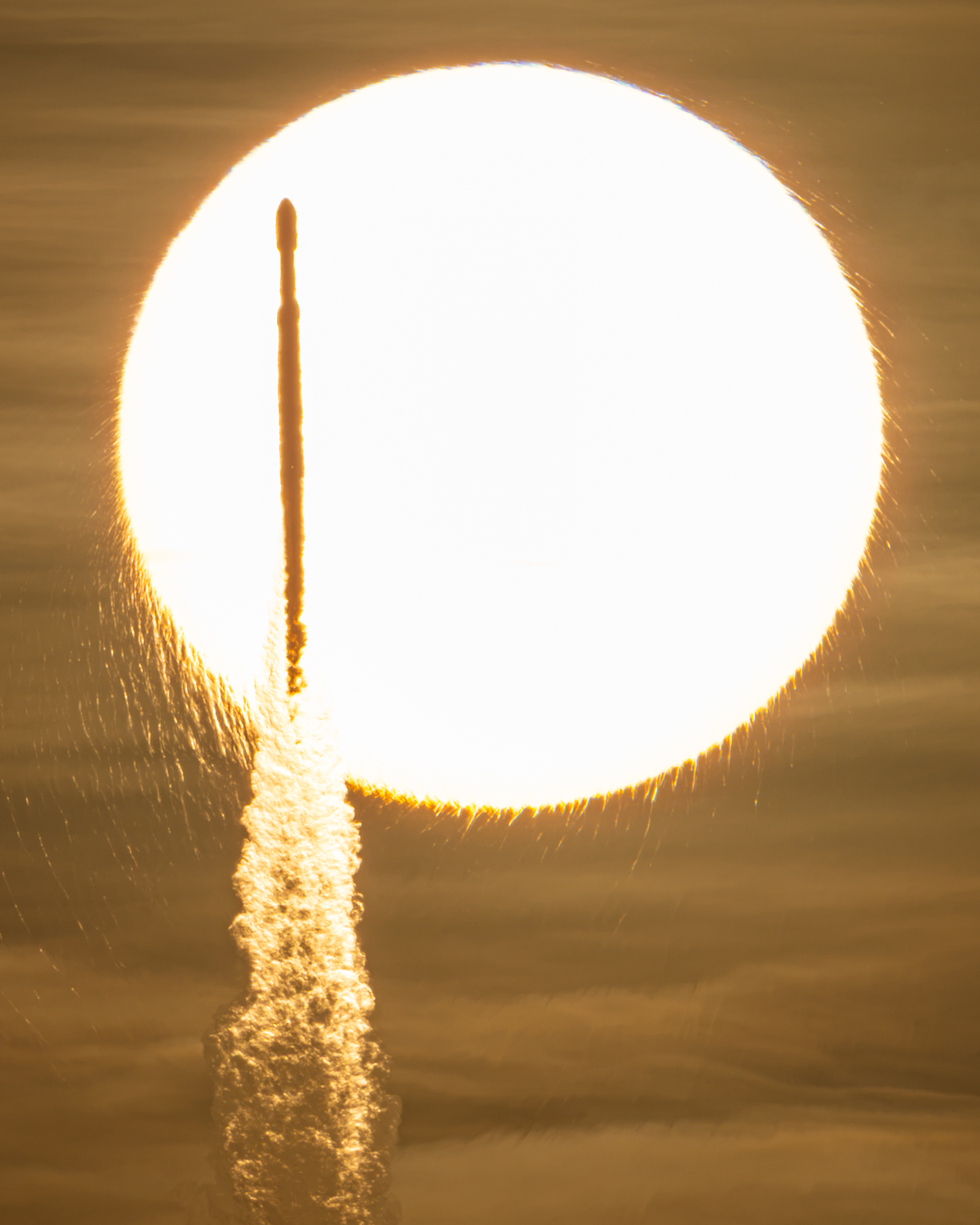
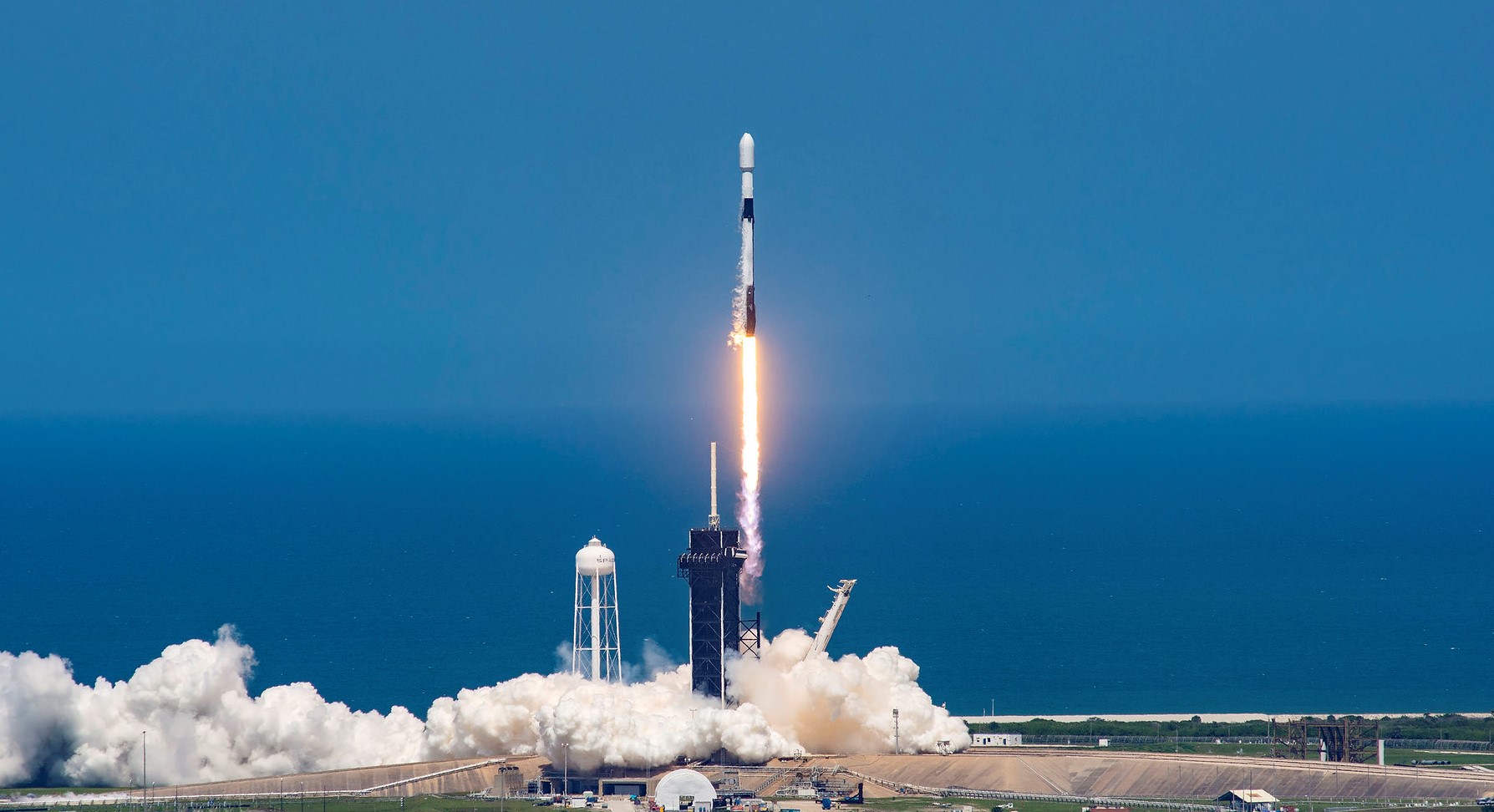
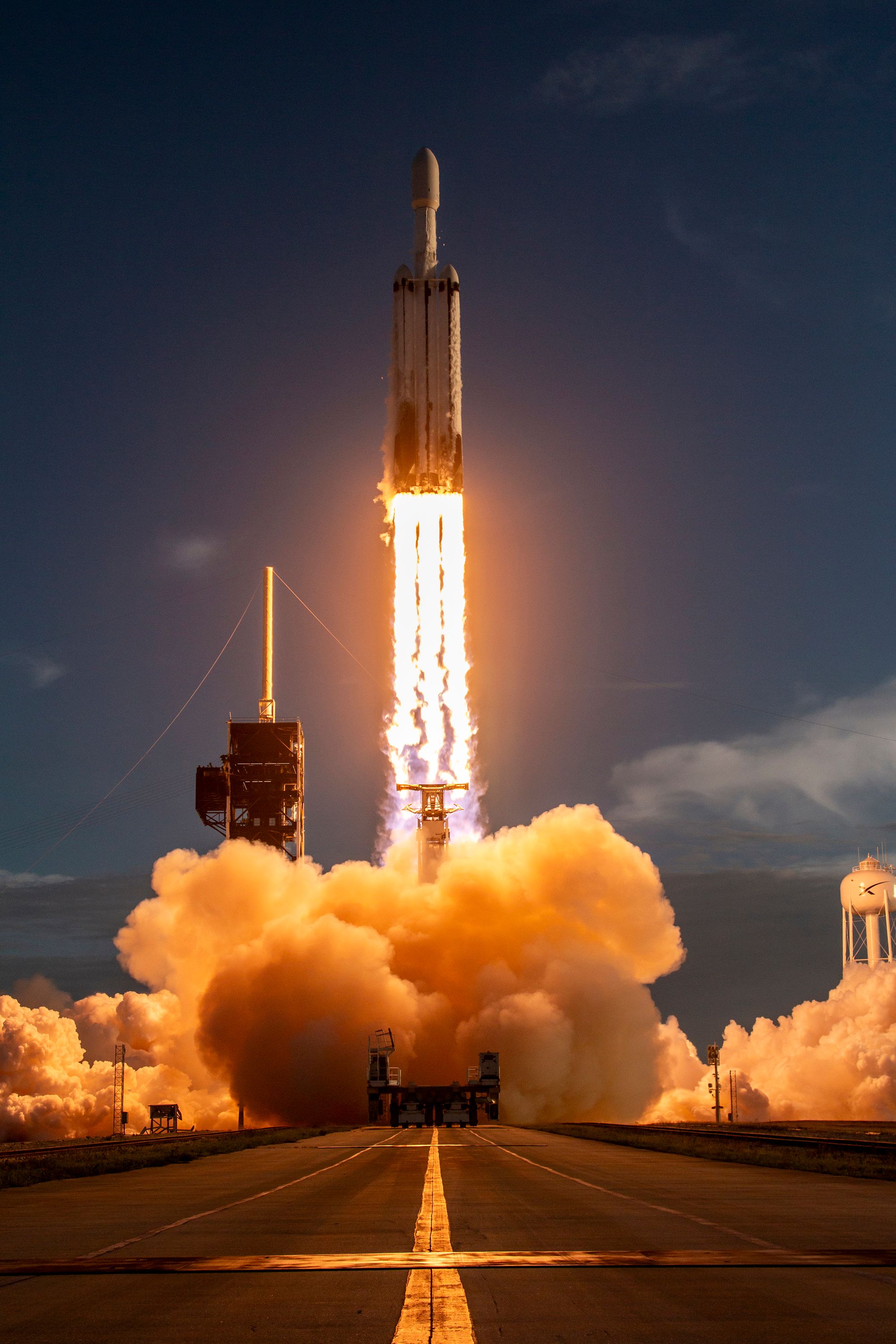
On Sunday, August 30 at 7:26 a.m. ET Falcon Heavy launched NASA’s Roman Space Telescope from Launch Complex 39A (LC-39A) at NASA’s Kennedy Space Center in Florida.
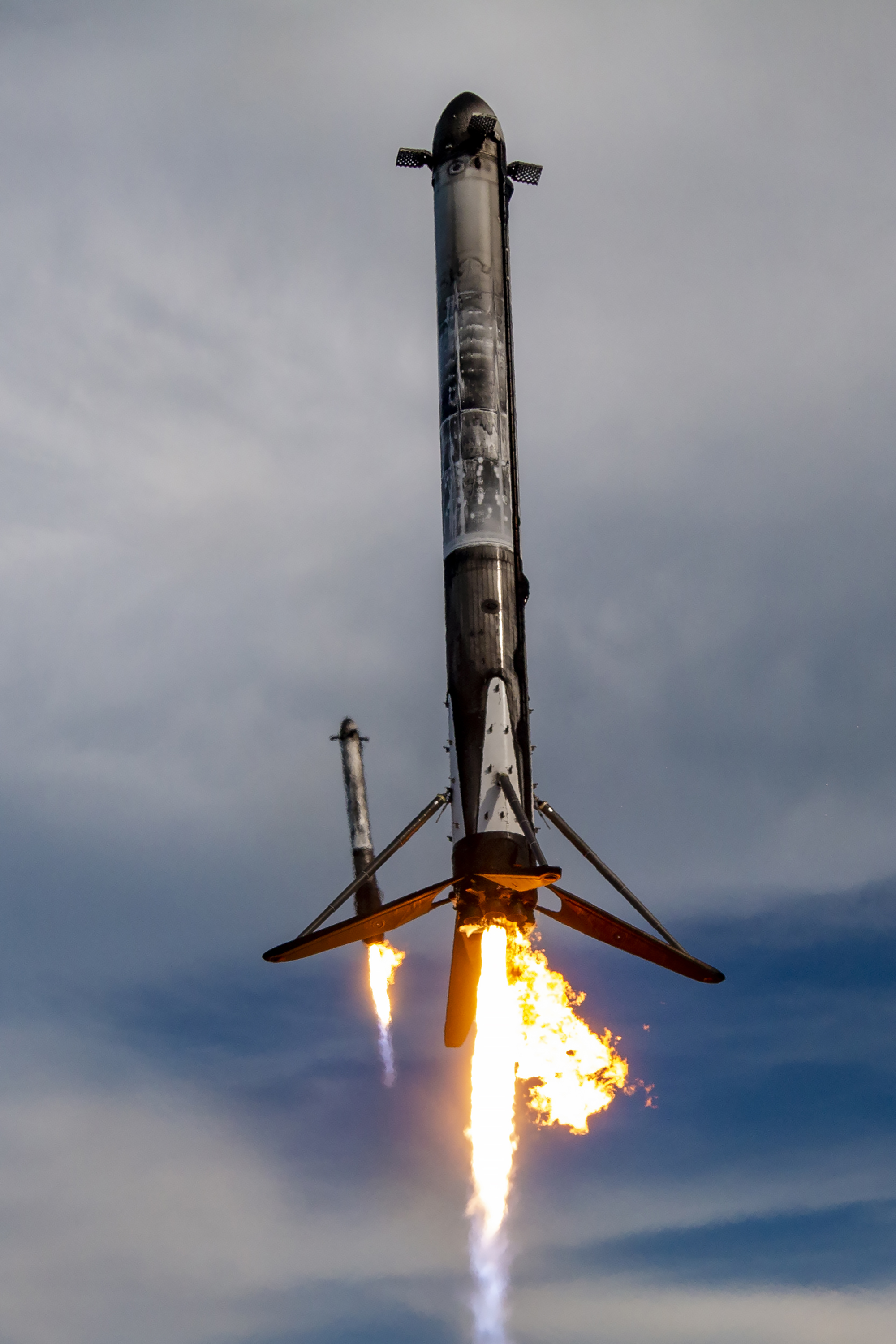
This is the first and third flight for the two first stage side boosters supporting this mission, which previously launched the GOES-U and Viasat-3 F3 missions. Following stage separation, Falcon Heavy’s two side boosters will land on SpaceX’s Landing Zones 2 and 40 (LZ-2 and LZ-40) at Cape Canaveral Space Force Station in Florida.
The Roman Space Telescope is a NASA flagship observatory designed to study dark energy and dark matter to help scientists unravel mysteries of the universe. Once at its final destination at Sun-Earth Lagrange Point 2, Roman will have an unobstructed view of the universe, and with a wide field of view at least 100 times larger than the Hubble Space Telescope, Roman will be able to map billions of galaxies, discover new exoplanets, study black holes, and more.
NASA’s Nancy Grace Roman Space Telescope will pair a large feld of view with crisp infrared vision to scan vast, deep swaths of sky. This fagship mission is designed to help astronomers explore dark matter, dark energy, and exoplanets. Since each of Roman’s surveys will sample such a large volume of the cosmos, the mission will also offer practically limitless opportunities for astronomers to conduct a broad range of additional science. From objects in our outer solar system and exploding stars to growing black holes and galaxies by the billions, very little will be beyond Roman’s reach. Roman’s data will be made public as soon as it’s processed so many teams will be able to analyze it simultaneously. The mission is targeting an Aug. 30, 2026, launch from NASA’s Kennedy Space Center in Florida. 4
Premium keeps the launch-by-launch change log visible so you can review slips, window edits, and status changes without waiting for an error-driven upgrade prompt.
Free-to-share photography matched to this launch. Tap a photo to view it at full resolution.
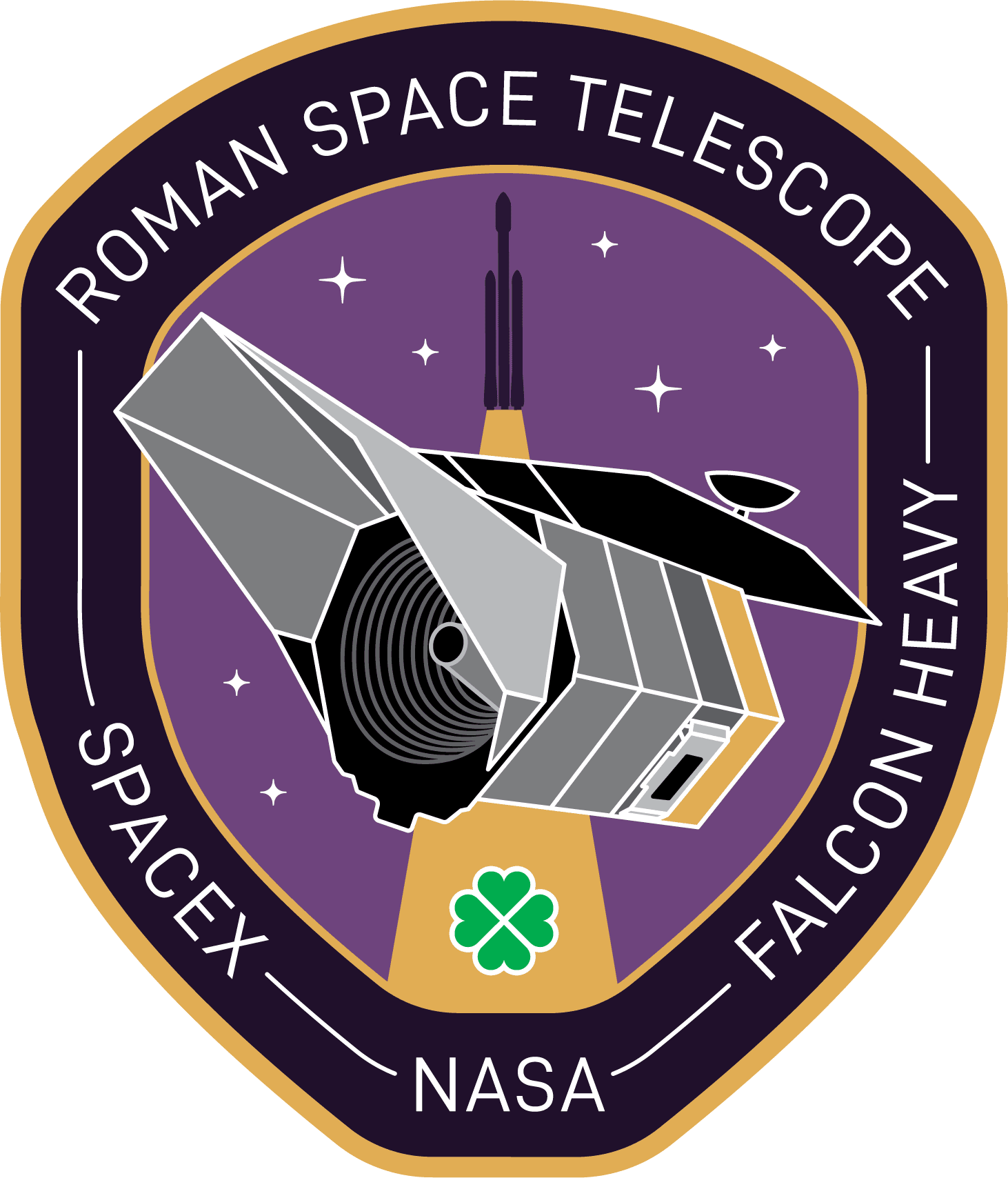 Roman
RomanThe Nancy Grace Roman Space Telescope is a NASA infrared space telescope with a 2.4 m (7.9 ft) wide field of view primary mirror and two scientific instruments. The Wide-Field Instrument (WFI) is a 300.8-megapixel multi-band visible and near-infrared camera, providing a sharpness of images comparable to that achieved by the Hubble Space Telescope over a 0.28 square degree field of view, 100 times larger than imaging cameras on the Hubble. The Coronagraphic Instrument (CGI) is a high-contrast, small field of view camera and spectrometer covering visible and near-infrared wavelengths using novel starlight-suppression technology. Roman objectives include a search for extra-solar planets using gravitational microlensing, and probing the expansion history of the Universe and the growth of cosmic structure, with the goal of measuring the effects of dark energy, the consistency of general relativity, and the curvature of spacetime.
Alternate mission URLs consolidate to this canonical launch record so exact mission timing, status, media, and source context stay on one page.
Use these internal paths to move from this exact launch record into the provider, vehicle, launch-site, schedule, and mission-family pages that own broader context.
This launch currently has no dedicated mission-family hub, so provider, vehicle, site, and canonical record links are the primary internal paths.
Key structured fields for this launch record are grouped here so the page answers mission, payload, orbit, provider, source, and timing questions before the deeper tracking and media sections.
The universe is full of shadows whose silhouettes hint at the presence of a strange form of matter. It behaves somewhat like an ocean current, invisibly steering everything within it. Scientists have been on a cosmic ghost hunt to fnd and study it for over 80 years, following a couple of perplexing discoveries. First, Swiss-American astronomer Fritz Zwicky observed that galaxies in the Coma cluster were moving so quickly they should have been fung away into space — yet they remained gravitationally bound to the cluster by unseen matter. Then in the 1970s, American astronomer Vera Rubin discovered the same type of problem in individual spiral galaxies. Stars toward the edge of the galaxy m...
Imagine you planted a fower and instead of its growth slowing as it reached its mature height, it suddenly shot up like Jack’s beanstalk in the classic fairy tale instead. Or what if you threw a baseball up into the air and instead of falling back down it rocketed up even faster like it was equipped with an invisible jetpack? That’s similar to what astronomers have discovered about the universe’s expansion. After the big bang sent the universe’s contents hurtling apart, scientists thought the expansion would gradually slow down. But instead galaxies are racing away at an ever-increasing clip, swept apart by an unseen power dubbed dark energy. All the stars in our galaxy, the particles in...
In little more than a generation, we’ve gone from knowing only our own solar system to fnding thousands of more distant worlds, called exoplanets. As new exoplanet discoveries continue to pour in, scientists are building an ever-more-complete catalog of the worlds that grace our galaxy. Roman will use three methods (microlensing, transits, and direct imaging) in a sweeping search expected to uncover around 100,000 new exoplanets — a staggering leap compared to the nearly 6,200 currently known. 12 Roman will monitor hundreds of millions of stars watching for tiny surges in starlight that signal a microlensing event. This light-bending phenomenon occurs when two stars align closely from our...
Designing a mission that can conduct the science listed above gives us a powerful tool that can perform a wide array of additional science, too. Even just probing dark matter, dark energy, and exoplanets as thoroughly as Roman will do automatically gives astronomers a treasure trove of data they can comb through for many other purposes. That includes discovering and characterizing rogue planets, isolated black holes, starquakes, kilonova explosions, nebulae, cosmic voids, the interstellar medium, stellar streams, planet-forming disks around nearby stars, and much more. Roman will use three primary observing modes. Its time-domain surveys will repeatedly scan large swaths of sky, and stitc...
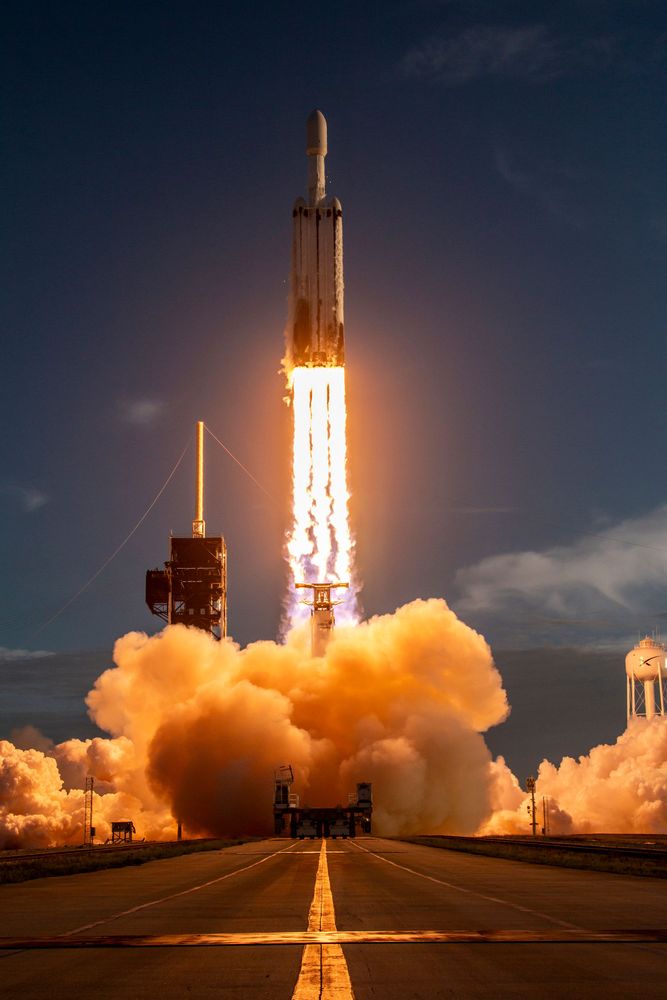
Premium unlocks the full source-quality provider graphic inside T-Minus Zero.
Stream links and embedded coverage.
Open the launch pad in Google Maps satellite mode using the pad coordinates.
The Nancy Grace Roman Space Telescope is a NASA infrared space telescope with a 2.4 m (7.9 ft) wide field of view primary mirror and two scientific instruments. The Wide-Field Instrument (WFI) is a 300.8-megapixel multi-band visible and near-infrared camera, providing a sharpness of images comparable to that achieved by the Hubble Space Telescope over a 0.28 square degree field of view, 100 times larger than imaging cameras on the Hubble. The Coronagraphic Instrument (CGI) is a high-contrast, small field of view camera and spectrometer covering visible and near-infrared wavelengths using novel starlight-suppression technology. Roman objectives include a search for extra-solar planets using gravitational microlensing, and probing the expansion history of the Universe and the growth of cosmic structure, with the goal of measuring the effects of dark energy, the consistency of general relativity, and the curvature of spacetime.
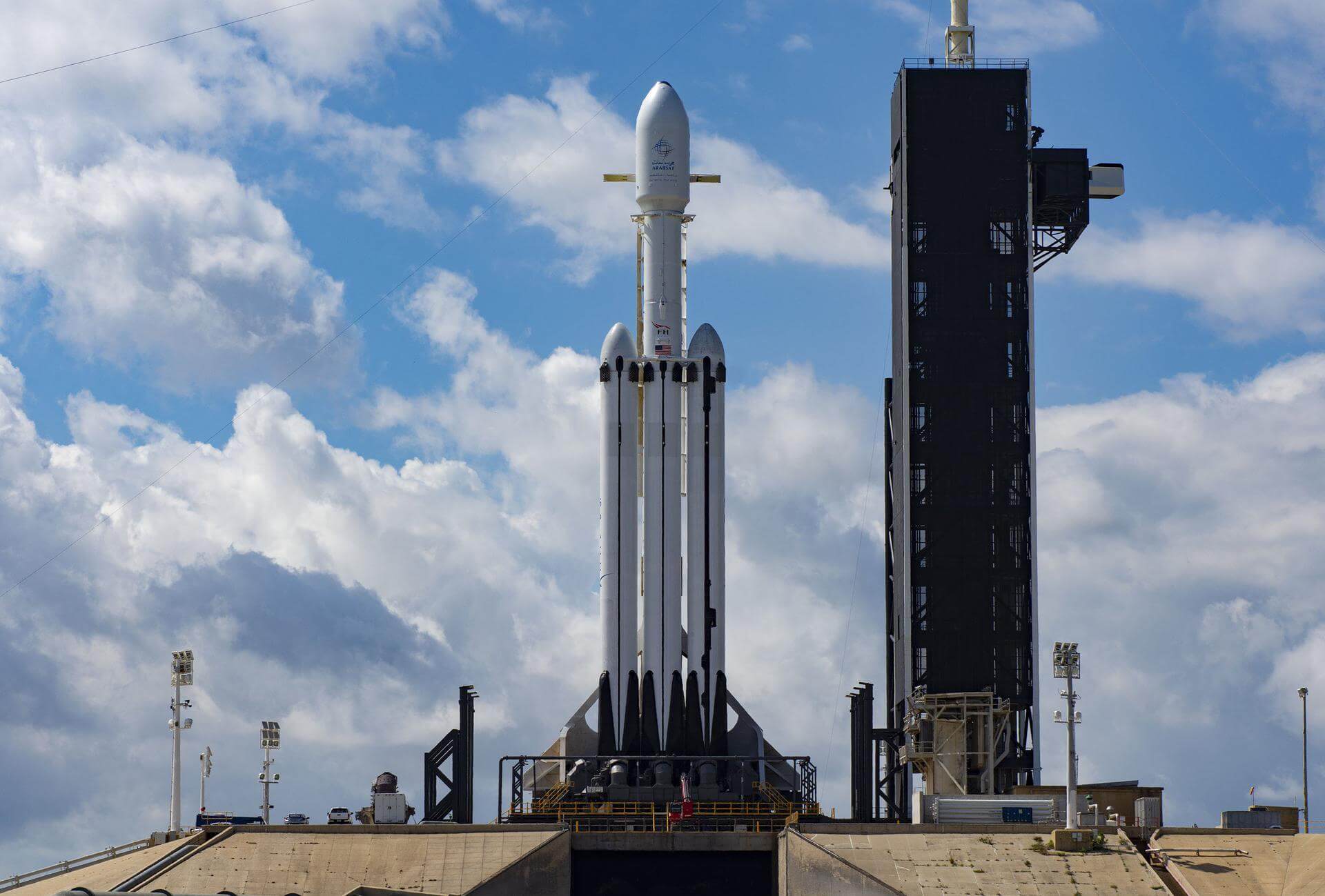
The Falcon Heavy is a variant of the Falcon 9 full thrust launch vehicle and consists of a standard Falcon 9 rocket core, with two additional boosters derived from the Falcon 9 first stage.
All Times Approximate
Roman commissioning milestones after launch.
Space Exploration Technologies Corp., known as SpaceX, is an American aerospace manufacturer and space transport services company headquartered in Hawthorne, California. It was founded in 2002 by entrepreneur Elon Musk with the goal of reducing space transportation costs and enabling the colonization of Mars. SpaceX operates from many pads, on the East Coast of the US they operate from SLC-40 at Cape Canaveral Space Force Station and historic LC-39A at Kennedy Space Center. They also operate from SLC-4E at Vandenberg Space Force Base, California, usually for polar launches. Another launch site is being developed at Boca Chica, Texas.
Enhanced forecast insights (select launches).
Premium adds the higher-signal weather shell for select Eastern Range launches, including the extra launch criteria and fast-read risk rows.
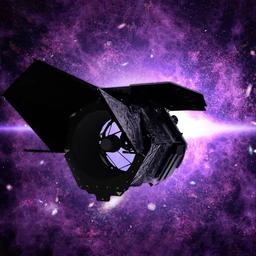
Matched SpaceX launch-page assets and outbound media links for this launch.
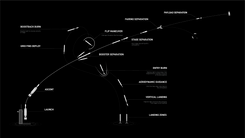
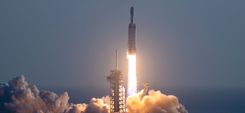
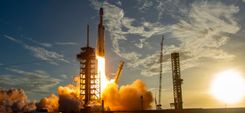

Launch-stage and landing context surfaced from LL2 when it exists.
Linked via Spaceflight News API (SNAPI).
 Article
NASA’s Nancy Grace Roman Space Telescope successfully launched on Sunday, Aug. 30, atop a SpaceX… The post Roman telescope deploys solar array and communica...
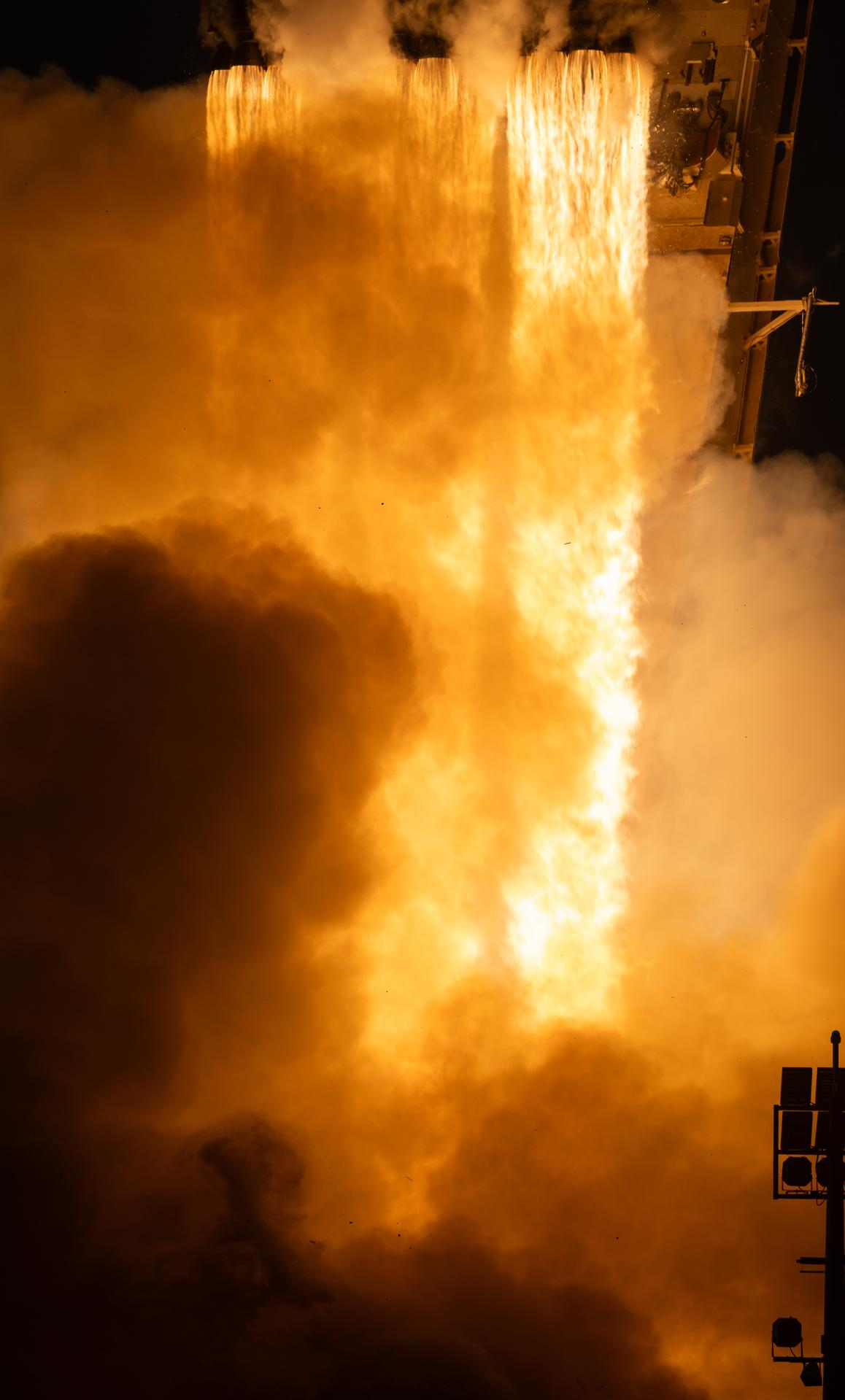 Article
Now on a three-month, million-mile journey to its final orbit, NASA’s Nancy Grace Roman Space Telescope will soon reveal the universe’s darkest secrets. The...
Falcon Heavy side booster first flown during the GOES-U mission.
Provider, rocket, pad, and booster history tied to this launch.
Core-level mission cadence associated with this launch.
A launch-area reference planning index. Use your location for a viewpoint-specific result.
A broad, sunlit jellyfish-style plume is unlikely at the launch area under the current model. The rocket may still be visible as a point.
This is a planning index, not a percent chance. Higher means the modeled viewing setup is stronger.
If needed, your browser asks permission only after you choose this. The launch-area result is not a forecast for your viewpoint.
This score uses a modeled ascent corridor rather than an exact mission path. The overall viewing setup remains useful; direction and timing are approximate.
No broad, sunlit jellyfish plume is currently expected at the modeled viewpoint.
This outlook evaluates whether a broad, sunlit ascent plume could stand out. It does not yet predict whether a specific vehicle will produce one, and an unfavorable plume outlook does not mean the rocket itself will be invisible.
Read the jellyfish effect and JEP FAQ
Did you see a jellyfish-style plume from this viewpoint?
Temporary flight restrictions and NOTAM matches tied to this launch.
Advisory data is informational. Confirm operational constraints with official FAA publications.