Loading photos...
Loading mission resources...
Loading related events...
Loading vehicle timeline...
Loading related news...
TMinusZero
Loading
Preparing the latest launch data.
Launch Detail
Loading launch detail
Pulling launch timing, vehicle context, weather signals, and mission evidence.
Launch detail
CAS Space • Kinetica 1 • Launch Area 130 (CN-NM)
Top answer
Share-ride of 5 satellites to sun-synchronous orbit: * Taijing-3-05A/B * Tianyi-50 * Tianyan-27 * Jilin-1 HR-03D-55
Last refreshed: May 16, 2026, 12:11 PM GMT+8. T-Minus Zero keeps this as the canonical launch record and reconciles schedule, mission, payload, media, and provider signals when those records are available.
Alternate mission URLs consolidate to this canonical launch record so exact mission timing, status, media, and source context stay on one page.
Premium keeps the launch-by-launch change log visible so you can review slips, window edits, and status changes without waiting for an error-driven upgrade prompt.
Free-to-share photography matched to this launch. Tap a photo to view it at full resolution.
Linked via Spaceflight News API (SNAPI).
Share-ride of 5 satellites to sun-synchronous orbit: * Taijing-3-05A/B * Tianyi-50 * Tianyan-27 * Jilin-1 HR-03D-55
Use these internal paths to move from this exact launch record into the provider, vehicle, launch-site, schedule, and mission-family pages that own broader context.
This launch currently has no dedicated mission-family hub, so provider, vehicle, site, and canonical record links are the primary internal paths.
Some high-demand launch records carry specialized search intent. These profiles explain what can be verified from the published record without filling gaps that upstream sources have not published.
Payload and orbit evidence is shown from published launch, payload, mission, and source-link records so the page can answer spacecraft, customer, orbit, provider, and schedule intent.
Key structured fields for this launch record are grouped here so the page answers mission, payload, orbit, provider, source, and timing questions before the deeper tracking and media sections.
This record is preserved as historical launch context. The page emphasizes what was launched, the vehicle and pad involved, published outcome/status fields, linked programs, and source records instead of treating the mission like an upcoming countdown.
Open the launch pad in Google Maps satellite mode using the pad coordinates.
Share-ride of 5 satellites to sun-synchronous orbit: * Taijing-3-05A/B * Tianyi-50 * Tianyan-27 * Jilin-1 HR-03D-55
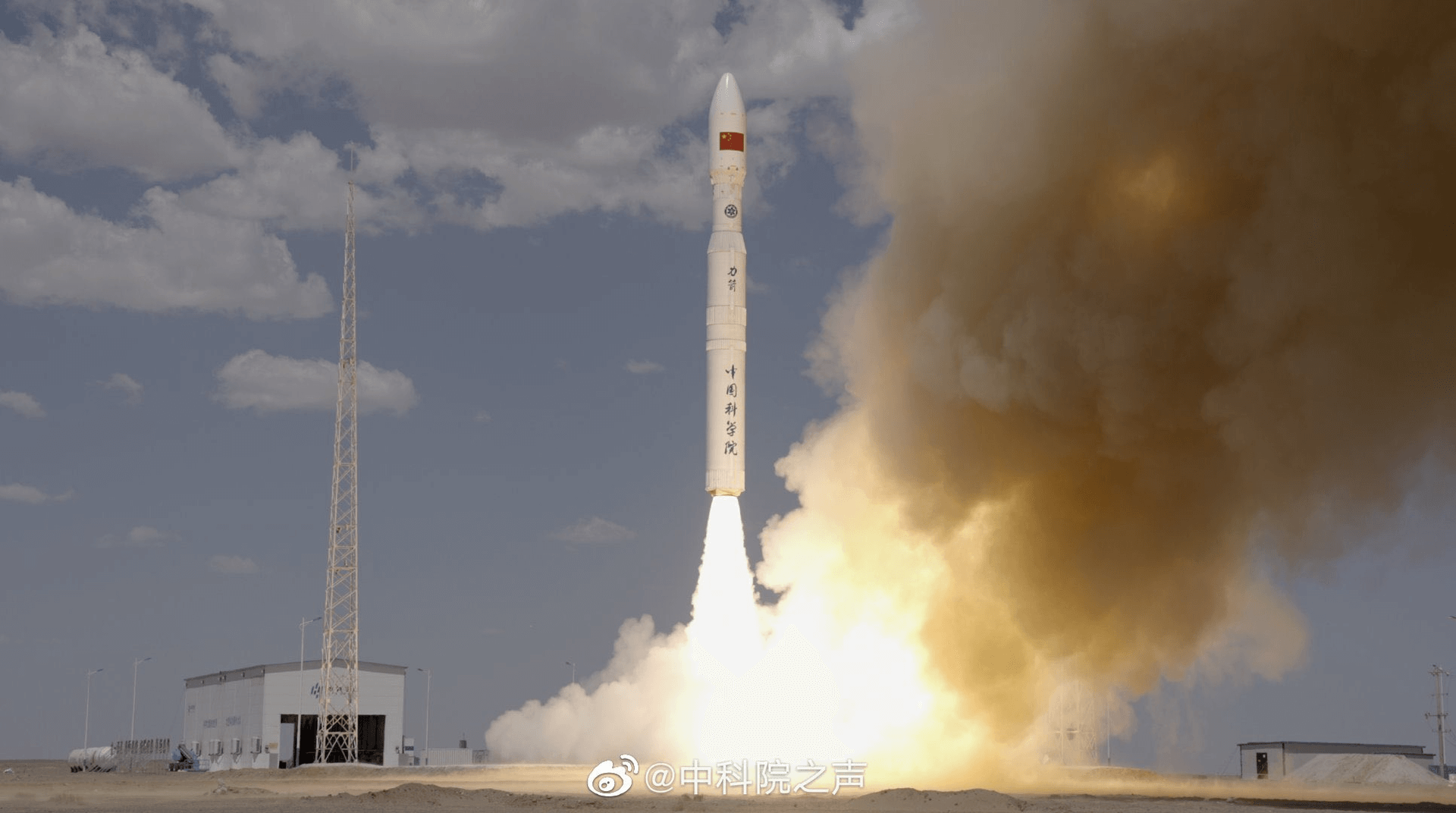
Kinetica 1 (also known as Lijian-1, Chinese: 力箭一号) is a Chinese solid-propellant light launch vehicle. It is capable of placing about 2 tons into low earth orbit and 1.5 tons into sun-synchronous orbit. It is developed by CAS Space, a subsidiary of the Chinese Academy of Sciences. Kinetica 1 is a light launcher whose first stage seems to be derived from the DF-31 long-range intercontinental ballistic missile. It is 30 m high and has a diameter of 2.65 m, with a liftoff mass of 135 t. It's the largest Chinese solid propellant launcher to date, with four stages with a thrust of 200, 100, 50 and 10 tons respectively. The fairing has a diameter of 3.35 meters.
CAS Space is a spin-off company from the Chinese Academy of Sciences (CAS) that is operating and plans to operate various launch vehicles of the Zhongke series.
db8eb8e90101a8f955f98c7e89f0f6957b4ad9bb223a78e1e734e85930bbd92eProvider, rocket, pad, and booster history tied to this launch.
A launch-area reference planning index. Use your location for a viewpoint-specific result.
This launch is waiting for a current solar-geometry calculation. The previous result is not shown because launch timing and sunlight geometry may have changed.
This is a planning index, not a percent chance. Higher means the modeled viewing setup is stronger.
If needed, your browser asks permission only after you choose this. The launch-area result is not a forecast for your viewpoint.
This launch is waiting for a current solar-geometry calculation. The previous result is not shown because launch timing and sunlight geometry may have changed.
This outlook evaluates whether a broad, sunlit ascent plume could stand out. It does not yet predict whether a specific vehicle will produce one, and an unfavorable plume outlook does not mean the rocket itself will be invisible.