
Loading photos...
Loading mission resources...
Loading related events...
Loading vehicle timeline...
Loading related news...
TMinusZero
Loading
Preparing the latest launch data.
Launch Detail
Loading launch detail
Pulling launch timing, vehicle context, weather signals, and mission evidence.
Launch detail
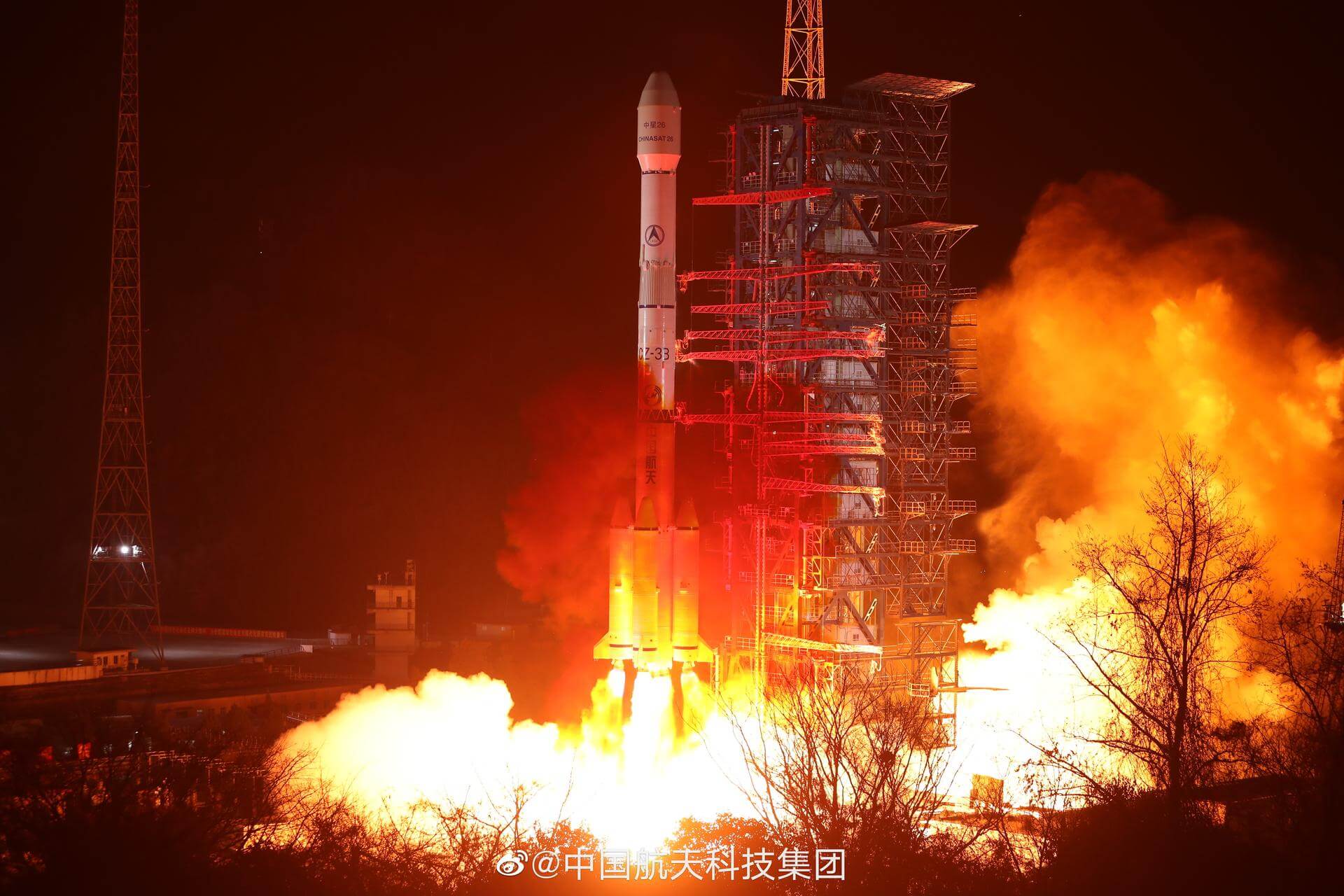
China Aerospace Science and Technology Corporation • Long March 3B/E • Launch Complex 2 (LC-2) (CN-SC)
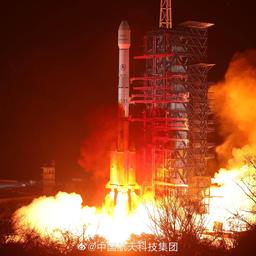

China Aerospace Science and Technology Corporation • Long March 3B/E • LC-2
Top answer
Designed by the CAST Institute (China Academy of Space Technology), a subsidiary of the Chinese aerospace group CASC and specialized in spacecraft design, the Tiantong-1 02 satellite will be operated by China Satellite Communications Co. Ltd, another CASC subsidiary which owns about ten communication satellites such as the ChinaStar and APStar. Tiantong-1 02 is the second satellite of China's first mobile communic...
Last refreshed: Jun 14, 2023, 11:53 AM GMT+8. T-Minus Zero keeps this as the canonical launch record and reconciles schedule, mission, payload, media, and provider signals when those records are available.
Premium keeps the launch-by-launch change log visible so you can review slips, window edits, and status changes without waiting for an error-driven upgrade prompt.
Free-to-share photography matched to this launch. Tap a photo to view it at full resolution.
Linked via Spaceflight News API (SNAPI).
 Article
A new Chinese mobile communications satellite launched Thursday on top of a Long March 3B rocket, joining a similar spacecraft launched four years ago to pro...
 Article
China launched the second Tiantong-1 mobile communications satellite on Thursday. The launch took place at 15:59 UTC Long March-3B/G2 (Chang Zheng-3B/G2) fro...
Designed by the CAST Institute (China Academy of Space Technology), a subsidiary of the Chinese aerospace group CASC and specialized in spacecraft design, the Tiantong-1 02 satellite will be operated by China Satellite Communications Co. Ltd, another CASC subsidiary which owns about ten communication satellites such as the ChinaStar and APStar. Tiantong-1 02 is the second satellite of China's first mobile communication network. It uses a Chinese DFH-4 satellite platform, and, according to its manufacturer CAST, has the highest payload mass utilization rate compared to other satellites of the same family. The project was launched in 2010 following the 2008 earthquake in Sichuan, where almost all ground communication networks were paralyzed. China had no mobile communication satellites at the time, so it had to lease services from foreign countries, such as Inmarsat in Europe, for its rescue teams.
Alternate mission URLs consolidate to this canonical launch record so exact mission timing, status, media, and source context stay on one page.
Use these internal paths to move from this exact launch record into the provider, vehicle, launch-site, schedule, and mission-family pages that own broader context.
This launch currently has no dedicated mission-family hub, so provider, vehicle, site, and canonical record links are the primary internal paths.
Some high-demand launch records carry specialized search intent. These profiles explain what can be verified from the published record without filling gaps that upstream sources have not published.
Payload and orbit evidence is shown from published launch, payload, mission, and source-link records so the page can answer spacecraft, customer, orbit, provider, and schedule intent.
Key structured fields for this launch record are grouped here so the page answers mission, payload, orbit, provider, source, and timing questions before the deeper tracking and media sections.
This record is preserved as historical launch context. The page emphasizes what was launched, the vehicle and pad involved, published outcome/status fields, linked programs, and source records instead of treating the mission like an upcoming countdown.
Open the launch pad in Google Maps satellite mode using the pad coordinates.
Designed by the CAST Institute (China Academy of Space Technology), a subsidiary of the Chinese aerospace group CASC and specialized in spacecraft design, the Tiantong-1 02 satellite will be operated by China Satellite Communications Co. Ltd, another CASC subsidiary which owns about ten communication satellites such as the ChinaStar and APStar. Tiantong-1 02 is the second satellite of China's first mobile communication network. It uses a Chinese DFH-4 satellite platform, and, according to its manufacturer CAST, has the highest payload mass utilization rate compared to other satellites of the same family. The project was launched in 2010 following the 2008 earthquake in Sichuan, where almost all ground communication networks were paralyzed. China had no mobile communication satellites at the time, so it had to lease services from foreign countries, such as Inmarsat in Europe, for its rescue teams.
The Long March 3B / E (G2) (CZ-3B / E) is one of the most successful medium-range launchers and the strongest variant of the CZ-3 series. It was specially developed for the transport of heavy communications satellites into a geostationary transfer orbit. The additional designation "E" stands for a higher payload fairing, stretched boosters and extended fuel tanks at the first stage, over the CZ-3B.
The China Aerospace Science and Technology Corporation (CASC) is the main contractor for the Chinese space program. It is state-owned and has a number of subordinate entities which design, develop and manufacture a range of spacecraft, launch vehicles, strategic and tactical missile systems, and ground equipment. It was officially established in July 1999 as part of a Chinese government reform drive, having previously been one part of the former China Aerospace Corporation. Various incarnations of the program date back to 1956.
c80d4f0c6893883662613e16d4a2d3b4f230626af8eb219af0201e082321b69eProvider, rocket, pad, and booster history tied to this launch.