
Boca Chica, TX, Thursday, July 23, 2026 through Thursday, July 23, 2026 Local
Expiredambiguousconfidence 50%6/7489
1 shape
TX
Window
Jul 23, 2026, 8:00 AM GMT+8 to Jul 24, 2026, 8:00 AM GMT+8
Details
ZHU • SPACE OPERATIONS
TMinusZero
Loading
Preparing the latest launch data.
Launch Detail
Loading launch detail
Pulling launch timing, vehicle context, weather signals, and mission evidence.
Launch detail
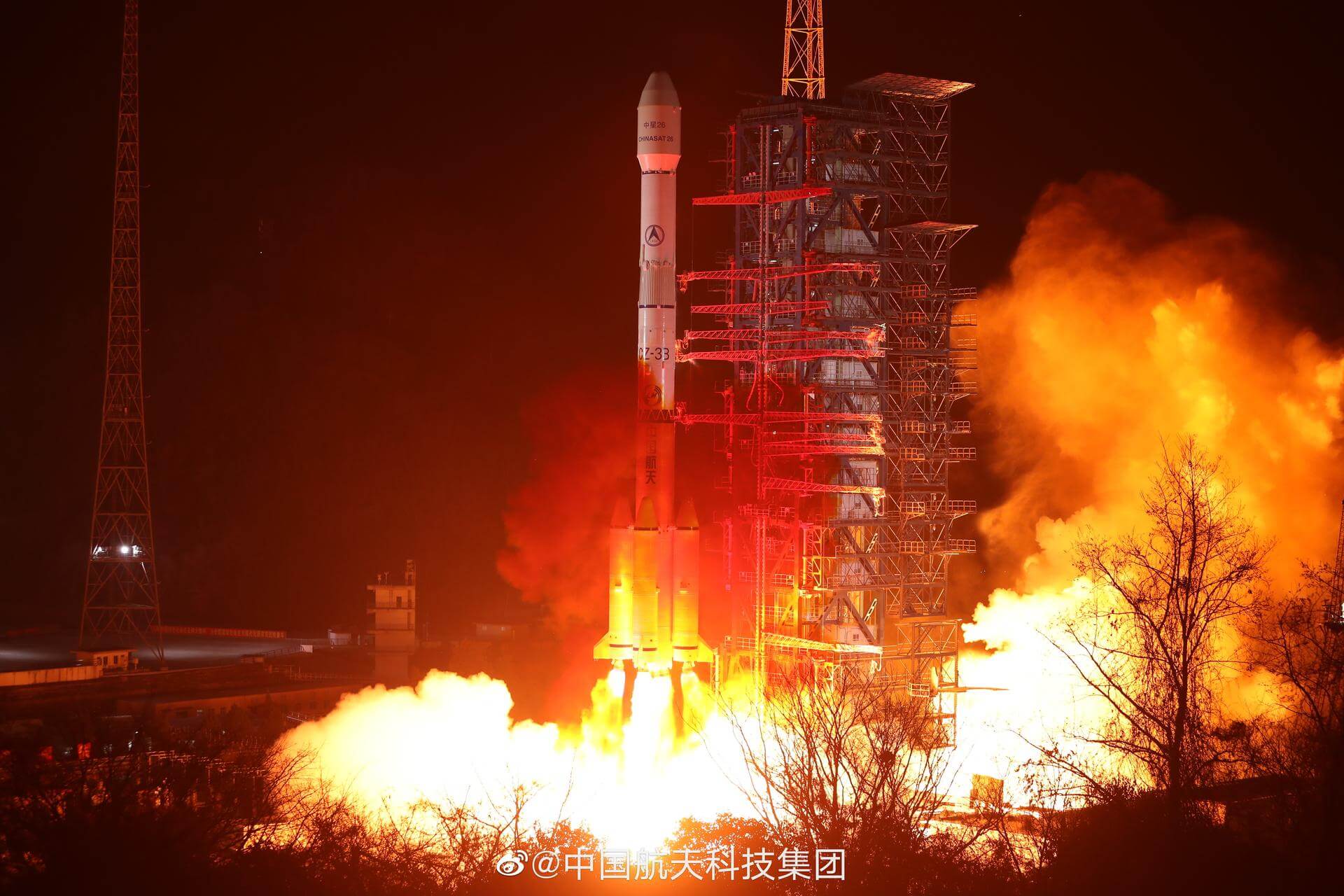
China Aerospace Science and Technology Corporation • Long March 3B/E • Launch Complex 2 (LC-2) (CN-SC)
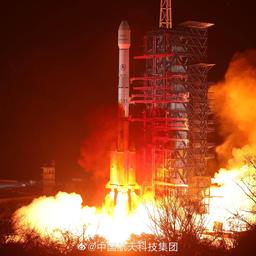

China Aerospace Science and Technology Corporation • Long March 3B/E • LC-2
Top answer
Tianlian is a Chinese data tracking and relay communications geostationary satellite series. The TL 2 (Tian Lian 2) satellites represent the second generation of this relay satellite network, and is based on the DFH-4 Bus, a three-axis-stabilized telecommunications satellite platform. TL 2 will be used to support real-time communications between orbiting satellites and ground control stations. This system will rep...
Last refreshed: Sep 13, 2026, 5:02 AM GMT+8. T-Minus Zero keeps this as the canonical launch record and reconciles schedule, mission, payload, media, and provider signals when those records are available.
Stream links and embedded coverage.
Premium keeps the launch-by-launch change log visible so you can review slips, window edits, and status changes without waiting for an error-driven upgrade prompt.
Free-to-share photography matched to this launch. Tap a photo to view it at full resolution.
Linked via Spaceflight News API (SNAPI).
 Article
China’s Wenchang Space Launch Site reached its milestone 50th launch at the end of July,… The post Amid failure, Wenchang celebrates milestone as China laun...
 Article
HELSINKI — China conducted a pair of launches Thursday, including a Long March 3B rocket which delivered its payload to orbit despite a lightning strike. The...
 Article
After last week’s aborted Starship Flight 13 launch, SpaceX is scheduling a new attempt as… The post Launch Preview: Falcon 9, Starship, and Chinese rockets...
Tianlian is a Chinese data tracking and relay communications geostationary satellite series. The TL 2 (Tian Lian 2) satellites represent the second generation of this relay satellite network, and is based on the DFH-4 Bus, a three-axis-stabilized telecommunications satellite platform. TL 2 will be used to support real-time communications between orbiting satellites and ground control stations. This system will replace the current network of ground-based space tracking and telemetry stations and space tracking ships.
Alternate mission URLs consolidate to this canonical launch record so exact mission timing, status, media, and source context stay on one page.
Use these internal paths to move from this exact launch record into the provider, vehicle, launch-site, schedule, and mission-family pages that own broader context.
This launch currently has no dedicated mission-family hub, so provider, vehicle, site, and canonical record links are the primary internal paths.
Some high-demand launch records carry specialized search intent. These profiles explain what can be verified from the published record without filling gaps that upstream sources have not published.
Payload and orbit evidence is shown from published launch, payload, mission, and source-link records so the page can answer spacecraft, customer, orbit, provider, and schedule intent.
Key structured fields for this launch record are grouped here so the page answers mission, payload, orbit, provider, source, and timing questions before the deeper tracking and media sections.
This record is preserved as historical launch context. The page emphasizes what was launched, the vehicle and pad involved, published outcome/status fields, linked programs, and source records instead of treating the mission like an upcoming countdown.
Open the launch pad in Google Maps satellite mode using the pad coordinates.
Tianlian is a Chinese data tracking and relay communications geostationary satellite series. The TL 2 (Tian Lian 2) satellites represent the second generation of this relay satellite network, and is based on the DFH-4 Bus, a three-axis-stabilized telecommunications satellite platform. TL 2 will be used to support real-time communications between orbiting satellites and ground control stations. This system will replace the current network of ground-based space tracking and telemetry stations and space tracking ships.
The Long March 3B / E (G2) (CZ-3B / E) is one of the most successful medium-range launchers and the strongest variant of the CZ-3 series. It was specially developed for the transport of heavy communications satellites into a geostationary transfer orbit. The additional designation "E" stands for a higher payload fairing, stretched boosters and extended fuel tanks at the first stage, over the CZ-3B.
The China Aerospace Science and Technology Corporation (CASC) is the main contractor for the Chinese space program. It is state-owned and has a number of subordinate entities which design, develop and manufacture a range of spacecraft, launch vehicles, strategic and tactical missile systems, and ground equipment. It was officially established in July 1999 as part of a Chinese government reform drive, having previously been one part of the former China Aerospace Corporation. Various incarnations of the program date back to 1956.
Provider, rocket, pad, and booster history tied to this launch.
A launch-area reference planning index. Use your location for a viewpoint-specific result.
A broad, sunlit jellyfish-style plume is unlikely at the launch area under the current model. The rocket may still be visible as a point.
This is a planning index, not a percent chance. Higher means the modeled viewing setup is stronger.
If needed, your browser asks permission only after you choose this. The launch-area result is not a forecast for your viewpoint.
This score uses a modeled ascent corridor rather than an exact mission path. The overall viewing setup remains useful; direction and timing are approximate.
The setup is weak right now because multiple parts of the visibility chain are underperforming.
This outlook evaluates whether a broad, sunlit ascent plume could stand out. It does not yet predict whether a specific vehicle will produce one, and an unfavorable plume outlook does not mean the rocket itself will be invisible.
Read the jellyfish effect and JEP FAQ
Did you see a jellyfish-style plume from this viewpoint?
Temporary flight restrictions and NOTAM matches tied to this launch.
Advisory data is informational. Confirm operational constraints with official FAA publications.