Recovery
Horizontal Landing
Failed landing • LL2
Type: Horizontal Landing
The lander lost contact with mission control, deviated from its intended trajectory while attempting to land near the lunar south pole, and crashed
TMinusZero
Loading
Preparing the latest launch data.
Launch Detail
Loading launch detail
Pulling launch timing, vehicle context, weather signals, and mission evidence.
Launch detail
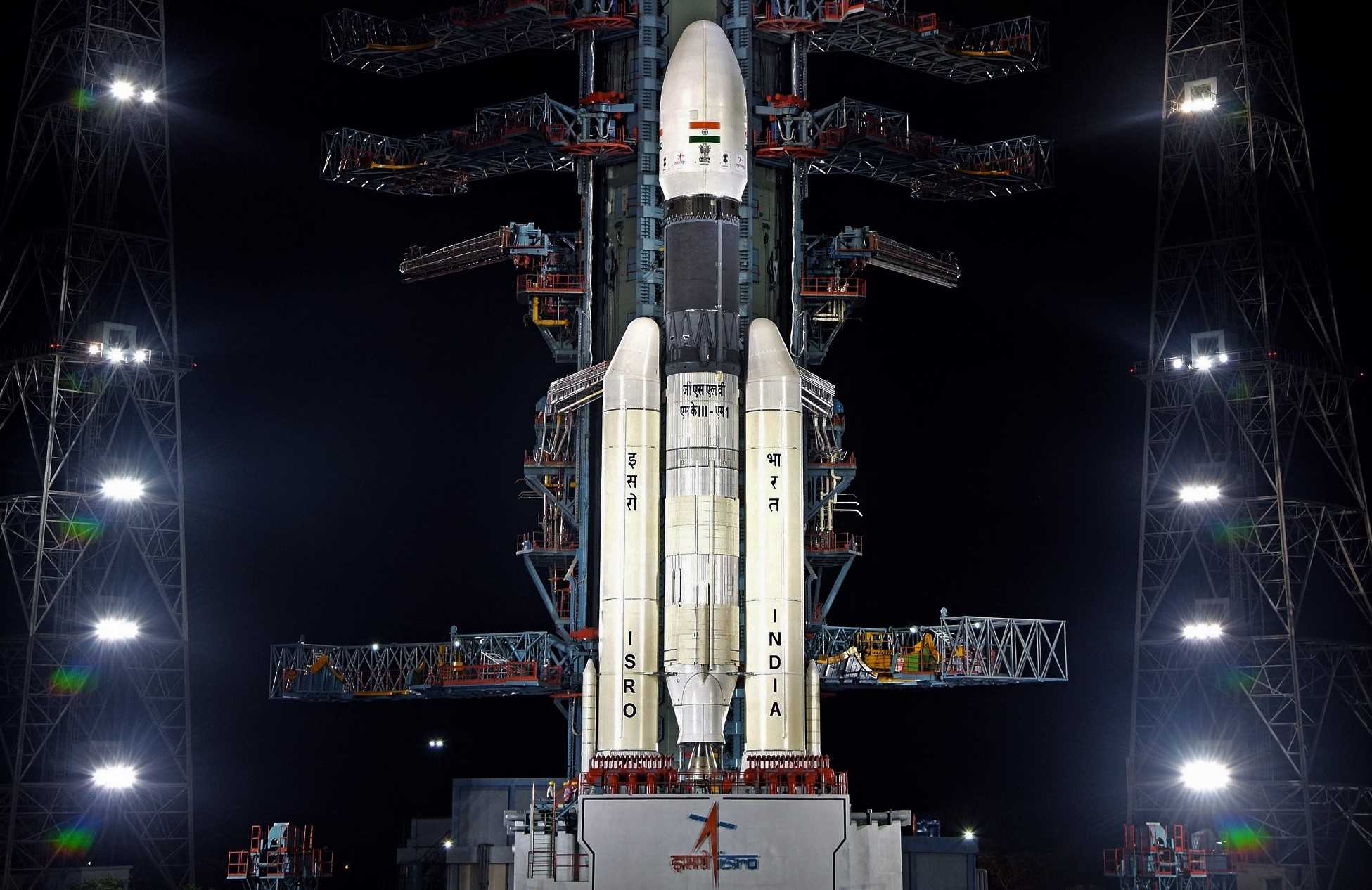
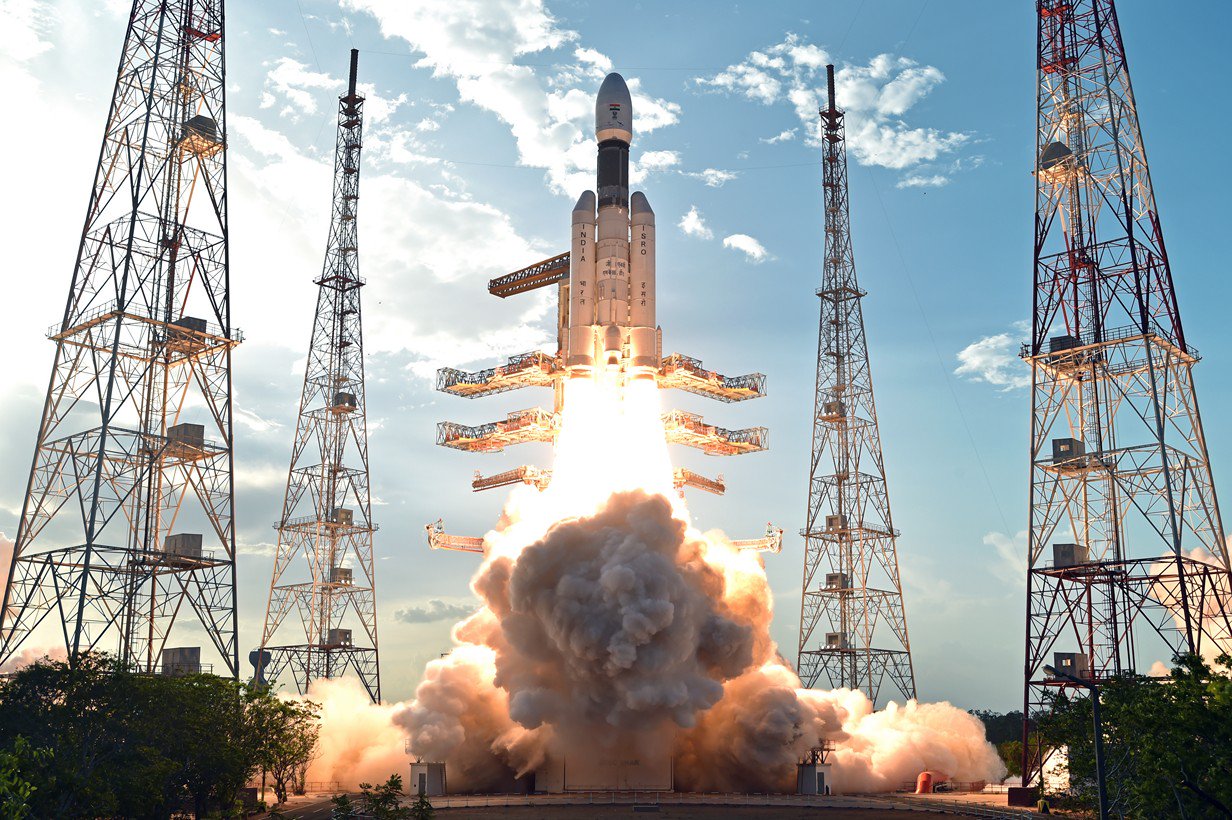
Indian Space Research Organization • Launch Vehicle Mark-3 (GSLV Mk III) • Satish Dhawan Space Centre Second Launch Pad (IN-AP)
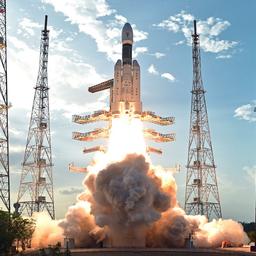
Indian Space Research Organization • Launch Vehicle Mark-3 (GSLV Mk III) • Satish Dhawan Space Centre Second Launch Pad
Top answer
Chandrayaan-2 is India's second mission to the Moon. It consists of an orbiter, lander and rover. After reaching the 100 km lunar orbit, the lander housing the rover will separate from the orbiter. After a controlled descent, the lander will perform a soft landing on the lunar surface at a specified site and deploy the rover. Six-wheeled rover weighs around 20 kg and will operate on solar power. It will move aroun...
Last refreshed: Jun 14, 2023, 9:38 AM GMT+5:30. T-Minus Zero keeps this as the canonical launch record and reconciles schedule, mission, payload, media, and provider signals when those records are available.
Stream links and embedded coverage.
Premium keeps the launch-by-launch change log visible so you can review slips, window edits, and status changes without waiting for an error-driven upgrade prompt.
Free-to-share photography matched to this launch. Tap a photo to view it at full resolution.
Launch-stage and landing context surfaced from LL2 when it exists.
The lander lost contact with mission control, deviated from its intended trajectory while attempting to land near the lunar south pole, and crashed
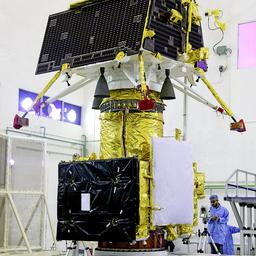
Chandrayaan-2 is India's second mission to the Moon. It consists of an orbiter, lander and rover. After reaching the 100 km lunar orbit, the lander housing the rover will separate from the orbiter. After a controlled descent, the lander will perform a soft landing on the lunar surface at a specified site and deploy the rover. Six-wheeled rover weighs around 20 kg and will operate on solar power. It will move around the landing site, performing lunar surface chemical analysis and relaying data back to Earth through the orbiter. The lander will be collecting data on Moon-quakes, thermal properties of the lunar surface, the density and variation of lunar surface plasma. The orbiter will be mapping lunar surface. Altogether, Chandrayaan-2 mission will collect scientific information on lunar topography, mineralogy, elemental abundance, lunar exosphere and signatures of hydroxyl and water-ice.
Alternate mission URLs consolidate to this canonical launch record so exact mission timing, status, media, and source context stay on one page.
Use these internal paths to move from this exact launch record into the provider, vehicle, launch-site, schedule, and mission-family pages that own broader context.
This launch currently has no dedicated mission-family hub, so provider, vehicle, site, and canonical record links are the primary internal paths.
Key structured fields for this launch record are grouped here so the page answers mission, payload, orbit, provider, source, and timing questions before the deeper tracking and media sections.
This record is preserved as historical launch context. The page emphasizes what was launched, the vehicle and pad involved, published outcome/status fields, linked programs, and source records instead of treating the mission like an upcoming countdown.
Open the launch pad in Google Maps satellite mode using the pad coordinates.
Chandrayaan-2 is India's second mission to the Moon. It consists of an orbiter, lander and rover. After reaching the 100 km lunar orbit, the lander housing the rover will separate from the orbiter. After a controlled descent, the lander will perform a soft landing on the lunar surface at a specified site and deploy the rover. Six-wheeled rover weighs around 20 kg and will operate on solar power. It will move around the landing site, performing lunar surface chemical analysis and relaying data back to Earth through the orbiter. The lander will be collecting data on Moon-quakes, thermal properties of the lunar surface, the density and variation of lunar surface plasma. The orbiter will be mapping lunar surface. Altogether, Chandrayaan-2 mission will collect scientific information on lunar topography, mineralogy, elemental abundance, lunar exosphere and signatures of hydroxyl and water-ice.
The Launch Vehicle Mark-3 (LVM-3), previously called Geosynchronous Satellite Launch Vehicle Mark III (GSLV Mk III), is a three-stage medium-lift launch vehicle developed by the Indian Space Research Organisation (ISRO). It is designed to launch satellites into geostationary orbit, and is intended as a launch vehicle for crewed missions under the Indian Human Spaceflight Programme.
The Indian Space Research Organisation (ISRO) is the space agency of the Government of India headquartered in the city of Bangalore. Its vision is to "harness space technology for national development while pursuing space science research and planetary exploration."
4897daa11f95fdb703de6eab815073171ce709ac783594e1783701e714a27baaLinked via Spaceflight News API (SNAPI).
 Article
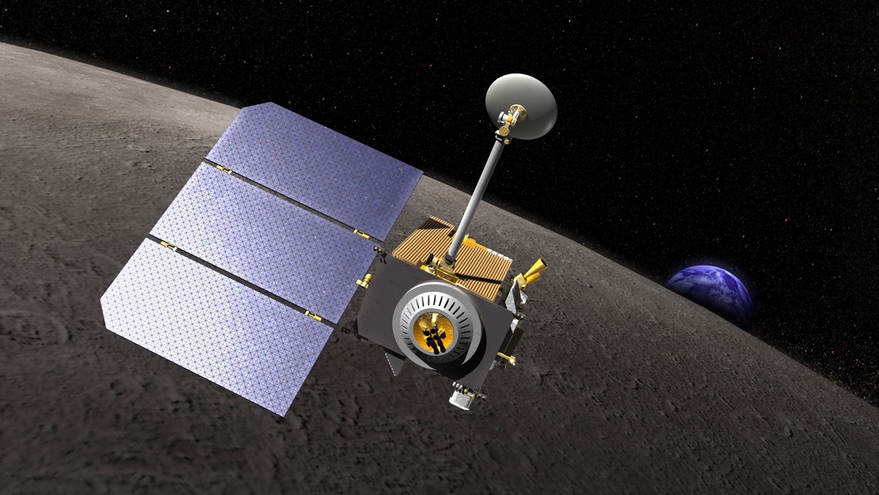
Even a few spacecraft in orbit around the moon can create dozens of warnings of potential collisions that require several maneuvers to avoid.
 Article
India’s Chandrayaan-2 lunar orbiter maneuvered in October to avoid a close approach to NASA’s Lunar Reconnaissance Orbiter (LRO) spacecraft, a conjunction bo...
Provider, rocket, pad, and booster history tied to this launch.