
Recovery
Vertical Landing
Successful landing • LL2
Type: Vertical Landing
Chandrayaan-3 landed sucessfully on the moon.
TMinusZero
Loading
Preparing the latest launch data.
Launch Detail
Loading launch detail
Pulling launch timing, vehicle context, weather signals, and mission evidence.
Launch detail
Indian Space Research Organization • Launch Vehicle Mark-3 (GSLV Mk III) • Satish Dhawan Space Centre Second Launch Pad (IN-AP)
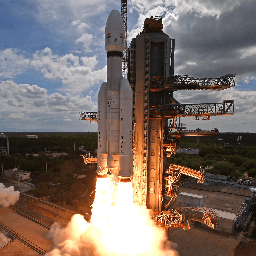
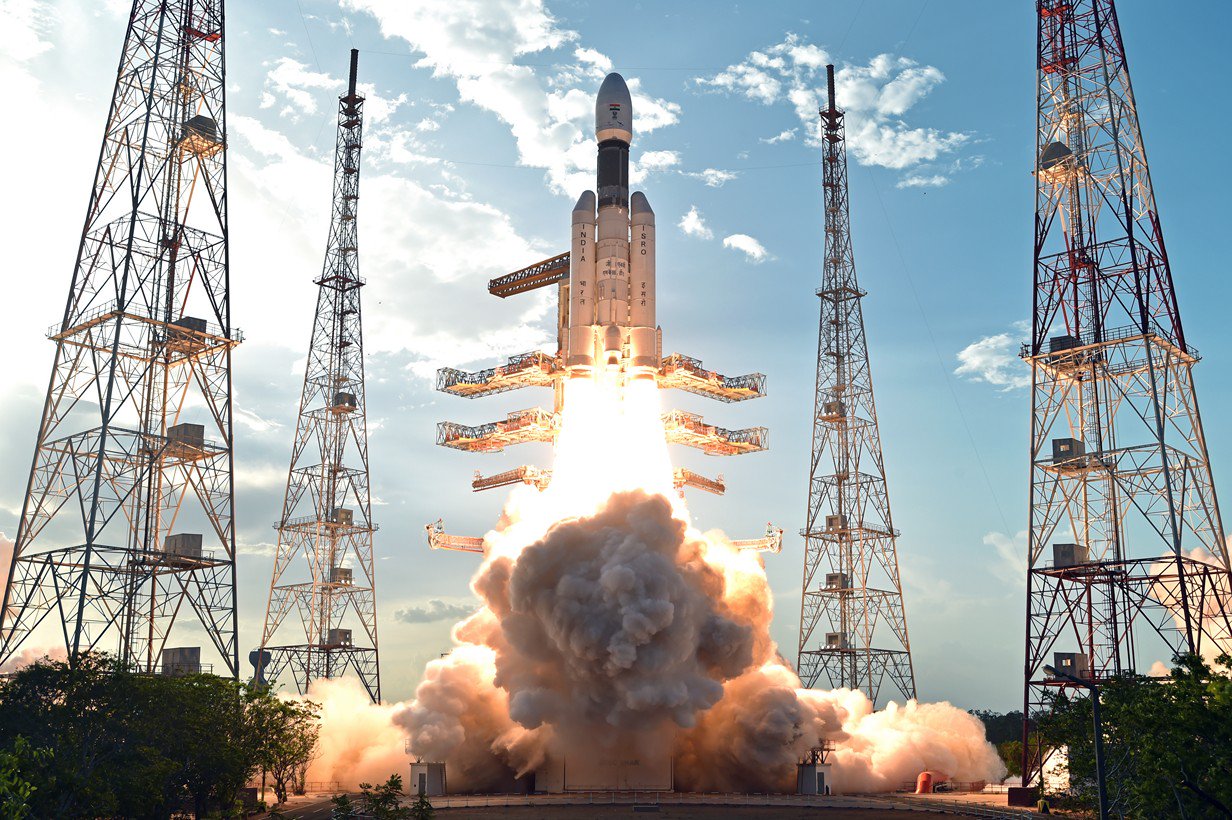
Indian Space Research Organization • Launch Vehicle Mark-3 (GSLV Mk III) • Satish Dhawan Space Centre Second Launch Pad
Top answer
Chandrayaan-3 is India's third mission to the Moon. It repeats most of the failed Chandrayaan-2 mission, with only a lander and rover. After a controlled descent, the lander will perform a soft landing on the lunar surface at a specified site and deploy the rover. The six-wheeled rover weighs around 20 kg and will operate on solar power. It will move around the landing site, performing lunar surface chemical analy...
Last refreshed: Mar 05, 2024, 11:48 PM GMT+5:30. T-Minus Zero keeps this as the canonical launch record and reconciles schedule, mission, payload, media, and provider signals when those records are available.
Stream links and embedded coverage.
Premium keeps the launch-by-launch change log visible so you can review slips, window edits, and status changes without waiting for an error-driven upgrade prompt.
Free-to-share photography matched to this launch. Tap a photo to view it at full resolution.
Launch-stage and landing context surfaced from LL2 when it exists.
Chandrayaan-3 landed sucessfully on the moon.
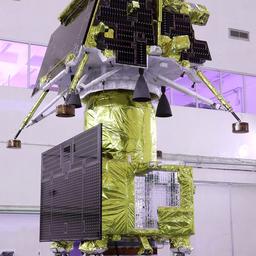
Chandrayaan-3 is India's third mission to the Moon. It repeats most of the failed Chandrayaan-2 mission, with only a lander and rover. After a controlled descent, the lander will perform a soft landing on the lunar surface at a specified site and deploy the rover. The six-wheeled rover weighs around 20 kg and will operate on solar power. It will move around the landing site, performing lunar surface chemical analysis and relaying data back to Earth through the orbiter. The lander will be collecting data on Moon-quakes, thermal properties of the lunar surface, the density and variation of lunar surface plasma. Altogether, the Chandrayaan-3 mission will collect scientific information on lunar topography, mineralogy, elemental abundance, lunar exosphere and signatures of hydroxyl and water-ice.
Alternate mission URLs consolidate to this canonical launch record so exact mission timing, status, media, and source context stay on one page.
Use these internal paths to move from this exact launch record into the provider, vehicle, launch-site, schedule, and mission-family pages that own broader context.
This launch currently has no dedicated mission-family hub, so provider, vehicle, site, and canonical record links are the primary internal paths.
Key structured fields for this launch record are grouped here so the page answers mission, payload, orbit, provider, source, and timing questions before the deeper tracking and media sections.
This record is preserved as historical launch context. The page emphasizes what was launched, the vehicle and pad involved, published outcome/status fields, linked programs, and source records instead of treating the mission like an upcoming countdown.
Open the launch pad in Google Maps satellite mode using the pad coordinates.
Chandrayaan-3 is India's third mission to the Moon. It repeats most of the failed Chandrayaan-2 mission, with only a lander and rover. After a controlled descent, the lander will perform a soft landing on the lunar surface at a specified site and deploy the rover. The six-wheeled rover weighs around 20 kg and will operate on solar power. It will move around the landing site, performing lunar surface chemical analysis and relaying data back to Earth through the orbiter. The lander will be collecting data on Moon-quakes, thermal properties of the lunar surface, the density and variation of lunar surface plasma. Altogether, the Chandrayaan-3 mission will collect scientific information on lunar topography, mineralogy, elemental abundance, lunar exosphere and signatures of hydroxyl and water-ice.
The Launch Vehicle Mark-3 (LVM-3), previously called Geosynchronous Satellite Launch Vehicle Mark III (GSLV Mk III), is a three-stage medium-lift launch vehicle developed by the Indian Space Research Organisation (ISRO). It is designed to launch satellites into geostationary orbit, and is intended as a launch vehicle for crewed missions under the Indian Human Spaceflight Programme.
The Indian Space Research Organisation (ISRO) is the space agency of the Government of India headquartered in the city of Bangalore. Its vision is to "harness space technology for national development while pursuing space science research and planetary exploration."
9b138e11e9f1951a49c7e5594dfcffe39513b3b2ed6e6fd83288abab5b67b981Linked via Spaceflight News API (SNAPI).
 Article
Sydney, Australia (SPX) Nov 15, 2025 Chandrayaan-3 was developed to demonstrate the capability for a controlled lunar landing, enable rover mobility on...
 Article
The Indian Space Research Organisation (ISRO) has made a surprise announcement, announcing they have successfully brought the Chandrayann-3 Propulsion Module...
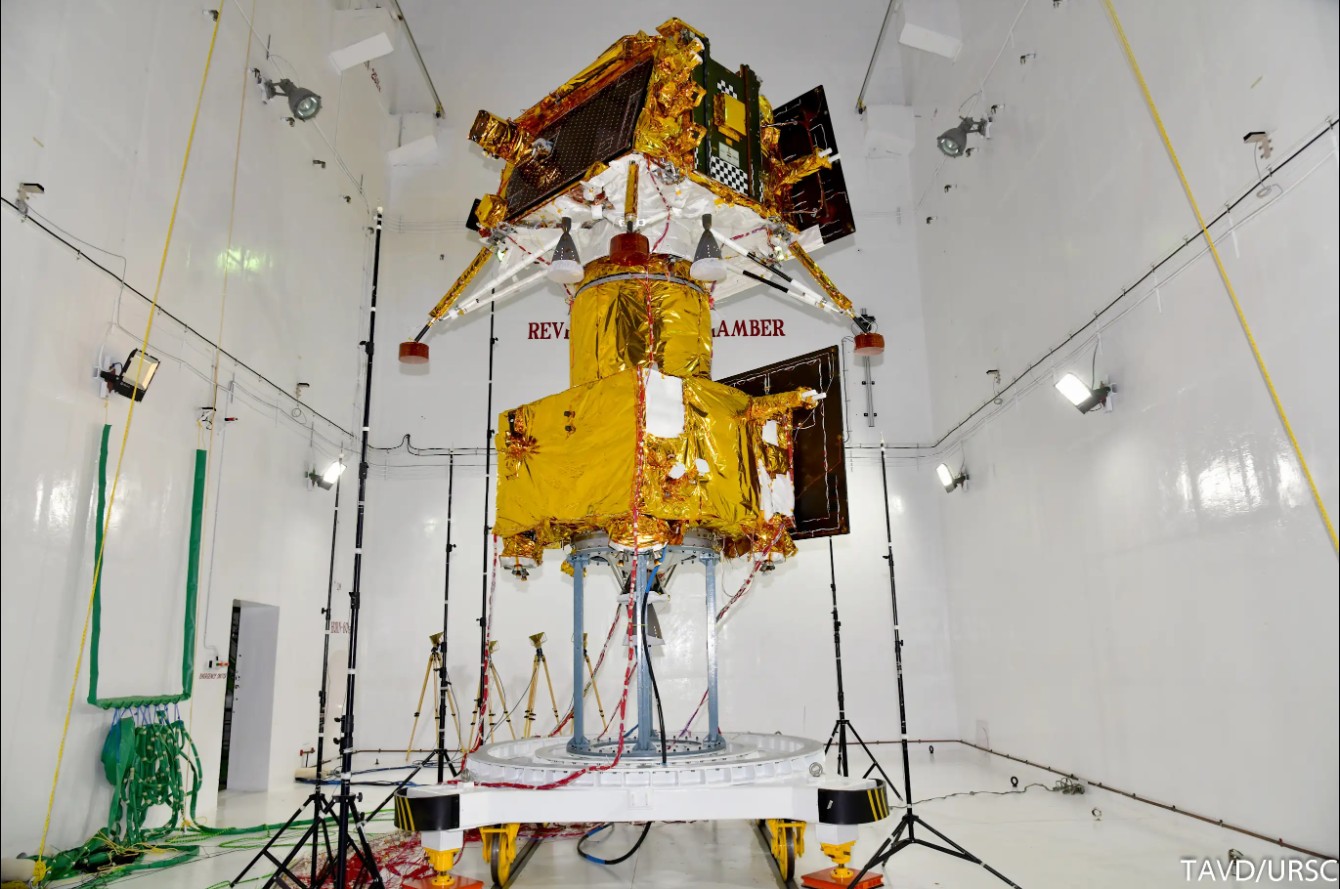 Article
India now credibly has the third most advanced deep-space program in the world.
 Article
The spacecraft that transported the Chandrayaan-3 lander to the moon has returned to Earth orbit, a demonstration of technologies to support a future Indian...
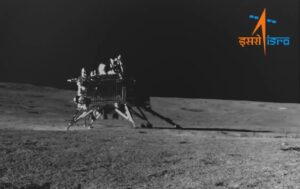 Article
The Chandrayaan-3 mission is a perfect example of India crossing the threshold to a new era of space activity. While the August 2023 Moon landing is a shinin...
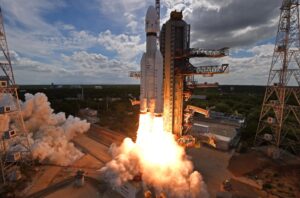 Article
The liftoff time for India’s historic Chandrayaan-3 lunar lander was shifted four seconds to avoid close approaches to other space objects.
Provider, rocket, pad, and booster history tied to this launch.