

Loading photos...
Loading mission resources...
Loading related events...
Loading vehicle timeline...
Loading related news...
TMinusZero
Loading
Preparing the latest launch data.
Launch Detail
Loading launch detail
Pulling launch timing, vehicle context, weather signals, and mission evidence.
Launch detail
Orbital Sciences Corporation • Minotaur I • Space Launch Complex 8 (CA)
Top answer
In early 2001, the National Space Program Office (NSPO) of Taiwan, Republic of China, selected Orbital for a $56 million contract for the ROCSAT-3/COSMIC (Republic of China Satellite / Constellation Observing System for Meteorology, Ionosphere and Climate) program. ROCSAT was renamed FORMOSAT in December 2004. The FORMOSAT-3/COSMIC program is an international collaboration between Taiwan and the United States that...
Last refreshed: Jun 13, 2023, 8:32 PM PDT. T-Minus Zero keeps this as the canonical launch record and reconciles schedule, mission, payload, media, and provider signals when those records are available.
Alternate mission URLs consolidate to this canonical launch record so exact mission timing, status, media, and source context stay on one page.
Premium keeps the launch-by-launch change log visible so you can review slips, window edits, and status changes without waiting for an error-driven upgrade prompt.
Free-to-share photography matched to this launch. Tap a photo to view it at full resolution.
In early 2001, the National Space Program Office (NSPO) of Taiwan, Republic of China, selected Orbital for a $56 million contract for the ROCSAT-3/COSMIC (Republic of China Satellite / Constellation Observing System for Meteorology, Ionosphere and Climate) program. ROCSAT was renamed FORMOSAT in December 2004. The FORMOSAT-3/COSMIC program is an international collaboration between Taiwan and the United States that will use a constellation of six remote sensing microsatellites to collect atmospheric data for weather prediction and for ionosphere, climate and gravity research. Data from the satellites will be made freely available to the international scientific community in near real-time.
Use these internal paths to move from this exact launch record into the provider, vehicle, launch-site, schedule, and mission-family pages that own broader context.
This launch currently has no dedicated mission-family hub, so provider, vehicle, site, and canonical record links are the primary internal paths.
Key structured fields for this launch record are grouped here so the page answers mission, payload, orbit, provider, source, and timing questions before the deeper tracking and media sections.
This record is preserved as historical launch context. The page emphasizes what was launched, the vehicle and pad involved, published outcome/status fields, linked programs, and source records instead of treating the mission like an upcoming countdown.
Open the launch pad in Google Maps satellite mode using the pad coordinates.
In early 2001, the National Space Program Office (NSPO) of Taiwan, Republic of China, selected Orbital for a $56 million contract for the ROCSAT-3/COSMIC (Republic of China Satellite / Constellation Observing System for Meteorology, Ionosphere and Climate) program. ROCSAT was renamed FORMOSAT in December 2004. The FORMOSAT-3/COSMIC program is an international collaboration between Taiwan and the United States that will use a constellation of six remote sensing microsatellites to collect atmospheric data for weather prediction and for ionosphere, climate and gravity research. Data from the satellites will be made freely available to the international scientific community in near real-time.
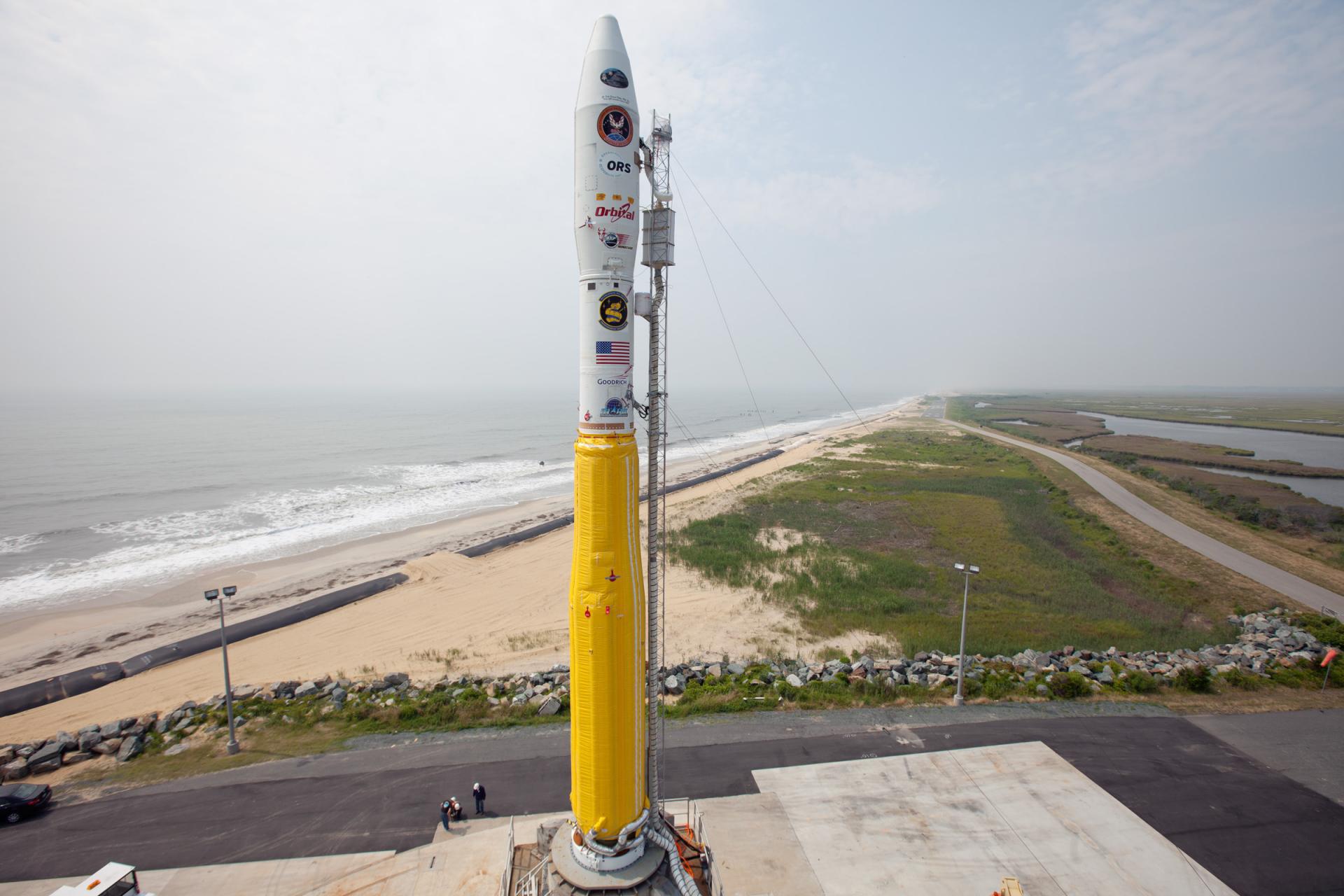
The Minotaur I launch system is derived from converted Minuteman II ICBMs and is used to launch small satellites for the US Government. The first and second stages, taken directly from decommissioned Minuteman missiles, are mated to the Orion third and fourth stages taken from the Pegasus XL air-launched rocket family. An optional hydrazine-powered fifth stage called HAPS can be used.The Minotaur I launch system is derived from converted Minuteman II ICBMs and is used to launch small satellites for the US Government. An optional hydrazine-powered fifth stage called HAPS can be used.
0170d30d62c08adf59925335cab62c1e45ba643d7e6c732e2b17b44d47c127e5Provider, rocket, pad, and booster history tied to this launch.