Soyuz 21
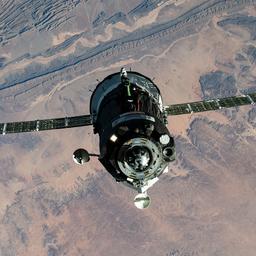
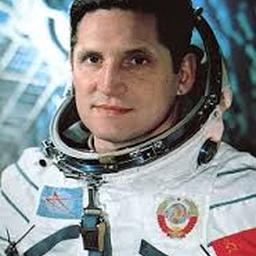
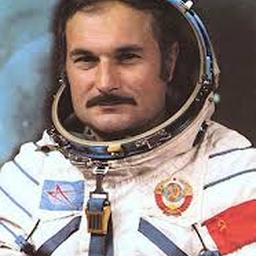
Soyuz 21 was a Soyuz spacecraft which launched on 6 July 1976 12:08 UTC. It transported two cosmonauts on the first flight to Salyut. The crew was Boris Volynov and Vitaly Zholobov.
Launch Detail
Pulling launch timing, vehicle context, weather signals, and mission evidence.
Launch detail
Soviet Space Program • Soyuz • 1/5 (NA)


Soviet Space Program • Soyuz • 1/5
Soyuz 21 was the first crewed mission to the Salyut 5 military space station. The mission began on July 6, 1976, 12:08:45 UTC, launching Commander Boris Volynov and Flight Engineer Vitaly Zholobov into orbit. Spacecraft docked with the station on July 7. During their stay on the station, crew conducted scientific experiments, inculding the first use of Kristall furnace for crystal growth, solar observations and experiments of military nature. The mission was expected to last for 60 days, but emergincies occured on the 42nd day, which included shutdown of several onboard systems, oxygen regeneration system among those. Crew restored functionality of the spaceship, but both Volynov and Zholobov's health was deteriorated, and mission had to end early. The mission concluded after 49 days with a rough landing back on Earth on August 24, 1976, 18:32:17 UTC.
Open the launch pad in Google Maps satellite mode using the pad coordinates.
Soyuz 21 was the first crewed mission to the Salyut 5 military space station. The mission began on July 6, 1976, 12:08:45 UTC, launching Commander Boris Volynov and Flight Engineer Vitaly Zholobov into orbit. Spacecraft docked with the station on July 7. During their stay on the station, crew conducted scientific experiments, inculding the first use of Kristall furnace for crystal growth, solar observations and experiments of military nature. The mission was expected to last for 60 days, but emergincies occured on the 42nd day, which included shutdown of several onboard systems, oxygen regeneration system among those. Crew restored functionality of the spaceship, but both Volynov and Zholobov's health was deteriorated, and mission had to end early. The mission concluded after 49 days with a rough landing back on Earth on August 24, 1976, 18:32:17 UTC.
The Soviet space program, was the national space program of the Union of Soviet Socialist Republics (USSR) actived from 1930s until disintegration of the Soviet Union in 1991. The Soviet Union's space program was mainly based on the cosmonautic exploration of space and the development of the expandable launch vehicles, which had been split between many design bureaus competing against each other. Over its 60-years of history, the Russian program was responsible for a number of pioneering feats and accomplishments in the human space flight, including the first intercontinental ballistic missile (R-7), first satellite (Sputnik 1), first animal in Earth orbit (the dog Laika on Sputnik 2), first human in space and Earth orbit (cosmonaut Yuri Gagarin on Vostok 1), first woman in space and Earth orbit (cosmonaut Valentina Tereshkova on Vostok 6), first spacewalk (cosmonaut Alexei Leonov on Voskhod 2), first Moon impact (Luna 2), first image of the far side of the Moon (Luna 3) and unmanned lunar soft landing (Luna 9), first space rover (Lunokhod 1), first sample of lunar soil automatically extracted and brought to Earth (Luna 16), and first space station (Salyut 1). Further notable records included the first interplanetary probes: Venera 1 and Mars 1 to fly by Venus and Mars, respectively, Venera 3 and Mars 2 to impact the respective planet surface, and Venera 7 and Mars 3 to make soft landings on these planets.
Provider, rocket, pad, and booster history tied to this launch.
Launch-stage and landing context surfaced from LL2 when it exists.
Soyuz 21 was a Soyuz spacecraft which launched on 6 July 1976 12:08 UTC. It transported two cosmonauts on the first flight to Salyut. The crew was Boris Volynov and Vitaly Zholobov.
The Soyuz spacecraft safely landed in Kazakhstan.