
Loading photos...
Loading mission resources...
Loading related events...
Loading vehicle timeline...
Loading related news...
TMinusZero
Loading
Preparing the latest launch data.
Launch Detail
Loading launch detail
Pulling launch timing, vehicle context, weather signals, and mission evidence.
Launch detail
Russian Federal Space Agency (ROSCOSMOS) • Soyuz-U-PVB • 31/6 (KZ-43)
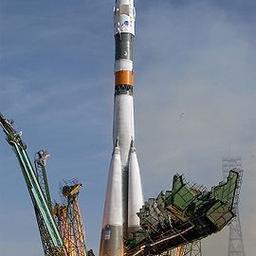

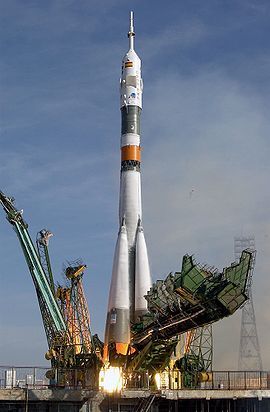
Russian Federal Space Agency (ROSCOSMOS) • Soyuz-U-PVB • 31/6
Top answer
Cluster is an magnetospheric research project, consisting of a constellation of four identical satellites. Part of the first Cornerstone Mission in the European Space Agency's long-term space science programme, the Cluster II satellites were built to replace the original Cluster mission, which was aborted after Ariane-5G's maiden flight in June 1996 failed to launch the satellites. The mission's objective is to re...
Last refreshed: Aug 22, 2024, 2:06 PM GMT+5. T-Minus Zero keeps this as the canonical launch record and reconciles schedule, mission, payload, media, and provider signals when those records are available.
Premium keeps the launch-by-launch change log visible so you can review slips, window edits, and status changes without waiting for an error-driven upgrade prompt.
Free-to-share photography matched to this launch. Tap a photo to view it at full resolution.
Linked via Spaceflight News API (SNAPI).
 Article
The Cluster mission danced its final dance as Tango reentered the atmosphere on 1 September, at 23:30:31 CEST. The end of the Cluster mission in 2024 turned...
 Article
The final two of ESA's pioneering Cluster spacecraft, Samba and Tango, will end their journeys as they burn up in our atmosphere on 31 August and 1 September...
 Article
Paris, France (SPX) Feb 04, 2026 When satellites fall back to Earth, most of their structure burns up in the atmosphere, but engineers still lack detail...
 Article
When satellites eventually fall back down to Earth, they mostly burn up because of the friction caused by the atmosphere. Scientific data about this atmosphe...
ArticleOn 8 September 2024, the first of four satellites that make up ESA’s Cluster mission will reenter Earth’s atmosphere over the South Pacific Ocean Uninhabited...
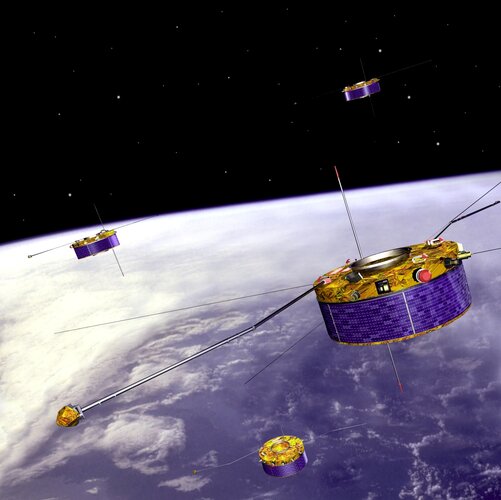
Cluster is an magnetospheric research project, consisting of a constellation of four identical satellites. Part of the first Cornerstone Mission in the European Space Agency's long-term space science programme, the Cluster II satellites were built to replace the original Cluster mission, which was aborted after Ariane-5G's maiden flight in June 1996 failed to launch the satellites. The mission's objective is to research the Earth's magnetosphere and its interaction with the solar winds, via four identical satellites flying in formation which take simultaneous measurements to provide the most detailed three-dimensional study of changes and processes taking place in near-Earth space. The four satellites were launched in 2000 on two Soyuz-U Fregat rockets.
Alternate mission URLs consolidate to this canonical launch record so exact mission timing, status, media, and source context stay on one page.
Use these internal paths to move from this exact launch record into the provider, vehicle, launch-site, schedule, and mission-family pages that own broader context.
This launch currently has no dedicated mission-family hub, so provider, vehicle, site, and canonical record links are the primary internal paths.
Key structured fields for this launch record are grouped here so the page answers mission, payload, orbit, provider, source, and timing questions before the deeper tracking and media sections.
This record is preserved as historical launch context. The page emphasizes what was launched, the vehicle and pad involved, published outcome/status fields, linked programs, and source records instead of treating the mission like an upcoming countdown.
Open the launch pad in Google Maps satellite mode using the pad coordinates.
Cluster is an magnetospheric research project, consisting of a constellation of four identical satellites. Part of the first Cornerstone Mission in the European Space Agency's long-term space science programme, the Cluster II satellites were built to replace the original Cluster mission, which was aborted after Ariane-5G's maiden flight in June 1996 failed to launch the satellites. The mission's objective is to research the Earth's magnetosphere and its interaction with the solar winds, via four identical satellites flying in formation which take simultaneous measurements to provide the most detailed three-dimensional study of changes and processes taking place in near-Earth space. The four satellites were launched in 2000 on two Soyuz-U Fregat rockets.
A Russian orbital launch vehicle. A version of the Soyuz-U with safety modifications to prevent and resist fires in all stages and the upper stage avionics compartment.
The Roscosmos State Corporation for Space Activities, commonly known as Roscosmos, is the governmental body responsible for the space science program of the Russian Federation and general aerospace research. Soyuz has many launch locations the Russian sites are Baikonur, Plesetsk and Vostochny however Ariane also purchases the vehicle and launches it from French Guiana.
e688283bef4c941bb433a6e52452d8d155b027be3825f94ad70e34cc7b6a5cd0Provider, rocket, pad, and booster history tied to this launch.