


Cape Canaveral, FL, Sunday, September 13, 2026 Local
Expiredambiguousconfidence 52%6/2192
1 shape
FL
Window
Sep 12, 2026, 8:00 PM EDT to Sep 13, 2026, 8:00 PM EDT
Details
ZMA • SPACE OPERATIONS
TMinusZero
Loading
Preparing the latest launch data.
Launch Detail
Loading launch detail
Pulling launch timing, vehicle context, weather signals, and mission evidence.
Launch detail
United Launch Alliance • Vulcan VC6L • Space Launch Complex 41 (FL)
Top answer
Amazon Leo, formerly known as Project Kuiper, is a mega constellation of satellites in Low Earth Orbit that will offer broadband internet access, this constellation will be managed by Kuiper Systems LLC, a subsidiary of Amazon. This constellation is planned to be composed of 3,276 satellites. The satellites are projected to be placed in 98 orbital planes in three orbital layers, one at 590 km, 610 km and 630 km al...
Last refreshed: Sep 19, 2026, 10:52 PM EDT. T-Minus Zero keeps this as the canonical launch record and reconciles schedule, mission, payload, media, and provider signals when those records are available.
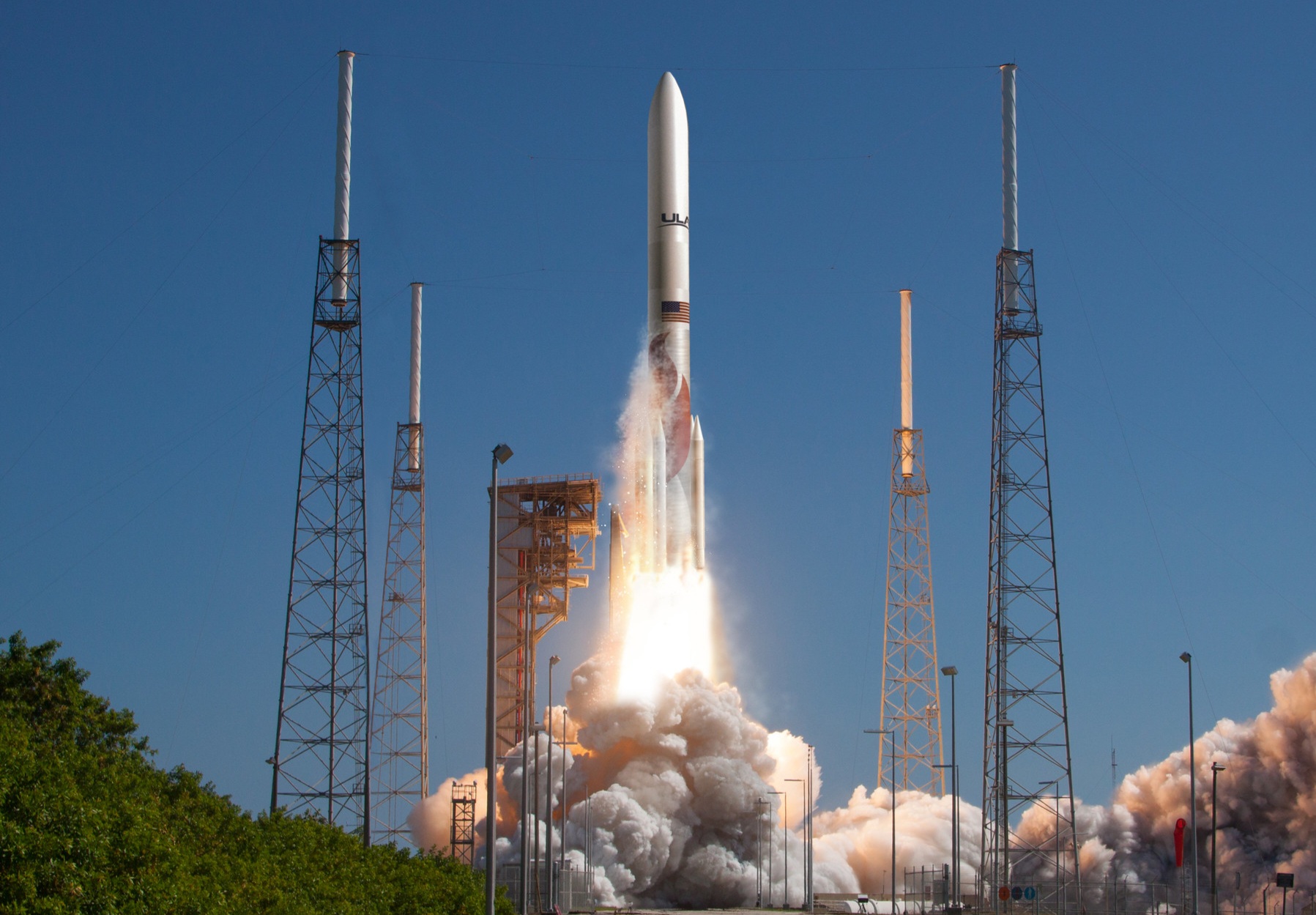
An Atlas V 551 rocket, configured with five side-mounted solid rocket boosters and a medium-length payload fairing, will launch the next Amazon Leo satellites into space. Liftoff will occur from Space Launch Complex-41 at Cape Canaveral Space Force Station, Florida. This is ULA's Amazon Leo 8 mission, continuing a new chapter in the commercial launch industry as Amazon partners with ULA to help deploy its advanced satellite constellation.
Premium unlocks this provider resource inside T-Minus Zero.
Stream links and embedded coverage.
Premium keeps the launch-by-launch change log visible so you can review slips, window edits, and status changes without waiting for an error-driven upgrade prompt.
Free-to-share photography matched to this launch. Tap a photo to view it at full resolution.
Matched SpaceX launch-page assets and outbound media links for this launch.
Enhanced forecast insights (select launches).
Premium adds the higher-signal weather shell for select Eastern Range launches, including the extra launch criteria and fast-read risk rows.
Amazon Leo, formerly known as Project Kuiper, is a mega constellation of satellites in Low Earth Orbit that will offer broadband internet access, this constellation will be managed by Kuiper Systems LLC, a subsidiary of Amazon. This constellation is planned to be composed of 3,276 satellites. The satellites are projected to be placed in 98 orbital planes in three orbital layers, one at 590 km, 610 km and 630 km altitude. 45 satellites will be carried on each Vulcan launch.
Alternate mission URLs consolidate to this canonical launch record so exact mission timing, status, media, and source context stay on one page.
Use these internal paths to move from this exact launch record into the provider, vehicle, launch-site, schedule, and mission-family pages that own broader context.
This launch currently has no dedicated mission-family hub, so provider, vehicle, site, and canonical record links are the primary internal paths.
Some high-demand launch records carry specialized search intent. These profiles explain what can be verified from the published record without filling gaps that upstream sources have not published.
Payload and orbit evidence is shown from published launch, payload, mission, and source-link records so the page can answer spacecraft, customer, orbit, provider, and schedule intent.
Key structured fields for this launch record are grouped here so the page answers mission, payload, orbit, provider, source, and timing questions before the deeper tracking and media sections.
Join the conversation on social media! @ulalaunch @AmazonLeo
Open the launch pad in Google Maps satellite mode using the pad coordinates.
Amazon Leo, formerly known as Project Kuiper, is a mega constellation of satellites in Low Earth Orbit that will offer broadband internet access, this constellation will be managed by Kuiper Systems LLC, a subsidiary of Amazon. This constellation is planned to be composed of 3,276 satellites. The satellites are projected to be placed in 98 orbital planes in three orbital layers, one at 590 km, 610 km and 630 km altitude. 45 satellites will be carried on each Vulcan launch.
Vulcan Centaur is a two-stage-to-orbit, heavy-lift launch vehicle under development by United Launch Alliance (ULA) since 2014. It is principally designed to meet launch demands for the U.S. government's National Security Space Launch (NSSL) program for use by the United States Space Force and U.S. intelligence agencies for national security satellite launches. It will replace both of ULA's existing launchers (Atlas V and Delta IV Heavy) in this role, as these launchers are retiring.
The spacecraft are encapsulated in a 17.7-ft (5.4-m) diameter medium payload fairing. The PLF is a sandwich composite structure made with a vented aluminum-honeycomb core and graphite-epoxy face sheets. The bisector (two-piece shell) PLF encapsulates both the Centaur and the satellites. The vehicle's height with the 5-meter medium PLF is approximately 205 ft (62.5 m).
The Centaur second stage is 10 ft (3 m) in diameter and 41.5 ft (12.6 m) in length. Its propellant tanks are pressure-stabilized and constructed of corrosion-resistant stainless steel. Centaur is a cryogenic vehicle, fueled with liquid hydrogen and liquid oxygen, powered by an RL10C-1-1 engine producing 23,825 lbs (106 kilo-Newtons) of thrust. The cryogenic tanks are insulated with a combination of helium-purged blankets, radiation shields and spray-on foam insulation (SOFI). The Centaur forward adapter (CFA) provides structural mountings for the fault-tolerant avionics system and structural and electrical interfaces with the spacecraft.
The booster is 12.5 ft (3.8 m) in diameter and 106.5 ft (32.5 m) in length. The booster's tanks are structurally rigid and constructed of isogrid aluminum barrels, spun-formed aluminum domes and intertank skirts. Booster propulsion is provided by the RD-180 engine system (a single engine with two thrust chambers). The RD-180 burns RP-1 (Rocket Propellant-1 or highly purified kerosene) and liquid oxygen and delivers 860,200 lbs (3.83 mega-Newtons) of thrust at sea level. Five solid rocket boosters (SRBs) generate the additional power required at liftoff, with each providing 371,550 lbs (1.6 mega-Newtons) of thrust. The Centaur avionics system, provides guidance, flight control and vehicle sequencing functions during the booster and Centaur phases of flight.
Space Launch Complex-41, the East Coast home of the Atlas V rocket at Cape Canaveral Space Force Station in Florida, employs a "clean pad" concept of operations to ready launch vehicles and payloads for ascent into space. The rocket elements are assembled atop a Mobile Launch Platform inside the Vertical Integration Facility (VIF) located adjacent to the launch pad. The platform and fully stacked Atlas V then travel by rail approximately 1,800 feet northward from the VIF to the pad for the final countdown, fueling and liftoff.
1. Promontory, UT Solid Rocket Booster Fabrication at Northrop Grumman 2. Denver, CO ULA Headquarters & Design Center Engineering 3. Decatur, AL Booster & Centaur Tank Fabrication, Final Assembly 4. Decatur, AL 5.4-m Payload Fairing Fabrication at Beyond Gravity 5. West Palm Beach, FL RL10 Engine Fabrication at Aerojet Rocketdyne, an L3Harris Technologies company 6. Khimki, Russia RD-180 Engine Fabrication at NPO Energomash
United Launch Alliance (ULA) is a joint venture of Lockheed Martin Space Systems and Boeing Defense, Space & Security. ULA was formed in December 2006 by combining the teams at these companies which provide spacecraft launch services to the government of the United States. ULA launches from both coasts of the US. They launch their Atlas V vehicle from LC-41 in Cape Canaveral and LC-3E at Vandeberg. Their Delta IV launches from LC-37 at Cape Canaveral and LC-6 at Vandenberg.
Payload and object details are usually published 1–2 days after launch.
Linked via Spaceflight News API (SNAPI).
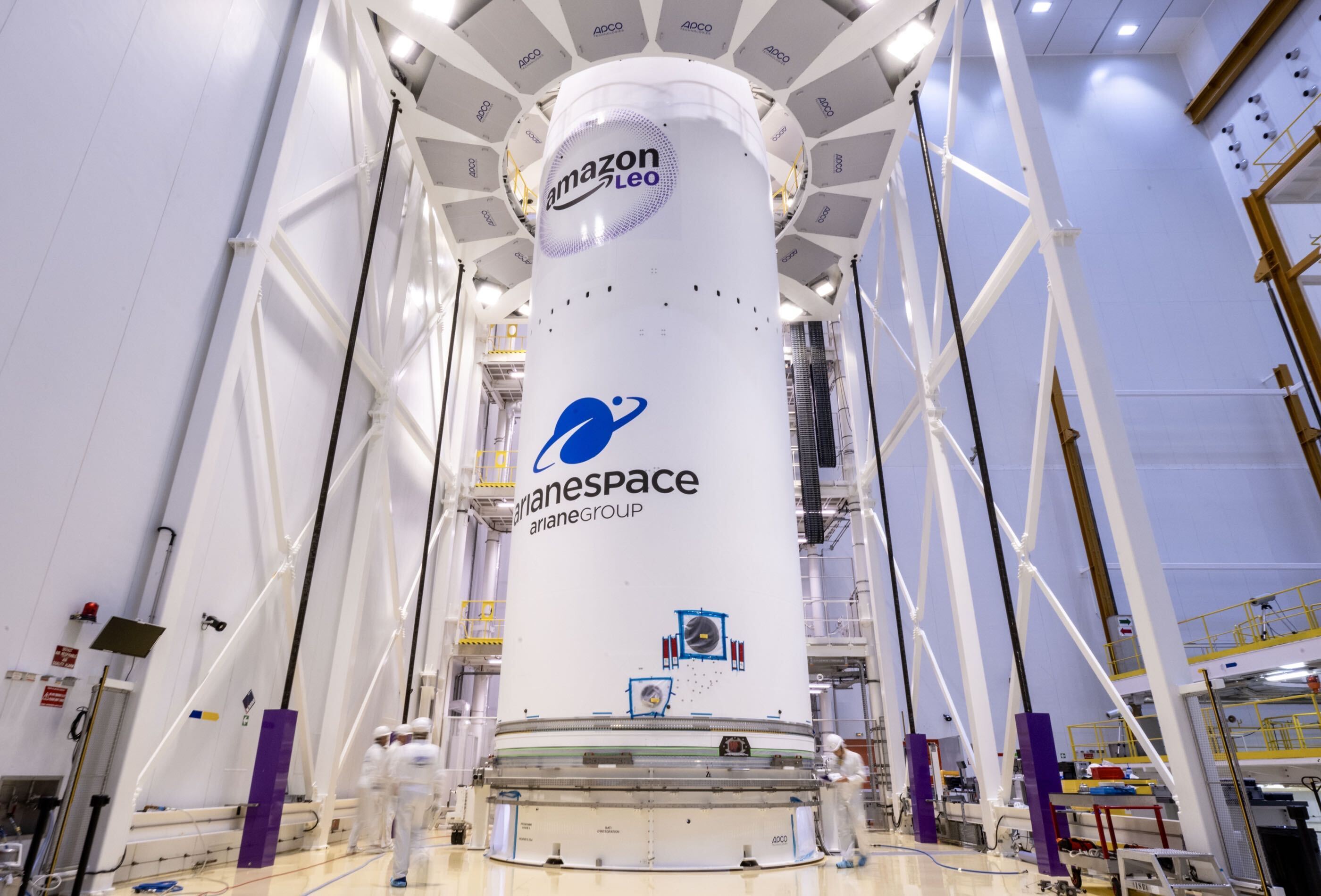 Article
"As for Arianespace, they have definitely stepped up."
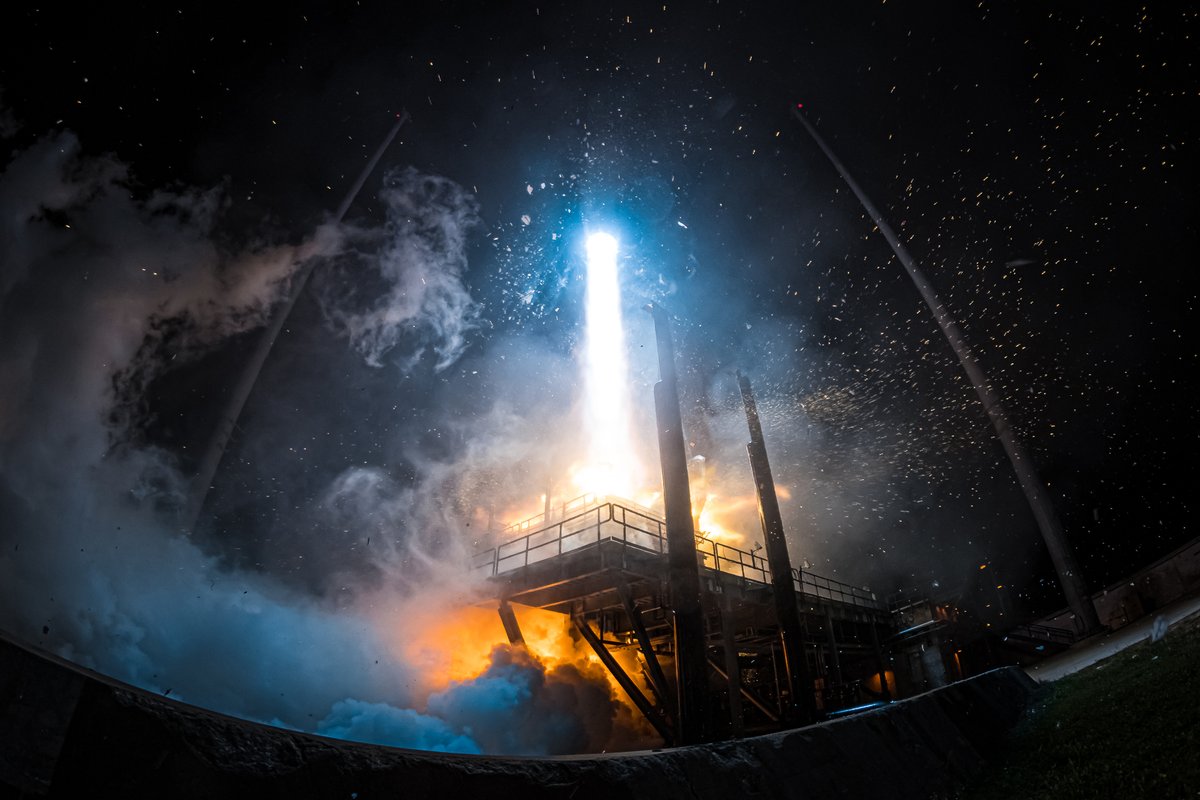 Article
"This is why we thoroughly & rigorously exercise every possible condition on the ground."
Provider, rocket, pad, and booster history tied to this launch.
Temporary flight restrictions and NOTAM matches tied to this launch.
Advisory data is informational. Confirm operational constraints with official FAA publications.
A launch-area reference planning index. Use your location for a viewpoint-specific result.
This viewing setup is refreshing because its saved inputs are no longer current. Check back shortly for the updated score.
This is a planning index, not a percent chance. Higher means the modeled viewing setup is stronger.
If needed, your browser asks permission only after you choose this. The launch-area result is not a forecast for your viewpoint.
This viewing setup is refreshing because its saved inputs are no longer current. Check back shortly for the updated score.
This outlook evaluates whether a broad, sunlit ascent plume could stand out. It does not yet predict whether a specific vehicle will produce one, and an unfavorable plume outlook does not mean the rocket itself will be invisible.