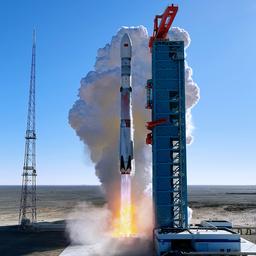

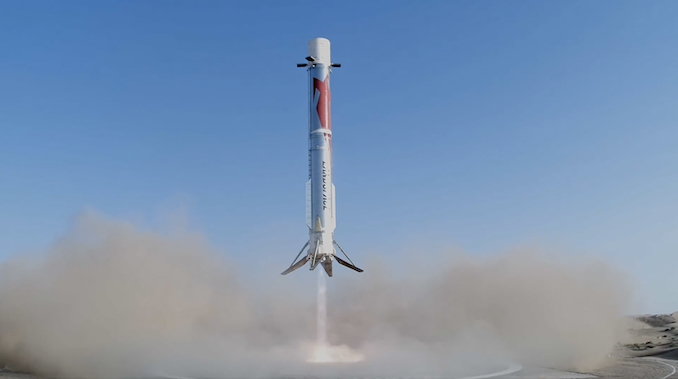
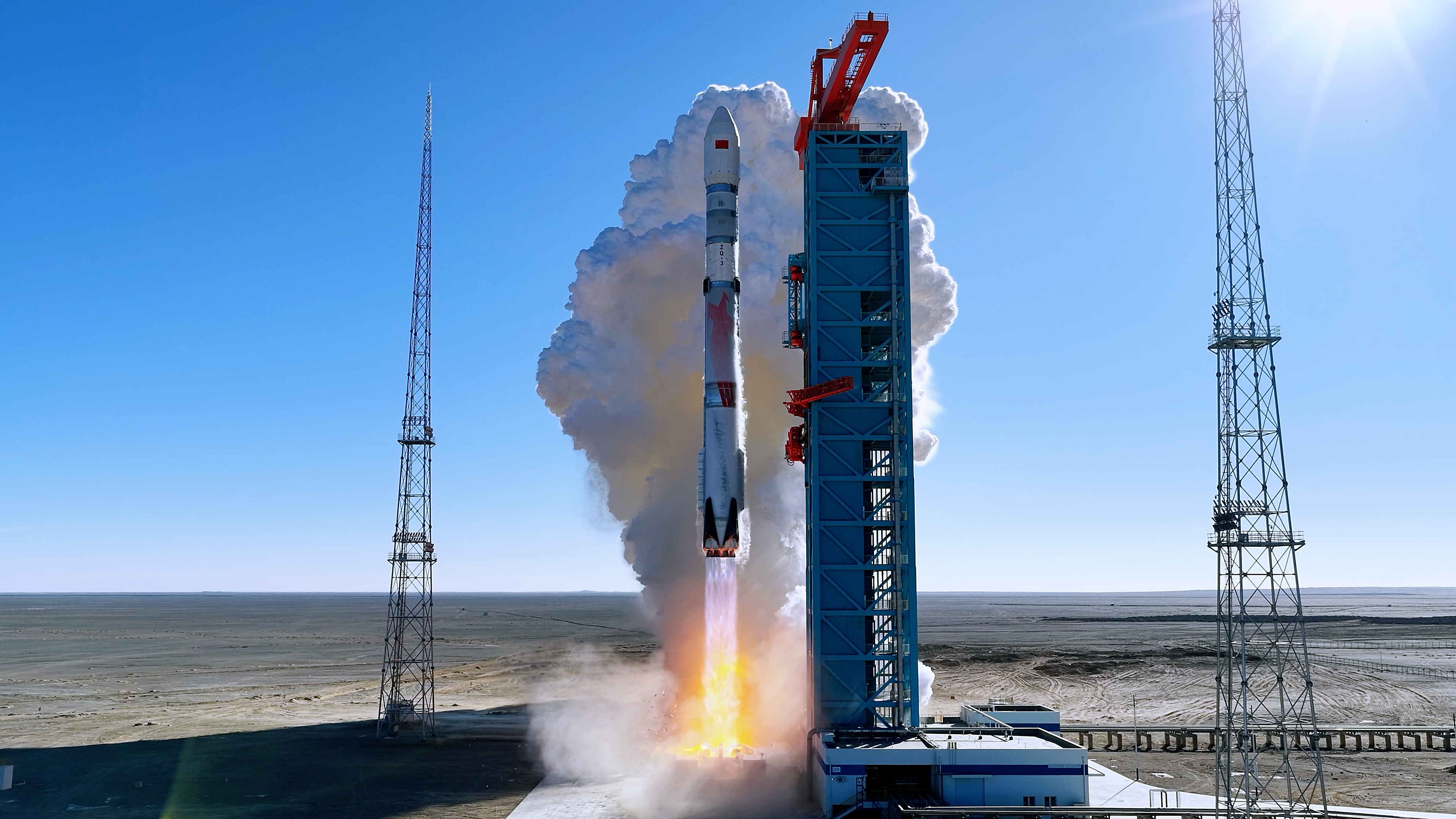
Vertical Landing • Zhuque-3 Landing Site
The Zhuque-3 first stage booster will attempt to land on its downrange landing pad.
TMinusZero
Loading
Preparing the latest launch data.
Launch Detail
Loading launch detail
Pulling launch timing, vehicle context, weather signals, and mission evidence.
Top answer
Note: Second test launch of LandSpace’s ZQ-3 rocket and first ever successful orbital launch vehicle booster recovery by a Chinese private launch service provider. Prototype LEO communication satellite for LandSpace's subsidiary Hongqing Technology.
Last refreshed: Aug 19, 2026, 8:38 AM GMT+8. T-Minus Zero keeps this as the canonical launch record and reconciles schedule, mission, payload, media, and provider signals when those records are available.
Alternate mission URLs consolidate to this canonical launch record so exact mission timing, status, media, and source context stay on one page.
Premium keeps the launch-by-launch change log visible so you can review slips, window edits, and status changes without waiting for an error-driven upgrade prompt.
Free-to-share photography matched to this launch. Tap a photo to view it at full resolution.
Linked via Spaceflight News API (SNAPI).
ArticleLandSpace achieved a major milestone for Chinese commercial rocketry this week when the first stage… The post LandSpace’s Zhuque-3 topples following milesto...
ArticleHELSINKI — Chinese commercial launch firm Landspace is targeting a reflight of its Zhuque-3 first stage in months, following its historic successful vertical...
ArticleThe August 19 landing of its ZhuQue-3 rocket marked the first landing of a Chinese-made rocket using landing legs as well.
ArticleThe commercial company LandSpace safely landed the first stage booster of their Zhuque-3 rocket on August 19th.
ArticleZhuque-3’s second flight marked a major milestone for LandSpace as the methalox rocket lifted off… The post Zhuque-3 Completes Second Flight with Successful...
ArticleHELSINKI — Landspace successfully landed the first stage of its Zhuque-3 rocket Tuesday following the second launch of the rocket from the Gobi Desert. The s...
Launch-stage and landing context surfaced from LL2 when it exists.

Booster serial number unknown.
The Zhuque-3 first stage booster will attempt to land on its downrange landing pad.
Note: Second test launch of LandSpace’s ZQ-3 rocket and first ever successful orbital launch vehicle booster recovery by a Chinese private launch service provider. Prototype LEO communication satellite for LandSpace's subsidiary Hongqing Technology.

Use these internal paths to move from this exact launch record into the provider, vehicle, launch-site, schedule, and mission-family pages that own broader context.
This launch currently has no dedicated mission-family hub, so provider, vehicle, site, and canonical record links are the primary internal paths.
Some high-demand launch records carry specialized search intent. These profiles explain what can be verified from the published record without filling gaps that upstream sources have not published.
Payload and orbit evidence is shown from published launch, payload, mission, and source-link records so the page can answer spacecraft, customer, orbit, provider, and schedule intent.
Key structured fields for this launch record are grouped here so the page answers mission, payload, orbit, provider, source, and timing questions before the deeper tracking and media sections.
Open the launch pad in Google Maps satellite mode using the pad coordinates.
Note: Second test launch of LandSpace’s ZQ-3 rocket and first ever successful orbital launch vehicle booster recovery by a Chinese private launch service provider. Prototype LEO communication satellite for LandSpace's subsidiary Hongqing Technology.
Zhuque-3 (ZQ-3) is a reusable orbital launch vehicle developed by Chinese private company LandSpace. The rocket is built using stainless steel and shares the same series of gas generator cycle methane/liquid oxygen powered rocket engines as in the currently active ZQ-2E rocket. The first stage uses 9 TQ-12 engines (initially the TQ-12A, then upgraded TQ-12B) while the second stage uses 1 TQ-15 engine (TQ-15A, then TQ-15B). On launch missions where the first stage is recovered, it will land on a down-range landing pad located in Minqin County, Gansu Province.
LandSpace is a Chinese private space launch company based in Beijing. It was founded in 2015 by Tsinghua University alumni Zhang Changwu.
Provider, rocket, pad, and booster history tied to this launch.
Core-level mission cadence associated with this launch.
A launch-area reference planning index. Use your location for a viewpoint-specific result.
A broad, sunlit jellyfish-style plume is unlikely at the launch area under the current model. The rocket may still be visible as a point.
This is a planning index, not a percent chance. Higher means the modeled viewing setup is stronger.
If needed, your browser asks permission only after you choose this. The launch-area result is not a forecast for your viewpoint.
This score uses a modeled ascent corridor rather than an exact mission path. The overall viewing setup remains useful; direction and timing are approximate.
No broad, sunlit jellyfish plume is currently expected at the modeled viewpoint.
This outlook evaluates whether a broad, sunlit ascent plume could stand out. It does not yet predict whether a specific vehicle will produce one, and an unfavorable plume outlook does not mean the rocket itself will be invisible.
Read the jellyfish effect and JEP FAQ
Did you see a jellyfish-style plume from this viewpoint?